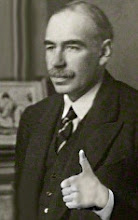
Steve Keen is interviewed below by Gordon Long of the Financial Repression website. More details here.
Most interesting are Steve Keen’s comments on Austrians and the EU.
Steve Keen also blogs at Forbes now. See his latest post here, where he analyses what might happen if the anti-austerity Greek party Syriza forms a coalition government in Greece in the coming election.
Showing posts with label debt. Show all posts
Showing posts with label debt. Show all posts
Friday, January 23, 2015

Saturday, February 8, 2014
Steve Keen on the Tapering of Quantitative Easing
This is old, but still an interesting talk on quantitative easing and the end of that policy.
The graph of US private debt since 1830 that can be seen from 29.05 is particularly interesting to me, even though I do not know what data sources were used for the pre-1945 period. You can see the graph below.

As an aside, there appears to be a large fall in the level of private debt as a percentage of GDP from about 1915 to about 1919, which is very interesting since this must have preceded the recession of 1920 to 1921.
The graph of US private debt since 1830 that can be seen from 29.05 is particularly interesting to me, even though I do not know what data sources were used for the pre-1945 period. You can see the graph below.

As an aside, there appears to be a large fall in the level of private debt as a percentage of GDP from about 1915 to about 1919, which is very interesting since this must have preceded the recession of 1920 to 1921.
Monday, December 3, 2012
Steve Keen on Debt in Neoclassical Economics
Another talk from Steve Keen, and this time given in Berlin (1 December, 2012).
This talk examines the issue of debt in a capitalist economy, and loanable funds versus endogenous money theory.
This talk examines the issue of debt in a capitalist economy, and loanable funds versus endogenous money theory.
Thursday, May 24, 2012
Steve Keen on Debt
An interview here with Steve Keen on both private and public debt: the real issue today here is the disaster of private debt, not public debt.
Thursday, February 9, 2012
David Graeber on Debt and Money, Part 2
I have written a review of some of the more interesting parts of David Graeber’s Debt: The First 5,000 Years (Brooklyn, N.Y., 2011) in this post:
Graeber, David. 2011. Debt: The First 5,000 Years, Melville House, Brooklyn, N.Y.
Grierson, P. 1977. The Origins of Money, Athlone Press and University of London, London.
Grierson, P. 1978. “The Origins of Money,” Research in Economic Anthropology 1: 1–35.
“David Graeber on the Origins of Money,” January 23, 2012.I will continue here with some further points of interest:
(1) The neoclassical economics profession’s obsession with barter stems from the belief that money is a neutral veil and that economies can be modelled as barter systems (Graeber 2011: 44–45).BIBLIOGRAPHY
(2) On pp. 46–52 of Debt: The First 5,000 Years, Graeber reviews the credit theory of money and chartalism. Mitchell Innes made the point that money units are abstract units of measurement, and that such units can emerge before concrete tokens of exchange. The use of debts as a medium of exchange and means of payment is an important element of the story of money. The origin of money in Mesopotamia appears to demonstrate how a unit of account can emerge in a way other than the barter spot trade. The silver unit of account was developed in the temples, and it is in fact interesting how cattle, gold and silver, objects emerging as money in many societies, are also high prestige objects that were offered to the gods (Graeber 2011: 59).
(3) Graeber refers to Primordial Debt Theory, advanced by Michel Aglietta, Andre Orléans, and Bruno Thére (Graeber 2011: 55), although in the end dismisses their theory as another myth (Graeber 2011: 62). The Primordial Debt Theorists take up the thesis of Grierson (1977 and 1978), and emphasise the role of wergild-like social practices, penalties and fines in the emergence of money. In gift exchange economies, it is difficult to imagine how a system of commodity equivalences or calculating relative values arises, but when fines and compensations need to be paid, this is actually when people demand precise and exact compensation in terms of goods lost and goods deemed to be equivalent.
(4) In societies where there exist what we might call “primitive” money, such as shell money in the Americas or Papua New Guinea, cattle money in Africa, bead money, feather money, and so on, these monies are often used exclusively in social interactions like arranging marriages, establishing paternity of children, compensation, or consoling mourners over the dead (Graeber 2011: 60; 130), not for exchanging everyday items and sometimes not even for buying or selling anything at all (Graeber 2011: 130). Such monies are called “social currencies” by Graeber (2011: 130).
Graber makes the following observation:“One of the puzzling things about all the theories about the origins of money that we’ve been looking at so far is that they almost completely ignore the evidence of anthropology. Anthropologists do have a great deal of knowledge of how economies within stateless societies actually worked—how they still work in places where states and markets have been unable to completely break up existing ways of doing things. There are innumerable studies of, say, the use of cattle as money in eastern or southern Africa, of shell money in the Americas (wampum being the most famous example) or Papua New Guinea, bead money, feather money, the use of iron rings, cowries, spondylus shells, brass rods, or woodpecker scalps. The reason that this literature tends to be ignored by economists is simple: ‘primitive currencies’ of this sort is only rarely used to buy and sell things, and even when they are, never primarily everyday items such as chickens or eggs or shoes or potatoes. Rather than being employed to acquire things, they are mainly used to rearrange relations between people. Above all, to arrange marriages and to settle disputes, particularly those arising from murders or personal injury.” (Graeber 2011: 61).
Graeber, David. 2011. Debt: The First 5,000 Years, Melville House, Brooklyn, N.Y.
Grierson, P. 1977. The Origins of Money, Athlone Press and University of London, London.
Grierson, P. 1978. “The Origins of Money,” Research in Economic Anthropology 1: 1–35.
Monday, January 30, 2012
Steve Keen on the History of Money
A nice video interview here with Steve Keen, where he discusses money, credit and debt. He also deals with a good many another issues in economics.
In video 1, Keen mentions the work of David Graeber (which I have examined myself), and the widespread existence of reciprocal gift exchange in many human societies, rather than barter spot trades, and how the barter origin of money as a universal theory is a myth.
In video 1, Keen mentions the work of David Graeber (which I have examined myself), and the widespread existence of reciprocal gift exchange in many human societies, rather than barter spot trades, and how the barter origin of money as a universal theory is a myth.
Monday, January 2, 2012
David Graeber Videos
I’ve been reading David Graeber’s Debt: The First 5,000 Years (Brooklyn, N.Y., 2011), and hope to review some of the chapters soon. I do recommend this book.
In the meantime, here are interesting videos where David Graeber talks about his work in the book on money and debt, and, above all, the debt origin of money.
Graeber’s anthropological work on the debt origin of money is a very interesting confirmation of the modern Chartalist view on this subject: that money is essentially an IOU, that debt has played a major role in the historical origin of money, and that the neoclassical pure barter origin of money is a myth (or, at least, requires substantial revision). Money’s role as an abstract unit of account/money of account (often arising from weight units, wergild-like social practices, and even planning and design as in ancient Mesopotamia) has been neglected in modern scholarship. For the opposing Austrian and neoclassical view on the origin of money from barter spot transactions, see Menger (1892) and Kiyotaki and Wright (1989; 1991; 1992).
I will end with a brief digression here on Chartalism, since Graeber mentions this theory. Chartalism as a theory of money was developed by Georg Friedrich Knapp (1905; English translation 1924), was taken up by Keynes in his Treatise on Money (1930), and was revived by economists in the late 20th century associated with Post Keynesianism, like L. Randall Wray (1998) and mavericks like Charles A. E. Goodhart (the work of Alfred Mitchell-Innes 1913 and 1914 on credit money is also highly relevant).
The macroeconomics we call Modern Monetary Theory (MMT)* appears to have been independently developed by Bill Mitchell and Warren Mosler (who called his theory “soft currency economics”), and chartalist ideas were mixed in as MMT subsequent developed. I quote Warren Mosler:
Footnote
* L. Randall Wray states:
____________________
“Debt: The First 5,000 Years,” C-span Interview (by Doug Henwood), August 23, 2011.
BIBLIOGRAPHY
Kiyotaki, N. and Wright, R. 1989. “On Money as a Medium of Exchange,” Journal of Political Economy 97: 927–954.
Kiyotaki, N. and Wright, R. 1991. “A Contribution to the Pure Theory of Money,” Journal of Economic Theory 53: 215–235.
Kiyotaki, N. and Wright, R. 1992. “Acceptability, Means of Payment, and Media of Exchange,” Federal Reserve Bank of Minneapolis Quarterly Review 2–10.
Knapp, G. F. 1905. Staatliche Theorie des Geldes, Duncker & Humblot, Leipzig.
Knapp, G. F. 1918. Staatliche Theorie des Geldes (2nd edn.), Duncker & Humblot, Munich and Leipzig.
Knapp, G. F. 1921. Staatliche Theorie des Geldes (3rd edn.), Duncker & Humblot, Munich and Leipzig.
Knapp, G. F. 1973 [1924]. The State Theory of Money (trans. H. M. Lucas and J. Bonar), Augustus M. Kelley, Clifton, NY.
Menger, C. 1892. “On the Origin of Money,” Economic Journal 2: 238–255.
Mitchell-Innes, A. 1913. “What is Money?,” Banking Law Journal 30.5 (May): 377–408.
Mitchell-Innes, A. 1914. “The Credit Theory of Money,” Banking Law Journal 31.2 (January–December): 151-168.
N.B. There seems to be some confusion about whether Alfred Mitchell-Innes had a double-barrelled surname or not.
Mosler, W. 1995.“Soft Currency Economics,”
http://www.mosler.org/docs/docs/soft0004.htm
Mosler, W. 2010. The Seven Deadly Innocent Frauds of Economic Policy, Valance Co., St Croix, U.S.V.I.
http://moslereconomics.com/wp-content/powerpoints/7DIF.pdf
Wray, L. R. 1998. Understanding Modern Money: The Key to Full Employment and Price Stability, Edward Elgar, Cheltenham.
In the meantime, here are interesting videos where David Graeber talks about his work in the book on money and debt, and, above all, the debt origin of money.
Graeber’s anthropological work on the debt origin of money is a very interesting confirmation of the modern Chartalist view on this subject: that money is essentially an IOU, that debt has played a major role in the historical origin of money, and that the neoclassical pure barter origin of money is a myth (or, at least, requires substantial revision). Money’s role as an abstract unit of account/money of account (often arising from weight units, wergild-like social practices, and even planning and design as in ancient Mesopotamia) has been neglected in modern scholarship. For the opposing Austrian and neoclassical view on the origin of money from barter spot transactions, see Menger (1892) and Kiyotaki and Wright (1989; 1991; 1992).
I will end with a brief digression here on Chartalism, since Graeber mentions this theory. Chartalism as a theory of money was developed by Georg Friedrich Knapp (1905; English translation 1924), was taken up by Keynes in his Treatise on Money (1930), and was revived by economists in the late 20th century associated with Post Keynesianism, like L. Randall Wray (1998) and mavericks like Charles A. E. Goodhart (the work of Alfred Mitchell-Innes 1913 and 1914 on credit money is also highly relevant).
The macroeconomics we call Modern Monetary Theory (MMT)* appears to have been independently developed by Bill Mitchell and Warren Mosler (who called his theory “soft currency economics”), and chartalist ideas were mixed in as MMT subsequent developed. I quote Warren Mosler:
“The origin of MMT is 'Soft Currency Economics' .... I had never read or even heard of Lerner, Knapp, [Innes], Chartalism, and only knew Keynes by reading his quotes published by others. I 'created' what became know as 'MMT' entirely independently of prior economic thought. It came from my direct experience in actual monetary operations, much of which is also described in the book.”But Chartalism clearly was a later important influence on Modern Monetary Theory (MMT), and the latter goes well beyond the original theories of Knapp or Mitchell-Innes. Some leading proponents of MMT hold that it is now an independent macroeconomic theory (others like Mark Hayes regard MMT as a sub-branch of Post Keynesianism). At the very least, Post Keynesianism can be regarded as the important macro-theory that stands behind MMT as one of its intellectual fathers, so to speak.
http://mmtwiki.org/wiki/History_of_MMT
Footnote
* L. Randall Wray states:
“... somehow [sc. Chartalism] ... got the name Modern Money Theory. We think the first time those exact words were used might have been in a comment to Bill’s blog in 2007; if anyone can find that comment or a previous use, please send it along. It also looks like Bill used the term “modern monetary theory” in an academic paper in 2008.”
L. Randall Wray, “MMP Blog #30: What is Modern Money Theory?,” January 1, 2012.
____________________
“Debt: The First 5,000 Years,” C-span Interview (by Doug Henwood), August 23, 2011.
BIBLIOGRAPHY
Kiyotaki, N. and Wright, R. 1989. “On Money as a Medium of Exchange,” Journal of Political Economy 97: 927–954.
Kiyotaki, N. and Wright, R. 1991. “A Contribution to the Pure Theory of Money,” Journal of Economic Theory 53: 215–235.
Kiyotaki, N. and Wright, R. 1992. “Acceptability, Means of Payment, and Media of Exchange,” Federal Reserve Bank of Minneapolis Quarterly Review 2–10.
Knapp, G. F. 1905. Staatliche Theorie des Geldes, Duncker & Humblot, Leipzig.
Knapp, G. F. 1918. Staatliche Theorie des Geldes (2nd edn.), Duncker & Humblot, Munich and Leipzig.
Knapp, G. F. 1921. Staatliche Theorie des Geldes (3rd edn.), Duncker & Humblot, Munich and Leipzig.
Knapp, G. F. 1973 [1924]. The State Theory of Money (trans. H. M. Lucas and J. Bonar), Augustus M. Kelley, Clifton, NY.
Menger, C. 1892. “On the Origin of Money,” Economic Journal 2: 238–255.
Mitchell-Innes, A. 1913. “What is Money?,” Banking Law Journal 30.5 (May): 377–408.
Mitchell-Innes, A. 1914. “The Credit Theory of Money,” Banking Law Journal 31.2 (January–December): 151-168.
N.B. There seems to be some confusion about whether Alfred Mitchell-Innes had a double-barrelled surname or not.
Mosler, W. 1995.“Soft Currency Economics,”
http://www.mosler.org/docs/docs/soft0004.htm
Mosler, W. 2010. The Seven Deadly Innocent Frauds of Economic Policy, Valance Co., St Croix, U.S.V.I.
http://moslereconomics.com/wp-content/powerpoints/7DIF.pdf
Wray, L. R. 1998. Understanding Modern Money: The Key to Full Employment and Price Stability, Edward Elgar, Cheltenham.
Subscribe to:
Posts (Atom)