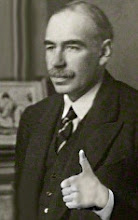
It was made in The Observer, on 31 August, 1997 (Godley 1997), and you can see the crucial passage in the video below (the resolution/quality of the video may need to be increased).
This is actually what we see throughout much of Europe today (though admittedly many parties actively embrace neoliberal austerity too), and what I suspect Greece will discover as it attempts to end austerity and implement some kind of stimulus.
You can read Wynne Godley’s article here, and a good analysis of MMT predictions about the Eurozone here.
We are seeing the failure of the Eurozone not only in the anti-austerity Leftish parties like Syriza and Podemos, but also in right-wing parties like UKIP, the Danish People’s Party (DPP), and the French Front National (FN).
In a recent byelection for the French parliament, the Front National (FN) won the first round, and the French Socialist party only narrowly won the second round, with the National Front candidate taking about 49% per cent of the vote.
The real question: why do mindless left-wing parties continue to support the Eurozone and EU? Why not dismantle both and reconstruct a real progressive EU at some time in the future? Most of the new anti-austerity leftish parties like Syriza and Podemos are only somewhat Eurosceptic, and not clearly anti-EU.
BIBLIOGRAPHY
Godley, Wynne. 1997. “Curried EMU – the Meal that Fails to Nourish,” The Observer, 31 August.
Showing posts with label prediction. Show all posts
Showing posts with label prediction. Show all posts
Friday, February 13, 2015

Monday, March 31, 2014
Did Austrians Never Predict Hyperinflation?
I read libertarian blogs frequently, and one thing I have noticed of late is how some Austrian economists and vulgar Austrians who comment on Austrian/libertarian blogs and are now so embarrassed by the prior predictions of hyperinflation that they deny that Austrians ever made any such predictions.
So is this new denial really true? Did no Austrian economist or Austrian pundit predict hyperinflation?
Of course, when confronted with the evidence that a number of them did indeed predict this, Austrians will quickly slip into the no true Scotsman fallacy, fallacy of equivocation, or the moving the goalposts fallacy.
Often the argument will run like this:
We need only look at these examples:
The idea that Austrians never predicted hyperinflation in any sense is outrageous, mendacious and contemptible rewriting of history.
So is this new denial really true? Did no Austrian economist or Austrian pundit predict hyperinflation?
Of course, when confronted with the evidence that a number of them did indeed predict this, Austrians will quickly slip into the no true Scotsman fallacy, fallacy of equivocation, or the moving the goalposts fallacy.
Often the argument will run like this:
Austrian: No Austrian predicted hyperinflation!Of course, the argument may hinge on the meaning of “predict.” The ordinary dictionary definition of “predict” is to “announce something as an event that will occur in the future” or “say that something will happen”: this could mean either that
Critic: But person x – an Austrian – predicted hyperinflation.
Austrian: But person x is not a genuine Austrian! [no true Scotsman fallacy].
Critic: But person x supports Austrian economics and uses it in economic analysis and self-identifies as an Austrian.
Austrian: But he is still not a genuine Austrian economist with a degree in Austrian economics! [fallacy of equivocation].
Critic: Well, person y is recognised as an Austrian economist with a degree in that field under another prominent Austrian economist and he predicted hyperinflation too.
Austrian: but person y did not predict hyperinflation as 100% certain, he only said it might happen! [fallacy of equivocation and moving the goalposts fallacy].
(1) the person says the event absolutely will happen with a 100% certainty (in a given time frame), or (more probably)These are the meaningful senses of the word “predict,” but, as it happens, we have evidence that Austrians predicted hyperinflation in both senses.
(2) the prediction that something will happen (in a given time frame) is probable or highly probable and contingent on given conditions (if x and y continue to occur, then z will result).
We need only look at these examples:
(1) Marc Faber predicted that hyperinflation in the US was 100% certain in 2009So from (1) to (5) above we have predictions of hyperinflation as a 100% certainty (Faber in no. 1), to hyperinflation (apparently) as a serious probability (no. 2, no. 4 and no. 5) to hyperinflation at least a serious possibility (3).
Mark Faber is a Swiss investor, publisher of the Gloom Boom & Doom Report, and director of Marc Faber Ltd (an investment advisor and fund manager).
But it is clear from this that Faber does not dispute that he uses the Austrian School of thought in economics analysis.
But there he is on the record predicting that hyperinflation was 100% certain, and he said the same thing here in this interview published on May 27, 2009.
Of course the absurd thing is that Faber gave no time period for his prediction in the video (was it supposed to be within 1 year? 2? 3? 6? 10? 50? 100?), and one need hardly point to how absurd it is for anyone to claim that he is predicting something, but then spectacularly fail to give a time period to limit the prediction and allow it to be tested.
Nevertheless, the context would suggest that Faber was thinking of a short to medium time frame, perhaps 10 years at the most. As of this day, his prediction has failed.
And we should note that in the same video, Peter Schiff made a conditional, probabilistic prediction of hyperinflation too.
(2) Peter Schiff in 2008
In this interview from April 21, 2008:“[sc. Interviewer]: What is your long-term, 20 year outlook on the health and durability of the American economy as a whole? Will the combination of new regulations, welfare liabilities and inflationary pressure create a prolonged recession similar to what Japan has undergone since the early ’90s?In the full interview, Schiff explicitly states that he supports Austrian economics (he says: “Austrian economics is economics, period!”). Although Schiff’s time frame was in the context of a 20 year period, what is interesting here is that this was before the turn to QE in about December 2008: already around April 2008 Schiff was predicting hyperinflation in a probabilistic sense.
Peter [Schiff]: I am not sure. The road ahead will be filled with many potholes and include some important forks. Since I do not for sure which ones we will follow, I prefer to invest abroad until our path is more certain. As it stands now, we are headed to a hyperinflationary depression. I hope we will choose a different path before we actually get there.”
Tim Swanson, “Interview with Peter Schiff,” Mises Economics Blog, April 21, 2008.
Still more interesting evidence is that Peter Schiff’s Euro Pacific Capital newsletter in its April 2009 issue contained an article by James Turk who predicted that hyperinflation in the US was “imminent.” Did Schiff agree with this article? If so, we have evidence that Schiff thought hyperinflation was highly probable in the short term, not just in a 20 year time frame.
And we have already noted that Peter Schiff made a conditional, probabilistic prediction of hyperinflation too in 2009 in the video above.
(3) Doug French in 2009
In this Mises Daily article:“So instead of allowing the market to provide a healthy cleansing deflation, the Fed, the Treasury, and bank regulators are fighting valiantly to keep the fractional-reserve-bubble machine operating, with the ultimate result likely to be inflation and possibly hyperinflation.Doug French is clearly an Austrian economist (he received a master’s degree under Murray N. Rothbard at the University of Nevada).
http://mises.org/daily/3653
Doug French, “Store ’em If You Got ’em,” Mises Daily, August 17, 2009.
Even though his statement about hyperinflation is far less strident and only a possibility, one must question how he could have mentioned it as a serious possibility without at the same time thinking it was at least probable.
(4) Gary North in 2012
Gary North raises hyperinflation as one of two possibilities, presumably both of which he thought were probable:“The Federal Reserve and its allies — virtually the entire intellectual class — use this fear to maintain its position as the quasi-public bureaucracy in charge of America’s money. It lured the nation into the lobster trap of debt — debt undergirded by Federal Reserve fiat money and congressional deficits — and the country cannot see a way to get out on a pain-free basis. There is no pain-free escape, as we will find over the next two decades: hyperinflation or the Great Deflationary Default or both.North is clearly a strong supporter of Austrian economics.
The government’s debt and the monetary inflation cannot go on indefinitely. Either the dollar dies or else the debt is repudiated. Maybe both.”
Gary North, “How to End the Fed, and How Not To,” Mises Daily, September 10, 2012.
(5) Ron Paul in 2011
Details in this article here. In an interview from 2011, Paul predicts the collapse of the US dollar and hyperinflation, presumably in a probabilistic sense.
Nobody can doubt Paul’s credentials as a supporter and advocate of Austrian economics:“Paul is a proponent of Austrian School economics; he has authored six books on the subject, and displays pictures of Austrian School economists Friedrich Hayek, Murray Rothbard, and Ludwig von Mises (as well as of Grover Cleveland) on his office wall.”
http://en.wikipedia.org/wiki/Ron_Paul#Political_positions
The idea that Austrians never predicted hyperinflation in any sense is outrageous, mendacious and contemptible rewriting of history.
Sunday, March 9, 2014
No Constants in Human Behaviour?
Consider this passage from Mises:
In fact, there is a deep epistemological problem with all these “laws”: the human action axiom is nothing but a synthetic a posteriori statement. Subsequent “laws” are deduced in a manner that reduces them to mere analytic a priori statements and such statements entail no necessary truths about the real world of human economic life. If they describe general “principles,” those regularities are contingent; they are known empirically; and exceptions do or can in theory exist.
To return to the main point, it follows, then, that Mises certainly must think there are regularities or “constant relations” in a qualitative sense in human behaviour and history, even if there are no strict and universal quantitative ones akin to the speed of light constant in physics.
And we see that this is what Mises thought as interpreted by later Austrians:
But John Maynard Keynes already anticipated this criticism of econometrics: in Keynes’s famous debate with Jan Tinbergen he said very similar things (which can be read in Keynes 1939; Tinbergen 1940; Keynes 1940).
In a letter to Roy Harrod of 10 July 1938, Keynes said this:
Even on the most generous interpretation of Keynes’s opinion of econometrics (O’Donnell 1997: 110–112), while Keynes was not necessarily hostile to the use of mathematics in economics nor to historically specific estimates of variables like the multiplier, he was heavily critical of the idea that certain empirically estimated magnitudes in econometric equations and models were assumed to be constants in the way constants in the natural science were: that is, such magnitudes were not permanently “constant” or “homogeneous through time” like natural scientific constants.
For Keynes, econometrics cannot yield prediction of future economic quantitative variables with objective probability scores in non-ergodic stochastic systems, as, for example, the price of any specific stock on a stock market at some given future date, or what the London Interbank Offered Rate (or Libor) will be in January 2021.
But at that same time it seems that Keynes would not deny that there are observable qualitative regularities, consistencies or trends in human behaviour or economic life, although they are not necessarily stable in the long term.
One must not confuse (1) Keynes’ rejection of fundamental quantitative economic constants (like the speed of light) in economics with (2) the existence of observable qualitative regularities (which do exist).
For example, you cannot make precise quantitative predictions about exactly when a recession will happen and what magnitudes the other relevant variables (such as real output loss and unemployment, etc.) will have with objective probability scores, but a general qualitative inductive inference (with an epistemic, not objective, probability) that it is probable that a recession will follow a boom, on the basis of past experience and the evidence that no radical changes in the current economic system seem likely in the immediate future, is not unreasonable at all.
Further Reading
Lars P Syll, “Keynes’s Critique of Econometrics,” 4 July, 2012
https://larspsyll.wordpress.com/2012/07/04/keyness-critique-of-econometrics/
Philip Pilkington, “Proud to Be a Nihilist: Bill Mitchell on Econometrics and Numerical Prediction,” Fixing the Economists, February 12, 2014
https://fixingtheeconomists.wordpress.com/2014/02/12/proud-to-be-a-nihilist-bill-mitchell-on-econometrics-and-numerical-prediction/
BIBLIOGRAPHY
Keynes, J. M. 1938. Letter: 791. J. M. Keynes to Harrod, 10 July 1938
http://economia.unipv.it/harrod/edition/editionstuff/rfh.34a.htm
Keynes, J. M. 1938. Letter: 787. J. M. Keynes to Harrod , 4 July 1938
http://economia.unipv.it/harrod/edition/editionstuff/rfh.346.htm
Keynes, J. M. 1939. “Official Papers. The League of Nations. Professor Tinbergen’s Method,” The Economic Journal 49.195: 558–577.
Keynes, J. M. 1940. “On a Method of Statistical Business-Cycle Research. A Comment,” The Economic Journal 50.197: 154–156.
Mises, L. 2008. Human Action: A Treatise on Economics. The Scholar’s Edition. Mises Institute, Auburn, Ala.
Murphy, Robert P. and Amadeus Gabriel. 2008. Study Guide to Human Action. A Treatise on Economics: Scholar’s Edition. Ludwig von Mises Institute, Auburn, Ala.
O’Donnell, R. 1997. “Keynes and Formalism,” in G. C. Harcourt and P. A. Riach (eds.), A “Second Edition” of The General Theory. Volume 2. Routledge, London. 94–119.
Patinkin, D. 1976. “Keynes and Econometrics: On the Interaction between the Macroeconomic Revolutions of the Inter-War Period,” Econometrica 44: 1091–1123.
Pressman, Steven. 2007. “What can post Keynesian Economics teach us about Poverty?,” in Richard P.F. Holt and Steven Pressman (eds.), Empirical Post Keynesian Economics: Looking at the Real World. M.E. Sharpe, Armonk, NY. 21–43.
Rothbard, M. N. 2009. Man, Economy, and State, The Scholar’s Edition (2nd edn.). Ludwig von Mises Institute, Auburn, Ala.
Tinbergen, J. 1940. “On a Method of Statistical Business-Cycle Research. A Reply,” The Economic Journal 50.197: 141–154.
“Here we are faced with one of the main differences between physics and chemistry on the one hand and the sciences of human action on the other. In the realm of physical and chemical events there exist (or, at least, it is generally assumed that there exist) constant relations between magnitudes, and man is capable of discovering these constants with a reasonable degree of precision by means of laboratory experiments. No such constant relations exist in the field of human action outside of physical and chemical technology and therapeutics. For some time economists believed that they had discovered such a constant relation in the effects of changes in the quantity of money upon commodity prices. It was asserted that a rise or fall in the quantity of money in circulation must result in proportional changes of commodity prices. Modern economics has clearly and irrefutably exposed the fallaciousness of this statement. Those economists who want to substitute ‘quantitative economics’ for what they call ‘qualitative economics’ are utterly mistaken. There are, in the field of economics, no constant relations, and consequently no measurement is possible.The meaning of this passage can cause confusion, since in fact Austrian economics precisely assumes a number of constants in human behaviour:
If a statistician determines that a rise of 10 per cent in the supply of potatoes in Atlantis at a definite time was followed by a fall of 8 per cent in the price, he does not establish anything about what happened or may happen with a change in the supply of potatoes in another country or at another time. He has not ‘measured’ the ‘elasticity of demand’ of potatoes. He has established a unique and individual historical fact. No intelligent man can doubt that the behavior of men with regard to potatoes, and every other commodity is variable. Different individuals value the same things in a different way, and valuations change with the same individuals with changing conditions.
Outside of the field of economic history nobody ever ventured to maintain that constant relations prevail in human history. ….
The impracticability of measurement is not due to the lack of technical methods for the establishment of measure. It is due to the absence of constant relations. If it were only caused by technical insufficiency, at least an approximate estimation would be possible in some cases. But the main fact is that there are no constant relations. Economics is not, as ignorant positivists repeat again and again, backward because it is not ‘quantitative.’ It is not quantitative and does not measure because there are no constants. Statistical figures referring to economic events are historical data.” (Mises 2008: 55–56).
(1) the constant that all conscious human action by non-mentally ill human beings has a purpose in view;Now these “laws” – assuming the basic phenomena are in place like production, pricing and purchasing in money terms by consumers – are supposed to be true for all times and places in human history, even though that necessary truth is all dependent on an untenable Kantian epistemology with its synthetic a priori knowledge.
(2) the constant operation of the downward-sloping function governing human behaviour that relates quantity demanded of a good to its price (the law of demand);
(3) the constant phenomenon in which the utility gained by consumers derived from consuming each additional unit of the same good purchased will diminish (the law of diminishing marginal utility);
(4) the constant phenomenon that work carries disutility and leisure utility, so that leisure is preferred to work (disutility of labour axiom).
(5) the constant tendency on the hypothetical free market without government or trade union intervention for prices to move towards their market-clearing levels.
In fact, there is a deep epistemological problem with all these “laws”: the human action axiom is nothing but a synthetic a posteriori statement. Subsequent “laws” are deduced in a manner that reduces them to mere analytic a priori statements and such statements entail no necessary truths about the real world of human economic life. If they describe general “principles,” those regularities are contingent; they are known empirically; and exceptions do or can in theory exist.
To return to the main point, it follows, then, that Mises certainly must think there are regularities or “constant relations” in a qualitative sense in human behaviour and history, even if there are no strict and universal quantitative ones akin to the speed of light constant in physics.
And we see that this is what Mises thought as interpreted by later Austrians:
“In fact, one lesson above all should be kept in mind when considering the claims of the various groups of mathematical economists: in human action there are no quantitative constants. As a necessary corollary, all praxeological-economic laws are qualitative, not quantitative.” (Rothbard 2009: 845).It follows that the Austrians shun econometrics and what they call quantitative economics (referring to the neoclassical mainstream with its heavy use of mathematical models and econometrics).
“7. PRAXEOLOGICAL PREDICTION
Praxeology can make certain predictions about the future, but they are necessarily qualitative. For example, it can tell us that (other things equal) a fall in the demand for apples will lead to a lower price of apples. But praxeology alone can never tell us that (say) a particular change will yield a 9 percent drop in apple prices. Such quantitative forecasts are possible with the aid of understanding, but then of course they are no longer certain.” (Murphy and Gabriel 2008: 47–48).
“Whereas in physics, causal relations can only be assumed hypothetically and later approximately verified by referring to precise observable regularities, in praxeology we know the causal force at work. This causal force is human action, motivated, purposeful behavior, directed at certain ends. The universal aspects of this behavior can be logically analyzed. We are not dealing with ‘functional,’ quantitative relations among variables, but with human reason and will causing certain action, which is not ‘determinable’ or reducible to outside forces. Furthermore, since the data of human action are always changing, there are no precise, quantitative relationships in human history. In physics, the quantitative relationships, or laws, are constant; they are considered to be valid for any point in human history, past, present, or future. In the field of human action, there are no such quantitative constants. There are no constant relationships valid for different periods in human history. The only ‘natural laws’ (if we may use such an old-fashioned but perfectly legitimate label for such constant regularities) in human action are qualitative rather than quantitative. They are, for example, precisely the laws educed in praxeology and economics-the fact of action, the use of means to achieve ends, time preference, diminishing marginal utility, etc.” (Rothbard 2009: 324).
But John Maynard Keynes already anticipated this criticism of econometrics: in Keynes’s famous debate with Jan Tinbergen he said very similar things (which can be read in Keynes 1939; Tinbergen 1940; Keynes 1940).
In a letter to Roy Harrod of 10 July 1938, Keynes said this:
“My point against Tinbergen is a different one. In chemistry and physics and other natural sciences the object of experiment is to fill in the actual values of the various quantities and factors appearing in an equation or a formula; and the work when done is once and for all. In economics that is not the case, and to convert a model into a quantitative formula is to destroy its usefulness as an instrument of thought. Tinbergen endeavours to work out the variable quantities in a particular case, or perhaps in the average of several particular cases, and he then suggests that the quantitative formula so obtained has general validity. Yet in fact, by filling in figures, which one can be quite sure will not apply next time, so far from increasing the value of his instrument, he has destroyed it. All the statisticians tend that way. Colin, for example, has recently persuaded himself that the propensity to consume in terms of money is constant at all phases of the credit cycle. He works out a figure for it and proposes to predict by using the result, regardless of the fact that his own investigations clearly show that it is not constant, in addition to the strong a priori reasons for regarding it as most unlikely that it can be so.And in another letter to Roy Harrod:
The point needs emphasising because the art of thinking in terms of models is a difficult – largely because it is an unaccustomed – practice. The pseudo-analogy with the physical sciences leads directly counter to the habit of mind which is most important for an economist proper to acquire.
I also want to emphasise strongly the point about economics being a moral science. I mentioned before that it deals with introspection and with values. I might have added that it deals with motives, expectations, psychological uncertainties. One has to be constantly on guard against treating the material as constant and homogeneous in the same way that the material of the other sciences, in spite of its complexity, is constant and homogeneous. It is as though the fall of the apple to the ground depended on the apple’s motives, on whether it is worth while falling to the ground, and whether the ground wanted the apple to fall, and on mistaken calculations on the part of the apple as to how far it was from the centre of the earth.
Keynes, J. M. 1938. Letter: J. M. Keynes to Harrod, 10 July
http://economia.unipv.it/harrod/edition/editionstuff/rfh.34a.htm
“It seems to me that economics is a branch of logic, a way of thinking; and that you do not repel sufficiently firmly attempts à la Schultz to turn it into a pseudo-natural-science. One can make some quite worthwhile progress merely by using your axioms and maxims. But one cannot get very far except by devising new and improved models. This requires, as you say, ‘a vigilant observation of the actual working of our system’. Progress in economics consists almost entirely in a progressive improvement in the choice of models. The grave fault of the later classical school, exemplified by Pigou, has been to overwork a too simple or out of date model, and in not seeing that progress lay in improving the model; whilst Marshall often confused his models, for the devising of which he had great genius, by wanting to be realistic and by being unnecessarily ashamed of lean and abstract outlines.Keynes’s method is clear: thought experiments by deductive logic only take you so far and must be checked against experience: “a vigilant observation of the actual working of our system.”
But it is of the essence of a model that one does not fill in real values for the variable functions. To do so would make it useless as a model. For as soon as this is done, the model loses its generality and its value as a mode of thought. That is why Clapham with his empty boxes was barking up the wrong tree and why Schultz’s results, if he ever gets any, are not very interesting (for we know beforehand that they will not be applicable to future cases). The object of statistical study is not so much to fill in missing variables with a view to prediction, as to test the relevance and validity of the model.
Economics is a science of thinking in terms of models joined to the art of choosing models which are relevant to the contemporary world. It is compelled to be this, because, unlike the typical natural science, the material to which it is applied is, in too many respects, not homogeneous through time.”
Keynes, J. M. 1938. Letter: 787. J. M. Keynes to Harrod , 4 July 1938
http://economia.unipv.it/harrod/edition/editionstuff/rfh.346.htm
Even on the most generous interpretation of Keynes’s opinion of econometrics (O’Donnell 1997: 110–112), while Keynes was not necessarily hostile to the use of mathematics in economics nor to historically specific estimates of variables like the multiplier, he was heavily critical of the idea that certain empirically estimated magnitudes in econometric equations and models were assumed to be constants in the way constants in the natural science were: that is, such magnitudes were not permanently “constant” or “homogeneous through time” like natural scientific constants.
For Keynes, econometrics cannot yield prediction of future economic quantitative variables with objective probability scores in non-ergodic stochastic systems, as, for example, the price of any specific stock on a stock market at some given future date, or what the London Interbank Offered Rate (or Libor) will be in January 2021.
But at that same time it seems that Keynes would not deny that there are observable qualitative regularities, consistencies or trends in human behaviour or economic life, although they are not necessarily stable in the long term.
One must not confuse (1) Keynes’ rejection of fundamental quantitative economic constants (like the speed of light) in economics with (2) the existence of observable qualitative regularities (which do exist).
For example, you cannot make precise quantitative predictions about exactly when a recession will happen and what magnitudes the other relevant variables (such as real output loss and unemployment, etc.) will have with objective probability scores, but a general qualitative inductive inference (with an epistemic, not objective, probability) that it is probable that a recession will follow a boom, on the basis of past experience and the evidence that no radical changes in the current economic system seem likely in the immediate future, is not unreasonable at all.
Further Reading
Lars P Syll, “Keynes’s Critique of Econometrics,” 4 July, 2012
https://larspsyll.wordpress.com/2012/07/04/keyness-critique-of-econometrics/
Philip Pilkington, “Proud to Be a Nihilist: Bill Mitchell on Econometrics and Numerical Prediction,” Fixing the Economists, February 12, 2014
https://fixingtheeconomists.wordpress.com/2014/02/12/proud-to-be-a-nihilist-bill-mitchell-on-econometrics-and-numerical-prediction/
BIBLIOGRAPHY
Keynes, J. M. 1938. Letter: 791. J. M. Keynes to Harrod, 10 July 1938
http://economia.unipv.it/harrod/edition/editionstuff/rfh.34a.htm
Keynes, J. M. 1938. Letter: 787. J. M. Keynes to Harrod , 4 July 1938
http://economia.unipv.it/harrod/edition/editionstuff/rfh.346.htm
Keynes, J. M. 1939. “Official Papers. The League of Nations. Professor Tinbergen’s Method,” The Economic Journal 49.195: 558–577.
Keynes, J. M. 1940. “On a Method of Statistical Business-Cycle Research. A Comment,” The Economic Journal 50.197: 154–156.
Mises, L. 2008. Human Action: A Treatise on Economics. The Scholar’s Edition. Mises Institute, Auburn, Ala.
Murphy, Robert P. and Amadeus Gabriel. 2008. Study Guide to Human Action. A Treatise on Economics: Scholar’s Edition. Ludwig von Mises Institute, Auburn, Ala.
O’Donnell, R. 1997. “Keynes and Formalism,” in G. C. Harcourt and P. A. Riach (eds.), A “Second Edition” of The General Theory. Volume 2. Routledge, London. 94–119.
Patinkin, D. 1976. “Keynes and Econometrics: On the Interaction between the Macroeconomic Revolutions of the Inter-War Period,” Econometrica 44: 1091–1123.
Pressman, Steven. 2007. “What can post Keynesian Economics teach us about Poverty?,” in Richard P.F. Holt and Steven Pressman (eds.), Empirical Post Keynesian Economics: Looking at the Real World. M.E. Sharpe, Armonk, NY. 21–43.
Rothbard, M. N. 2009. Man, Economy, and State, The Scholar’s Edition (2nd edn.). Ludwig von Mises Institute, Auburn, Ala.
Tinbergen, J. 1940. “On a Method of Statistical Business-Cycle Research. A Reply,” The Economic Journal 50.197: 141–154.
Sunday, January 6, 2013
More on Alvin A. Hansen’s Prediction of a Post-1945 Boom
In a previous post I drew attention to Alvin A. Hansen’s prediction of a US boom after the Second World War in his chapter in Postwar Economic Problems (McGraw-Hill, New York and London).
Let us look further at his chapter.
On pp. 17–18, Hansen assumes a hypothetical model of postwar US GDP in which both private consumption and investment spending would rise considerably from 1943.
Hansen makes it clear that he regarded this as the most probable outcome for the US economy after the war:
Elsewhere, Hansen also made it clear that he was an optimist, and did not share the views of the pessimists about the post-war economy:
Moreover, there was nothing inherently unreasonable about the idea that America might face severe unemployment problems and depression after the war. Business expectations are subjective. They can change rapidly in response to shocks. What happened to the private US economy after 1945 was dependent on expectations. Either a boom or slump was possible. The fact that some Keynesian economists did think a slump was coming does nothing to invalidate their underlying macroeconomic theory, for Keynesian economics (or at least that of Keynes himself and those heterodox varieties not compromised by neoclassical economics) stresses the uncertainty of the future. It is not possible to predict with certainty or with objective probability scores the state of certain future economic variables in market economies. All one can do is make forecasts qualified by assumptions about how expectations will play out. One’s assumptions may turn out to be right or wrong.
As it happens, Keynes, Hansen and Richard M. Bissell were right in their forecasts about the post-1945 US economy.
BIBLIOGRAPHY
Hansen, Alvin A. 1943. “The Postwar Economy,” in Seymour E. Harris (ed.), Postwar Economic Problems, McGraw-Hill, New York and London. 9–26.
Let us look further at his chapter.
On pp. 17–18, Hansen assumes a hypothetical model of postwar US GDP in which both private consumption and investment spending would rise considerably from 1943.
Hansen makes it clear that he regarded this as the most probable outcome for the US economy after the war:
“Altogether the various factors enumerated above indicate the great possibilities for the expansion both of consumption and of private investment during the transitional period. Indeed, the potentialities for expansion of consumption and private investment in the immediate postwar period are sufficient to indicate the possibility of a genuine and fairly prolonged postwar boom. The Federal government should, however, be prepared to play a balancing role, checking any temporary tendency toward an excessive boom, and, on the other hand, be prepared to go forward with large Federal expenditures on public improvement projects to compensate for any strong tendency toward deflation and depression.” (Hansen 1943: 18).So, while Hansen did hedge his bets, in the sense that he thought that any tendency towards “deflation and depression” would require fiscal stimulus, nonetheless he felt there were “great possibilities [my emphasis] for the expansion both of consumption and of private investment during the transitional period. Indeed, the potentialities for expansion of consumption and private investment in the immediate postwar period are sufficient to indicate the possibility of a genuine and fairly prolonged postwar boom.”
Elsewhere, Hansen also made it clear that he was an optimist, and did not share the views of the pessimists about the post-war economy:
“The fact is that many people dread to think of what is coming. Businessmen, wage earners, white-collar employees, professional people, farmers—all alike expect and fear a postwar collapse: demobilization of armies, shutdowns in defense industries, unemployment, deflation, bankruptcy, hard times. Some are hoping for a postwar boom. We got that after the First World War. Not improbably we may get it again. If the war lasts several years, we may have at the end of the war sufficient accumulated shortages in residential housing, in durable consumers' good such as automobiles, and in the plant and equipment required to supply peacetime consumption demands, to give us a vigorous private investment boom. Indeed, we need to be on the alert to prevent a possible postwar inflation. If in fact we do experience a strong postwar boom, there is, however, the gravest danger that it will lull us to sleep. Sooner or later such a boom will end in a depression unless we are prepared. If appropriate action is taken, there is no necessity for a postwar collapse.What emerges from this is that opinion on what would happen after the war was divided. There was indeed some pessimism about the possibility of a severe slump after 1945 amongst certain “[b]usinessmen, wage earners, white-collar employees, professional people, [and] farmers.” It was not some opinion held merely by Keynesian economists (and even amongst Keynesians there were important optimists). In the end, Hansen did not share the pessimistic view, and explicitly stated that he thought the idea was not “sustained by past experience.”
Everywhere one hears it said that, when this war is over, all countries including our own will be impoverished. This view is, however, not sustained by past experience. No country need be impoverished if its productive resources (both capital and human) are intact. The productive resources of this country will be on a considerably higher plane when this war is over than ever before. A larger proportion of our population will be trained to perform skilled and semiskilled jobs. We shall have enormous productive capacities in all the machine industries. And in special consumers’ durable industries where plant and equipment may have become deficient by reason of the war, we shall be able very quickly, with our large basic machine-producing industries, to expand to meet the peacetime requirements. We shall have, when the war is over, the technical equipment, the trained and efficient labor, and the natural resources required to produce a substantially higher real income for civilian needs than any ever achieved before in our history.” (Hansen 1943: 12–13).
Moreover, there was nothing inherently unreasonable about the idea that America might face severe unemployment problems and depression after the war. Business expectations are subjective. They can change rapidly in response to shocks. What happened to the private US economy after 1945 was dependent on expectations. Either a boom or slump was possible. The fact that some Keynesian economists did think a slump was coming does nothing to invalidate their underlying macroeconomic theory, for Keynesian economics (or at least that of Keynes himself and those heterodox varieties not compromised by neoclassical economics) stresses the uncertainty of the future. It is not possible to predict with certainty or with objective probability scores the state of certain future economic variables in market economies. All one can do is make forecasts qualified by assumptions about how expectations will play out. One’s assumptions may turn out to be right or wrong.
As it happens, Keynes, Hansen and Richard M. Bissell were right in their forecasts about the post-1945 US economy.
BIBLIOGRAPHY
Hansen, Alvin A. 1943. “The Postwar Economy,” in Seymour E. Harris (ed.), Postwar Economic Problems, McGraw-Hill, New York and London. 9–26.
Friday, January 4, 2013
Alvin Hansen Predicted the Post-1945 US Boom
I suspect most readers know who Alvin A. Hansen was. For those who do not, Alvin Hansen was a major US Keynesian economist (albeit of the neoclassical synthesis variety), and some even referred to him as the “American Keynes” for his role in introducing Keynes’s economic ideas to the United States after 1936.
In 1943, Alvin Hansen had a chapter published in a book called Postwar Economic Problems (McGraw-Hill, New York and London, 1943), the same book in which Samuelson’s famous comments on the post-1945 US economy appeared (Samuelson 1943).
Here is Alvin Hansen predicting the post-1945 boom:
Hansen correctly foresaw that a surge in private investment and consumption owing to the release of demand pent up during the war would drive the post-1945 economy.
He also correctly foresaw that this boom would end in a slump. That did occur from November 1948 to October 1949.
The US government stepped in after 1948 to provide macroeconomic stability, as Hansen said it would. Truman’s budget surplus of 4.6% of GDP in fiscal year 1948 fell to 0.2% in fiscal year 1949, as spending went from $29.8 billion in 1948 to $38.8 billion in 1949, as automatic stabilizers kicked in. In fiscal year 1950 (July 1, 1949 to June 30 1950), the budget went into an actual deficit of 1.1% of GDP. Moreover, Congress had pushed through a tax cut in 1948, which boosted private spending in 1949.
What we have here is classic Keynesian countercyclical fiscal policy. Some of the increases from 1950–1953 were, of course, related to the Korean war, but also to new social, welfare and military programs enacted under Truman. Government spending in both absolute terms and as a percentage of GDP surged from 1948 to 1953, fell slightly from 1953–1954 as the Korean war ended, but remained between about 25% and 30% of GDP throughout the classic era of Keynesian economics (1945–1973) – an unprecedented level to that point in American history. And the economy boomed.
The Austrian Thomas E. Woods tells us that “Keynesian economists everywhere [sc. were] predicting disaster and depression [sc. after 1945].” Everywhere? That is tommyrot.
In 1943, Keynes was giving a lecture at the Federal Reserve and was asked by Abba Lerner about the possible economic problems of the post-war period. Keynes also predicted a post war boom:
BIBLIOGRAPHY
Colander, D. C. and H. Landreth (eds). 1996. The Coming of Keynesianism to America: Conversations with the Founders of Keynesian Economics, E. Elgar, Cheltenham.
Hansen, Alvin A. 1943. “The Postwar Economy,” in Seymour E. Harris (ed.), Postwar Economic Problems, McGraw-Hill, New York and London. 9–26.
Samuelson, Paul A. 1943. “Full Employment after the War,” in Seymour E. Harris (ed.), Postwar Economic Problems, McGraw-Hill, New York and London. 27–53.
In 1943, Alvin Hansen had a chapter published in a book called Postwar Economic Problems (McGraw-Hill, New York and London, 1943), the same book in which Samuelson’s famous comments on the post-1945 US economy appeared (Samuelson 1943).
Here is Alvin Hansen predicting the post-1945 boom:
“The fact is that many people dread to think of what is coming. Businessmen, wage earners, white-collar employees, professional people, farmers—all alike expect and fear a postwar collapse: demobilization of armies, shutdowns in defense industries, unemployment, deflation, bankruptcy, hard times. Some are hoping for a postwar boom. We got that after the First World War. Not improbably we may get it again. If the war lasts several years, we may have at the end of the war sufficient accumulated shortages in residential housing, in durable consumers’ good such as automobiles, and in the plant and equipment required to supply peacetime consumption demands, to give us a vigorous private investment boom. Indeed, we need to be on the alert to prevent a possible postwar inflation. If in fact we do experience a strong postwar boom, there is, however, the gravest danger that it will lull us to sleep. Sooner or later such a boom will end in a depression unless we are prepared. If appropriate action is taken, there is no necessity for a postwar collapse.” (Hansen 1943: 12–13).I concede that Hansen’s prediction was a cautious one (“Not improbably we may get it again”). But it was an important prediction nonetheless.
Hansen correctly foresaw that a surge in private investment and consumption owing to the release of demand pent up during the war would drive the post-1945 economy.
He also correctly foresaw that this boom would end in a slump. That did occur from November 1948 to October 1949.
The US government stepped in after 1948 to provide macroeconomic stability, as Hansen said it would. Truman’s budget surplus of 4.6% of GDP in fiscal year 1948 fell to 0.2% in fiscal year 1949, as spending went from $29.8 billion in 1948 to $38.8 billion in 1949, as automatic stabilizers kicked in. In fiscal year 1950 (July 1, 1949 to June 30 1950), the budget went into an actual deficit of 1.1% of GDP. Moreover, Congress had pushed through a tax cut in 1948, which boosted private spending in 1949.
What we have here is classic Keynesian countercyclical fiscal policy. Some of the increases from 1950–1953 were, of course, related to the Korean war, but also to new social, welfare and military programs enacted under Truman. Government spending in both absolute terms and as a percentage of GDP surged from 1948 to 1953, fell slightly from 1953–1954 as the Korean war ended, but remained between about 25% and 30% of GDP throughout the classic era of Keynesian economics (1945–1973) – an unprecedented level to that point in American history. And the economy boomed.
The Austrian Thomas E. Woods tells us that “Keynesian economists everywhere [sc. were] predicting disaster and depression [sc. after 1945].” Everywhere? That is tommyrot.
In 1943, Keynes was giving a lecture at the Federal Reserve and was asked by Abba Lerner about the possible economic problems of the post-war period. Keynes also predicted a post war boom:
“Keynes harshly rejected the risk of post-war stagnation, holding that because of Social security there would be a large reduction in private saving and so that would be no problem.” (Colander and Landreth 1996: 202).But it is no surprise that the opinions of Keynes himself, Hansen and also Richard M. Bissell (actually cited in Samuelson 1943: 53, n. 1) are airbrushed out of the grossly distorted Austrian view of this period.
BIBLIOGRAPHY
Colander, D. C. and H. Landreth (eds). 1996. The Coming of Keynesianism to America: Conversations with the Founders of Keynesian Economics, E. Elgar, Cheltenham.
Hansen, Alvin A. 1943. “The Postwar Economy,” in Seymour E. Harris (ed.), Postwar Economic Problems, McGraw-Hill, New York and London. 9–26.
Samuelson, Paul A. 1943. “Full Employment after the War,” in Seymour E. Harris (ed.), Postwar Economic Problems, McGraw-Hill, New York and London. 27–53.
Sunday, February 5, 2012
Lionel Robbins and the Myth of Hayek’s Prediction of the Great Depression
In the introduction to the original edition of Prices and Production (London, 1931), Lionel Robbins made a bold claim for Austrian economists and Hayek’s predictive power:
Hansjörg Klausinger, in an excellent chapter in an edited monograph on Austrian economics, has recently charged that, “browsing through the monthly bulletins of the institute, it is difficult to discover anything that comes close to corroborating Robbin’s statement” (Klausinger 2010: 227). I am rather gratified that a reading of Klausinger (2010) confirms my own analysis of this very question here:
Klausinger also notes that Hayek’s “Monatsberichte” made very significant use of the “Harvard Economic Service” (a publication of the Harvard University Committee on Economic Research) and the Harvard barometer, and rarely engaged in much more than an “eclectic interpretation of these” (Klausinger 2010: 227).
This is easily verified. In a report from November 1928, we have the following (with my translation of the German):
Moreover, Hayek thought that a “great economic crisis is likely to be still quite far away” (“großen Wirtschaftskrise dürfte noch recht weit entfernt sein”). “Still quite far away” (“noch recht weit entfernt”) sounds like a number of years to me, not one year. This is yet another problem for the view that Hayek was some kind of prescient oracle.
There is a second relevant passage in an October 26, 1929 issue of the Monatsberichte (my translation follows):
So here a few days before the historic stock market crash of October 28, 1929 (Black Monday) and October 29 (Black Tuesday), a crash which continued until November 13, 1929, we have Hayek predicting
Hansjörg Klausinger (2010: 227) concludes that we still lack “convincing evidence of a prediction that conformed to what Robbins suggested in his foreword.”
And Klausinger is entirely correct. The Austrians’ predictive powers regarding the Great Depression are grossly exaggerated, and Hayek’s in particular.
BIBLIOGRAPHY
Ebenstein, A. O. 2003. Friedrich Hayek: A Biography, University of Chicago Press, Chicago and London.
Hayek, F. A. von, 1931. Prices and Production, G. Routledge & Sons, Ltd, London.
Hayek, F. A. von. 1991. The Collected Works of F. A. Hayek. Volume 3. The Trend of Economic Thinking: Essays on Political Economists and Economic History (ed. W. W. Bartley and S. Kresge), Routledge, London.
Hayek, F. A. von. 1994. Hayek on Hayek: An Autobiographical Dialogue (eds. S. Kresge and L. Wenar), Routledge, London.
Hülsmann, J. G. 2007. Mises: The Last Knight of Liberalism, Ludwig von Mises Institute, Auburn, Ala.
Klausinger, Hansjörg. 2010. “Hayek on Practical Business Cycle Research: A Note,” in H. Hagemann, T. Nishizawa, Y. Ikeda (eds.), Austrian Economics in Transition: From Carl Menger to Friedrich Hayek, Palgrave Macmillan, Basingstoke. 218–234.
Steele, G. R. 2001. Keynes and Hayek: The Money Economy, Routledge, London and New York.
“... I cannot think that it is altogether an accident that the Austrian Institut für Konjunkturforschung, of which Dr. Hayek is director, was one of the very few bodies of its kind which, in the spring of 1929, predicted a setback in America with injurious repercussions on European conditions” (Hayek 1931: xi-xii).Robbins refers here to the Österreichische Konjunkturforschungsinstitut (Austrian Institute for Business Cycle Research). This opened in 1927, and Hayek was appointed as the first director (Hayek 1991: 125, n. 1; Steele 2001: 8–9; for the foundation of the Institute by Mises, see Hülsmann 2007: 575-576). Hayek wrote nearly all the monthly reports (“Monatsberichte” in German) of the institute for four years, and only obtained the assistance of Oskar Morgenstern as his collaborator in 1929 (Hayek 1991: 125, n. 1; Ebenstein 2003: 44; cf. Hülsmann 2007: 576: “Hayek himself wrote the first, very lengthy report [sc. of the “Monatsberichte”] ... Over the years, [sc. Hayek] ... relied more and more on contributions from others”).
Hansjörg Klausinger, in an excellent chapter in an edited monograph on Austrian economics, has recently charged that, “browsing through the monthly bulletins of the institute, it is difficult to discover anything that comes close to corroborating Robbin’s statement” (Klausinger 2010: 227). I am rather gratified that a reading of Klausinger (2010) confirms my own analysis of this very question here:
“Hayek and the Stock Market Crash of 1929: So Much for His Predictive Powers,” December 28, 2011.I wrote this before reading Klausinger.
Klausinger also notes that Hayek’s “Monatsberichte” made very significant use of the “Harvard Economic Service” (a publication of the Harvard University Committee on Economic Research) and the Harvard barometer, and rarely engaged in much more than an “eclectic interpretation of these” (Klausinger 2010: 227).
This is easily verified. In a report from November 1928, we have the following (with my translation of the German):
“Harvard Economic Service meint, daß, wenn nicht unerwartete, jetzt nicht erkennbare Faktoren zu einer Liquidation am Effektenmarkt führen sollten, die ersten Monate 1929 eine neue Anspannung am Kapitalsmarkt bringen dürften. Die Kreditsituation sei als heikel und schwierig, nicht aber als gefährlich zu bezeichnen. Doch wenn die Krediterweiterung weiter fortgesetzt wird, wird man in einem Jahr einer noch viel schwierigeren und heikleren Situation gegenüberstehen. Die Position der Federal Reserve-Banken ist allerdings stark genug, um noch längere Zeit Kreditexpansion betreiben zu können und die Zeit der großen Wirtschaftskrise dürfte noch recht weit entfernt sein, wenn dies auch vorübergehende kleinere Liquidationsperioden nicht ausschließt.”As I have said before, what is clear is that American forecasters were predicting some kind of crisis in 1929. Hayek picked up on that, and noted it here.
“[The] Harvard Economic Service thinks that factors not now apparent/recognizable, if not unexpected/unforeseen, should lead to a liquidation effect on the market, [and] the first months of 1929 may be expected to bring a new strain in the capital market. The credit situation is to be described as awkward and difficult, but not as dangerous. But, if the credit expansion is continued, we will face in a year an even more difficult and awkward situation. The position of the Federal Reserve banks, however, is strong enough to be able to conduct credit expansion for quite some time, and a time of great economic crisis is likely to be still quite far away, even if this does not exclude periods of temporary smaller liquidation.”
Monatsberichte des österreichischen Institutes für Konjunkturforschung, 2. Jahrgang, Nr. 11. (26 November, 1928). p. 174.
Moreover, Hayek thought that a “great economic crisis is likely to be still quite far away” (“großen Wirtschaftskrise dürfte noch recht weit entfernt sein”). “Still quite far away” (“noch recht weit entfernt”) sounds like a number of years to me, not one year. This is yet another problem for the view that Hayek was some kind of prescient oracle.
There is a second relevant passage in an October 26, 1929 issue of the Monatsberichte (my translation follows):
“Jedoch besteht derzeit kein Grund, einen plötzlichen Zusammenbruch der New Yorker Börse zu erwarten. Allerdings ist es nicht ausgeschlossen, daß nunmehr das Ende der geradezu phantastischen Kurssteigerungen gekommen ist und das Niveau langsam abbröckeln dürfte.There is a strong likelihood that Hayek wrote this, or possibly as a co-author with Oskar Morgenstern (it is clear from p. 186 of the issue that Hayek is listed as the editor: “Verantwortlicher Schriftleiter: Dr. Friedrich A. Hayek”).
Die Kredit Möglichkeiten sind jedenfalls augenblicklich noch sehr große und es erscheint daher die Gewähr gegeben, daß eine ausgesprochen krisenhafte Zerstörung des jetzigen hohen Niveaus nicht befürchtet werden müßte. Zur Zeit werden europäische Gelder bereits in großen Beträgen abgezogen, so daß der Dollarkurs gedrückt ist.”
“However, at present there is no reason to expect a sudden crash of the New York stock exchange. However, it is not impossible that the end of the absolutely amazing price increases has arrived, and [that] the [price] level should slowly crumble. The credit possibilities/conditions are, at any rate, currently very great, and therefore it appears assured that an outright crisis-like destruction of the present high [sc. price] level should not be feared. At the moment, European funds are already being withdrawn in large amounts, so that the value of the [US] dollar is down.” Monatsberichte des österreichischen Institutes für Konjunkturforschung, 3. Jahrgang, Nr. 10 (26 October, 1929), p. 182.
So here a few days before the historic stock market crash of October 28, 1929 (Black Monday) and October 29 (Black Tuesday), a crash which continued until November 13, 1929, we have Hayek predicting
(1) no “sudden crash of the New York stock exchange”;All wrong.
(2) the possibility of a slow fall in stock market prices, and
(3) an “outright crisis-like destruction of the present high [sc. price] level should not be feared.”
Hansjörg Klausinger (2010: 227) concludes that we still lack “convincing evidence of a prediction that conformed to what Robbins suggested in his foreword.”
And Klausinger is entirely correct. The Austrians’ predictive powers regarding the Great Depression are grossly exaggerated, and Hayek’s in particular.
BIBLIOGRAPHY
Ebenstein, A. O. 2003. Friedrich Hayek: A Biography, University of Chicago Press, Chicago and London.
Hayek, F. A. von, 1931. Prices and Production, G. Routledge & Sons, Ltd, London.
Hayek, F. A. von. 1991. The Collected Works of F. A. Hayek. Volume 3. The Trend of Economic Thinking: Essays on Political Economists and Economic History (ed. W. W. Bartley and S. Kresge), Routledge, London.
Hayek, F. A. von. 1994. Hayek on Hayek: An Autobiographical Dialogue (eds. S. Kresge and L. Wenar), Routledge, London.
Hülsmann, J. G. 2007. Mises: The Last Knight of Liberalism, Ludwig von Mises Institute, Auburn, Ala.
Klausinger, Hansjörg. 2010. “Hayek on Practical Business Cycle Research: A Note,” in H. Hagemann, T. Nishizawa, Y. Ikeda (eds.), Austrian Economics in Transition: From Carl Menger to Friedrich Hayek, Palgrave Macmillan, Basingstoke. 218–234.
Steele, G. R. 2001. Keynes and Hayek: The Money Economy, Routledge, London and New York.
Wednesday, August 31, 2011
Prediction, Empiricism and Austrian Economics
A commentator on the previous post who supports Austrian economics asserts this:
When we turn to Mises and Rothbard, we find a blatant contradiction of this view:
And the claim that Austrian aprioristic praxeology escapes empiricism is wholly false. Why? Because praxeology requires any number of synthetic propositions that are hidden or stated premises in its deductive arguments (Schuller 1951: 188), and only empirical testing of these synthetic propositions will establish their truth, as Karen Vaughn, amongst numerous others, has pointed out:
Austrian economics and even praxeological methodology does not evade a fundamental empirical basis: this point should be stressed to all and every Austrian pushing the sort of nonsense I have quoted above, where they declare that their economics is somehow completely independent of empiricism. They are plainly wrong. Without elementary methods of empiricism, their theory (even as they conceive it) wouldn’t even work, and could provide no certain knowledge.
Of course, it comes as no surprise that there is another strand of Austrian economics where an empirical method is accepted. Hayek never accepted Mises’ apriorism at all, and admitted a role for empirical evidence which is far closer to Popper’s falsificationism (see Appendix 1). Gerald P. O’Driscoll and Mario J. Rizzo have offered a reconstructed Austrian methodology in their book The Economics of Time and Ignorance (Driscoll and Rizzo 1996), allowing a role for empirical testing of interpretive theories to see whether they apply to the real world.
Appendix 1: Hayek on Popperian Method
Hayek talks about Popperian ideas on methodology:
There was a poorly phrased sentence in the original post that could be misconstrued, where I say
“this point should be stressed to all and every Austrian pushing the sort of nonsense I have quoted above, where they declare that their economics is not an empirical science.”
That was a poor choice of words on my part. Of course, the Austrians think that their predictions made by praxeology are arrived at using an aprioristic method different from that used in the natural sciences. I have rewritten and clarified the sentence as
“this point should be stressed to all and every Austrian pushing the sort of nonsense I have quoted above, where they declare that their economics is somehow completely independent of empiricism.”
BIBLIOGRAPHY
Blaug, M. 1994. “Why I am not a Constructivist: Confessions of an Unrepentant Popperian,” in R. E. Backhouse (ed.), New Directions in Economic Methodology, Routledge, London and New York. 109–136.
Blaug, M. 1997. Economic Theory in Retrospect, Cambridge University Press, Cambridge and New York.
Keen, S. 2001. Debunking Economics: The Naked Emperor of the Social Sciences, Zed Books, New York and London.
Mises, L. 1998. Human Action: A Treatise on Economics. The Scholar’s Edition, Mises Institute, Auburn, Ala.
Mises, L. von. 2003. Epistemological Problems of Economics (3rd edn; trans. G. Reisman), Ludwig von Mises Institute, Auburn Ala.
Nobel Prize-Winning Economist: Friedrich A. von Hayek. Interviewed by Earlene Graver, Axel Leijonhufvud, Leo Rosten, Jack High, James Buchanan, Robert Bork, Thomas Hazlett, Armen A. Alchian, Robert Chitester, Regents of the University of California, 1983.
O’Driscoll, G. P. and M. J. Rizzo, 1996. The Economics of Time and Ignorance (rev. edn), Routledge, London.
Rothbard, M. N. 2006. Power and Market: Government and the Economy (4th edn), Ludwig von Mises Institute, Auburn Ala.
Schuller, G. J. 1951. “Mises’ ‘Human Action’: Rejoinder,” American Economic Review 41.1: 185–190
Vaughn, K. I. 1994. Austrian Economics in America: The Migration of a Tradition, Cambridge University Press, Cambridge and New York.
“Since our learning is inherently unpredictable through and through, and since our learning influences what we do, and since what we do is the subject of economics, it follows that economics is not a predictive, empirical science like chemistry and physics. Atoms and molecules don’t learn over time. They don’t act. So inductive logic through empiricism is justified. The reason why almost all mainstream empiricist economists couldn’t predict the housing bubble and collapse, is because they are using a faulty methodology. The reason why so many Austrians could predict it, is because they are using a proper methodology.”The assertion that sticks out to me is “economics is not a predictive … science like chemistry and physics.” Even if you subscribe to Austrian aprioristic praxeology (and reject the empirical approach to economics), how can economics not be predictive, yet somehow (magically?) Austrians can predict the “housing bubble and collapse”?
When we turn to Mises and Rothbard, we find a blatant contradiction of this view:
“Praxeological knowledge makes it possible to predict with apodictic certainty the outcome of various modes of action. But, of course, such prediction can never imply anything regarding quantitative matters.” (Mises 1998: 117-118).Mises is quite clear that economics “too can make predictions in the sense in which this ability is attributed to the natural sciences.” So even Mises and Rothbard thought that their economics had predictive power.
“Economics too can make predictions in the sense in which this ability is attributed to the natural sciences. The economist can and does know in advance what effect an increase in the quantity of money will have upon its purchasing power or what consequences price controls must have. Therefore, the inflations of the age of war and revolution, and the controls enacted in connection with them, brought about no results unforeseen by economics.” (Mises 2003: 129).
“Economics provides us with true laws, of the type if A, then B, then C, etc. Some of these laws are true all the time, i.e., A always holds (the law of diminishing marginal utility, time preference, etc.). Others require A to be established as true before the consequents can be affirmed in practice. The person who identifies economic laws in practice and uses them to explain complex economic fact is, then, acting as an economic historian rather than as an economic theorist. He is an historian when he seeks the casual explanation of past facts; he is a forecaster when he attempts to predict future facts. In either case, he uses absolutely true laws, but must determine when any particular law applies to a given situation. Furthermore, the laws are necessarily qualitative rather than quantitative, and hence, when the forecaster attempts to make quantitative predictions, he is going beyond the knowledge provided by economic science.” (Rothbard 2006: 311).
And the claim that Austrian aprioristic praxeology escapes empiricism is wholly false. Why? Because praxeology requires any number of synthetic propositions that are hidden or stated premises in its deductive arguments (Schuller 1951: 188), and only empirical testing of these synthetic propositions will establish their truth, as Karen Vaughn, amongst numerous others, has pointed out:
“... Mises does not deduce all of praxeology from the action axiom. He slips in subsidiary statements that can only be viewed as hypotheses and not certain truth.” (Vaughn 1994: 77).Even some of Mises’s fundamental starting axioms are synthetic and only provable by empirical evidence, such as the “disutility of labor” axiom:
“The disutility of labor is not of a categorial and aprioristic character. We can without contradiction think of a world in which labor does not cause uneasiness, and we can depict the state of affairs prevailing in such a world …. Experience teaches that there is disutility of labor. But it does not teach it directly. There is no phenomenon that introduces itself as disutility of labor. There are only data of experience which are interpreted, on the ground of aprioristic knowledge, to mean that men consider leisure—i.e., the absence of labor—other things being equal, as a more desirable condition than the expenditure of labor. We see that men renounce advantages which they could get by working more—that is, that they are ready to make sacrifices for the attainment of leisure. We infer from this fact that leisure is valued as a good and that labor is regarded as a burden. But for previous praxeological insight, we would never be in a position to reach this conclusion” (Mises 1998: 65).M. Blaug has pointed out that a fundamental hidden assumption underlying Mises’s praxeology is the justification for belief in negatively inclined demand curves:
“[sc. there is a] the fundamental flaw in Ludwig von Mises’ ‘praxeology’: [sc. it is] the notion that purposive choice as a Kantian ‘a priori synthetic proposition’ is more than sufficient to account for negatively inclined demand curves. This ignores the fact that a number of a posteriori auxiliary propositions are also required, such as transitivity or consistency of choices ... To this day, this failure to recognize the limited power of a priori synthetic propositions to generate substantive implications for economic behaviour characterises neo-Austrian writings in defence of Mises” (Blaug 1994: 132–133, n. 14; see also Blaug 1997: 332ff.).But as is now known, even in higher-level neoclassical literature, demand curves are not necessarily downward sloping, even though this is a fundamental assumption of the law of demand:
“Economists can prove that ‘the demand curve slopes downward in price’ for a single individual and a single commodity. But in a society consisting of many different individuals with many different commodities, the ‘market demand curve’ is more probably jagged, and slopes every which way. One essential building block of the economic analysis of markets, the demand curve, therefore does not have the characteristics needed for economic theory to be internally consistent.” (Keen 2001: 25).And it has been behavioural and experimental economics, with their strong empirical character and experimentation, that are relevant to establishing this.
Austrian economics and even praxeological methodology does not evade a fundamental empirical basis: this point should be stressed to all and every Austrian pushing the sort of nonsense I have quoted above, where they declare that their economics is somehow completely independent of empiricism. They are plainly wrong. Without elementary methods of empiricism, their theory (even as they conceive it) wouldn’t even work, and could provide no certain knowledge.
Of course, it comes as no surprise that there is another strand of Austrian economics where an empirical method is accepted. Hayek never accepted Mises’ apriorism at all, and admitted a role for empirical evidence which is far closer to Popper’s falsificationism (see Appendix 1). Gerald P. O’Driscoll and Mario J. Rizzo have offered a reconstructed Austrian methodology in their book The Economics of Time and Ignorance (Driscoll and Rizzo 1996), allowing a role for empirical testing of interpretive theories to see whether they apply to the real world.
Appendix 1: Hayek on Popperian Method
Hayek talks about Popperian ideas on methodology:
“I became one of the early readers [sc. of Karl Popper’s Logik der Forschung, 1934]. It had just come out a few weeks before …. And to me it was so satisfactory because it confirmed this certain view I had already formed due to an experience very similar to Karl Popper’s. Karl Popper is four or five years my junior; so we did not belong to the same academic generation. But our environment in which we formed our ideas was very much the same. It was very largely dominated by discussion, on the one hand, with Marxists and, on the other hand, with Freudians. Both these groups had one very irritating attribute: they insisted that their theories were, in principle, irrefutable. Their system was so built up that there was no possibility – I remember particularly one occasion when I suddenly began to see how ridiculous it all was when I was arguing with Freudians, and they explained, “Oh, well, this is due to the death instinct.” And I said, “But this can’t be due to the [death instinct].” “Oh, then this is due to the life instinct.” … Well, if you have these two alternatives, of course there’s no way of checking whether the theory is true or not. And that led me, already, to the understanding of what became Popper’s main systematic point: that the test of empirical science was that it could be refuted, and that any system which claimed that it was irrefutable was by definition not scientific. I was not a trained philosopher; I didn’t elaborate this. It was sufficient for me to have recognized this, but when I found this thing explicitly argued and justified in Popper, I just accepted the Popperian philosophy for spelling out what I had always felt. Ever since, I have been moving with Popper” (Nobel Prize-Winning Economist: Friedrich A. von Hayek, pp. 18–19).N.B.
There was a poorly phrased sentence in the original post that could be misconstrued, where I say
“this point should be stressed to all and every Austrian pushing the sort of nonsense I have quoted above, where they declare that their economics is not an empirical science.”
That was a poor choice of words on my part. Of course, the Austrians think that their predictions made by praxeology are arrived at using an aprioristic method different from that used in the natural sciences. I have rewritten and clarified the sentence as
“this point should be stressed to all and every Austrian pushing the sort of nonsense I have quoted above, where they declare that their economics is somehow completely independent of empiricism.”
BIBLIOGRAPHY
Blaug, M. 1994. “Why I am not a Constructivist: Confessions of an Unrepentant Popperian,” in R. E. Backhouse (ed.), New Directions in Economic Methodology, Routledge, London and New York. 109–136.
Blaug, M. 1997. Economic Theory in Retrospect, Cambridge University Press, Cambridge and New York.
Keen, S. 2001. Debunking Economics: The Naked Emperor of the Social Sciences, Zed Books, New York and London.
Mises, L. 1998. Human Action: A Treatise on Economics. The Scholar’s Edition, Mises Institute, Auburn, Ala.
Mises, L. von. 2003. Epistemological Problems of Economics (3rd edn; trans. G. Reisman), Ludwig von Mises Institute, Auburn Ala.
Nobel Prize-Winning Economist: Friedrich A. von Hayek. Interviewed by Earlene Graver, Axel Leijonhufvud, Leo Rosten, Jack High, James Buchanan, Robert Bork, Thomas Hazlett, Armen A. Alchian, Robert Chitester, Regents of the University of California, 1983.
O’Driscoll, G. P. and M. J. Rizzo, 1996. The Economics of Time and Ignorance (rev. edn), Routledge, London.
Rothbard, M. N. 2006. Power and Market: Government and the Economy (4th edn), Ludwig von Mises Institute, Auburn Ala.
Schuller, G. J. 1951. “Mises’ ‘Human Action’: Rejoinder,” American Economic Review 41.1: 185–190
Vaughn, K. I. 1994. Austrian Economics in America: The Migration of a Tradition, Cambridge University Press, Cambridge and New York.
Monday, May 30, 2011
Mises Did Not Predict the US Stock Crash of 1929
I see that someone has dragged up a stupid myth about Mises in one of the comments.
The claim is that Mises predicted that US stock market crash in 1929 and (presumably) the later depression. The source of this nonsense is a story by Fritz Machlup that can be conveniently found in Skousen (2009):
The only other evidence one can find is Mises’ introduction to the English version of his The Theory of Money and Credit published in 1934, where he claims that Austrians had “foreseen” the crisis, even though the depression had been going on for years at that point. You don’t need to be a genius to “predict” something years after it actually happens.
BIBLIOGRAPHY
Skousen, M. 2009. The Making of Modern Economics: The Lives and Ideas of the Great Thinkers (2nd edn.), M.E. Sharpe, Armonk, N.Y.
The claim is that Mises predicted that US stock market crash in 1929 and (presumably) the later depression. The source of this nonsense is a story by Fritz Machlup that can be conveniently found in Skousen (2009):
“As his assistant in the university seminar which met every Wednesday afternoon, I [i.e., Fritz Machlup] usually accompanied him home. On these walks we would pass through a passage of the Kreditanstalt in Vienna [one of the largest banks in Europe]. From 1924, every Wednesday afternoon as we walked through the passage for pedestrians he said: ‘That will be a big smash.’ Mind you, this was from 1924 onwards; yet in 1931, when the crash finally came, I still held some shares of the Kreditanstalt, which of course had become completely worthless” … In the summer of 1929, Mises was offered a high position at the Kreditanstalt bank. His future wife, Margit, was ecstatic, but Lu surprised her when he decided against it. ‘Why not’ she asked. His response shocked her: ‘A great crash is coming, and I don’t want my name in any way connected with it’ … (Skousen 2009: 295–296).In the world of Austrian apologists, this prediction of the failure of one Austrian bank is transformed into the prediction of US stock market crash in 1929. Mises is alleged to have warned his future wife that “a great crash” was coming, but I have seen no evidence to suggest he was referring to America or a global depression, or anything other than the Kreditanstalt bank with that statement.
The only other evidence one can find is Mises’ introduction to the English version of his The Theory of Money and Credit published in 1934, where he claims that Austrians had “foreseen” the crisis, even though the depression had been going on for years at that point. You don’t need to be a genius to “predict” something years after it actually happens.
BIBLIOGRAPHY
Skousen, M. 2009. The Making of Modern Economics: The Lives and Ideas of the Great Thinkers (2nd edn.), M.E. Sharpe, Armonk, N.Y.
Subscribe to:
Posts (Atom)