Showing posts with label postwar boom. Show all posts

Sunday, January 6, 2013

Why was there no Mass Unemployment Problem amongst returned G.I.s after 1945?

This question is closely related to the reasons why there were no serious economic problems after 1945 that some economists and the general public expected.

Of course, the boom in private investment after 1945 employed many men. But that is by no means the only reason.

Before 1945, about 14 million men served in the US armed forces, but by summer 1946 that number had been reduced to just over 2 million, although this decreased further in the course of the 1940s (Adams 1967: 161).

So, first, it can be seen that the creation of a standing army employed some 2 million men.

What about the other 12 million? Were they all just suddenly dropped into the labour market? The answer is no.

What happened is that – because of the G.I. Bill – many G.I.s undertook education and training programs after 1945 and did not seek full-time employment:
“While World War II was still being fought, the Department of Labor estimated that, after the war, 15 million men and women who had been serving in the armed services would be unemployed. To reduce the possibility of postwar depression brought on by widespread unemployment, the National Resources Planning Board, a White House agency, studied postwar manpower needs as early as 1942 and in June 1943 recommended a series of programs for education and training. The American Legion designed the main features of what became the Serviceman’s Readjustment Act and pushed it through Congress. The bill unanimously passed both chambers of Congress in the spring of 1944. President Franklin D. Roosevelt signed it into law on June 22, 1944, just days after the D-day invasion of Normandy.

American Legion publicist Jack Cejnar called it ‘the GI Bill of Rights,’ as it offered Federal aid to help veterans adjust to civilian life in the areas of hospitalization, purchase of homes and businesses, and especially, education. This act provided tuition, subsistence, books and supplies, equipment, and counseling services for veterans to continue their education in school or college. Within the following 7 years, approximately 8 million veterans received educational benefits. Under the act, approximately 2,300,000 attended colleges and universities, 3,500,000 received school training, and 3,400,000 received on-the-job training. The number of degrees awarded by U.S. colleges and universities more than doubled between 1940 and 1950, and the percentage of Americans with bachelor degrees, or advanced degrees, rose from 4.6 percent in 1945 to 25 percent a half-century later.”
http://www.ourdocuments.gov/doc.php?flash=true&doc=76
So nearly 6 million returned G.I.s, in the 7 years following the passing of the G.I. Bill, received education in colleges, universities or schools, and this prevented a major supply shock in the labour market. And that means nearly half of returned servicemen (of course, it also inaugurated the era of mass, higher education).

Instead of some 12 million men looking for work, the figure was reduced to about 6 million, and the investment boom after 1945 was capable of absorbing this level of labour. But would the private economy after 1945 have been able to employ some 12 million men? I doubt it. I suspect there would have been an unemployment problem in the absence of the G.I. Bill.

Furthermore, the welfare provisions of the G.I. Bill had a significant effect on economic activity, not only in terms of placing a floor on the income of returned men, but also by maintaining demand for goods and services while they were undertaking education programs.


BIBLIOGRAPHY

Adams, D. K. 1967. America in the Twentieth Century: A Study of the United States Since 1917. Cambridge U.P, London.

Friday, January 4, 2013

Alvin Hansen Predicted the Post-1945 US Boom

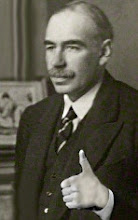
I suspect most readers know who Alvin A. Hansen was. For those who do not, Alvin Hansen was a major US Keynesian economist (albeit of the neoclassical synthesis variety), and some even referred to him as the “American Keynes” for his role in introducing Keynes’s economic ideas to the United States after 1936.

In 1943, Alvin Hansen had a chapter published in a book called Postwar Economic Problems (McGraw-Hill, New York and London, 1943), the same book in which Samuelson’s famous comments on the post-1945 US economy appeared (Samuelson 1943).

Here is Alvin Hansen predicting the post-1945 boom:
“The fact is that many people dread to think of what is coming. Businessmen, wage earners, white-collar employees, professional people, farmers—all alike expect and fear a postwar collapse: demobilization of armies, shutdowns in defense industries, unemployment, deflation, bankruptcy, hard times. Some are hoping for a postwar boom. We got that after the First World War. Not improbably we may get it again. If the war lasts several years, we may have at the end of the war sufficient accumulated shortages in residential housing, in durable consumers’ good such as automobiles, and in the plant and equipment required to supply peacetime consumption demands, to give us a vigorous private investment boom. Indeed, we need to be on the alert to prevent a possible postwar inflation. If in fact we do experience a strong postwar boom, there is, however, the gravest danger that it will lull us to sleep. Sooner or later such a boom will end in a depression unless we are prepared. If appropriate action is taken, there is no necessity for a postwar collapse.” (Hansen 1943: 12–13).
I concede that Hansen’s prediction was a cautious one (“Not improbably we may get it again”). But it was an important prediction nonetheless.

Hansen correctly foresaw that a surge in private investment and consumption owing to the release of demand pent up during the war would drive the post-1945 economy.

He also correctly foresaw that this boom would end in a slump. That did occur from November 1948 to October 1949.

The US government stepped in after 1948 to provide macroeconomic stability, as Hansen said it would. Truman’s budget surplus of 4.6% of GDP in fiscal year 1948 fell to 0.2% in fiscal year 1949, as spending went from $29.8 billion in 1948 to $38.8 billion in 1949, as automatic stabilizers kicked in. In fiscal year 1950 (July 1, 1949 to June 30 1950), the budget went into an actual deficit of 1.1% of GDP. Moreover, Congress had pushed through a tax cut in 1948, which boosted private spending in 1949.

What we have here is classic Keynesian countercyclical fiscal policy. Some of the increases from 1950–1953 were, of course, related to the Korean war, but also to new social, welfare and military programs enacted under Truman. Government spending in both absolute terms and as a percentage of GDP surged from 1948 to 1953, fell slightly from 1953–1954 as the Korean war ended, but remained between about 25% and 30% of GDP throughout the classic era of Keynesian economics (1945–1973) – an unprecedented level to that point in American history. And the economy boomed.

The Austrian Thomas E. Woods tells us that “Keynesian economists everywhere [sc. were] predicting disaster and depression [sc. after 1945].” Everywhere? That is tommyrot.

In 1943, Keynes was giving a lecture at the Federal Reserve and was asked by Abba Lerner about the possible economic problems of the post-war period. Keynes also predicted a post war boom:
“Keynes harshly rejected the risk of post-war stagnation, holding that because of Social security there would be a large reduction in private saving and so that would be no problem.” (Colander and Landreth 1996: 202).
But it is no surprise that the opinions of Keynes himself, Hansen and also Richard M. Bissell (actually cited in Samuelson 1943: 53, n. 1) are airbrushed out of the grossly distorted Austrian view of this period.


BIBLIOGRAPHY

Colander, D. C. and H. Landreth (eds). 1996. The Coming of Keynesianism to America: Conversations with the Founders of Keynesian Economics, E. Elgar, Cheltenham.

Hansen, Alvin A. 1943. “The Postwar Economy,” in Seymour E. Harris (ed.), Postwar Economic Problems, McGraw-Hill, New York and London. 9–26.

Samuelson, Paul A. 1943. “Full Employment after the War,” in Seymour E. Harris (ed.), Postwar Economic Problems, McGraw-Hill, New York and London. 27–53.