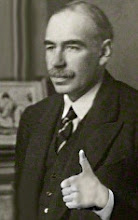
Thomas I. Palley gives a lecture on Post Keynesian economics below, a talk which he gave at the FMM Conference, The Spectre of Stagnation? Europe in the World Economy, in October 2015 in Berlin.
Showing posts with label Post Keynesian Economics. Show all posts
Showing posts with label Post Keynesian Economics. Show all posts
Saturday, July 16, 2016

Thursday, July 7, 2016
A Heterodox and Post Keynesian Bibliography on Trade Theory
I include the odd useful and relevant neoclassical work too.
I will update on a regular basis:
I will update on a regular basis:
Baiman, R. 2010. “The Infeasibility of Free Trade in Classical Theory: Ricardo’s Comparative Advantage Parable has No Solution,” Review of Political Economy 22.3: 419–437.Some other work that looks interesting:
Bairoch, Paul. 1993. Economics and World History: Myths and Paradoxes. Harvester Wheatsheaf, New York and London.
Brewer, A. 1985. “Trade with Fixed Real Wages and Mobile Capital,” Journal of International Economics 18: 177–186.
Chang, Ha-Joon. 2002. Kicking Away the Ladder: Development Strategy in Historical Perspective. Anthem Press, London.
Chang, Ha-Joon. 2008. Bad Samaritans: Rich Nations, Poor Policies, and the Threat to the Developing World. Random House Business, London.
Cripps, Francis and Wynne Godley. 1978. “Control of Imports as a Means to Full Employment and the Expansion of World Trade: The UK’s Case,” Cambridge Journal of Economics 2.3: 327–334.
Davidson, Paul. 2011. Post Keynesian Macroeconomic Theory: Foundation for Successful Economic Policies for the Twenty-First Century (2nd edn). Edward Elgar Publishing, Cheltenham. pp. 249–256.
Davidson, Paul. 2015. “Is International Free Trade always Beneficial?,” in Paul Davidson, Post Keynesian Theory and Policy: A Realistic Analysis of the Market Oriented Capitalist Economy. Edward Elgar, Cheltenham, UK. 124–135.
Duffield, J. 2010. ‘Ricardian ‘Comparative Advantage’ is Illusory,” Real-World Economics Review 54 (27 September). 62–78.
http://www.paecon.net/PAEReview/issue54/Duffield54.pdf
Fletcher, Ian. 2011. Free Trade Doesn’t Work: What Should Replace It and Why (2nd edn.). Coalition for a Prosperous America, Sheffield, MA.
Hudson, Michael. 2010. America’s Protectionist Takeoff, 1815–1914: The Neglected American School of Political Economy (new edn.). Islet, Dresden.
Kaldor, Nicholas. 1978. “The Nemesis of Free Trade,” in N. Kaldor, Further Essays on Applied Economics. Duckworth, London. 234–241.
Kaldor, Nicholas. 1980. “The Foundations of Free Trade Theory and their Implications for the Current World Recession,” in E. Malinvaud and J. P. Fitoussi (eds), Unemployment in Western Countries. MacMillan Press, London. 85–100.
Kaldor, Nicholas. 1981. “The Role of Increasing Returns, Technical Progress and Cumulative Causation in the Theory of International Trade and Economic Growth,” Économie Appliquée 34.4: 593–617.
Kaldor, Nicholas. 1985. Economics Without Equilibrium. M.E. Sharpe, Armonk, N.Y. pp. 68–75.
Kaldor, Nicholas. 1996. Causes of Growth and Stagnation in the World Economy. Cambridge University Press, Cambridge.
King, John Edward. 2013. David Ricardo. Palgrave Macmillan, Basingstoke, UK. pp. 81–88, 104–106.
Lavoie, Marc. 2014. Post-Keynesian Economics: New Foundations. Edward Elgar, Cheltenham. pp. 507–512.
Norman, Neville R. 1996. “A General Post Keynesian Theory of Protection,” Journal of Post Keynesian Economics 18.4: 509–531.
Palley, Thomas I. “The Free Trade Debate: A Left Keynesian Gaze.”
http://www.thomaspalley.com/docs/articles/international_markets/freetrade_debate.pdf
Palley, Thomas I. 2008. “Institutionalism and New Trade Theory: Rethinking Comparative Advantage and Trade Policy,” Journal of Economic Issues 42.1: 195–208.
Parrinello, S. 2006. “National Competitiveness and Absolute Advantage in a Global Economy,” Dipartimento di Economia pubblica, Working paper 95, University of Rome “La Sapienza.”
Prasch, Robert E. 1995. “Reassessing Comparative Advantage: The Impact of Capital Flows on the Argument for Laissez-Faire,” Journal of Economic Issues 29.2: 427–433.
Prasch, Robert E. 1996. “Reassessing the Theory of Comparative Advantage,” Review of Political Economy 8.1: 37–56.
Pullen, John. 2006. “Did Ricardo really have a Law of Comparative Advantage? A Comparison of Ricardo’s Version and the Modern Version,” History of Economics Review 44: 59–75.
Robinson, Joan. 1973. “The Need for a Reconsideration of the Theory of International Trade,” in M. B. Connolly and A. K. Swoboda (eds.), International Trade and Money: The Geneva Essays. Allen and Unwin, London. 15–25.
Robinson, Joan. 1974. Reflections on the Theory of International Trade. The University Press, Manchester.
Robinson, Joan. 1977. “What Are the Questions?,” Journal of Economic Literature 15.4: 1318–1339, at 1333–1336.
Robinson, Joan. 1979. Aspects of Development and Underdevelopment. Cambridge University Press, Cambridge and New York.
Ruffin, Roy J. 2002. “David Ricardo’s Discovery of Comparative Advantage,” History of Political Economy 34.4: 727–748.
Shaikh, A. 2007. “Globalization and the Myth of Free Trade,” in A. Shaikh (ed.), Globalization and the Myths of Free Trade: History, Theory, and Empirical Evidence. Routledge, London 50–68.
Meoqui, Jorge Morales. 2011. “Comparative Advantage and the Labor Theory of Value,” History of Political Economy 43.4: 743–763.
Steedman, I. 1999. “Production of Commodities by Means of Commodities and the Open Economy,” Metroeconomica 50.3: 260–276.
Meoqui, Jorge Morales. 2016. “Ricardo’s Numerical Example versus Ricardian Trade Model: A Comparison of Two Distinct Notions of Comparative Advantage,” July
http://etdiscussion.worldeconomicsassociation.org/?wea_paper=ricardos-numerical-example-versus-ricardian-trade-model-a-comparison-of-two-distinct-notions-of-comparative-advantage
Schumacher, Reinhard. 2012. Free Trade and Absolute and Comparative Advantage: A Critical Comparison of Two Major Theories of International Trade. Universitätsverlag Potsdam, Potsdam.
Thursday, January 28, 2016
Another Introduction to Post Keynesian Economics by Engelbert Stockhammer
Another lecture by Engelbert Stockhammer on the basics of Post Keynesian economics.
Wednesday, September 30, 2015
Post Keynesian Economics: A Bibliography of Recent Introductory and Advanced Books (Updated)
Books on Post Keynesian economics and Modern Monetary Theory (MMT) appear every year, but over the past 9 years or so – especially after the financial crisis of 2008 – there seems to have been an embarrassment of riches in that many very good introductory and advanced books have appeared.
I update below my earlier list of these recent books:
“A Bibliography on the History of Post Keynesian Economics (updated),” September 6, 2014.
“Post Keynesian Textbooks,” July 5, 2011.
“Bibliography on Post Keynesian Economics,” July 6, 2011.
“Bibliography on Post Keynesian Methodology,” September 16, 2013.
“Bibliography on Keynes’s Theory of Probability (Updated),” July 6, 2014.
“Bibliography on Uncertainty in Post Keynesian Economics (Updated),” May 21, 2014.
BIBLIOGRAPHY
King, J. E. (ed.). 2003. The Elgar Companion to Post Keynesian Economics. Edward Elgar, Cheltenham, UK and Northhampton, MA.
Keen, S. 2001. Debunking Economics: The Naked Emperor of the Social Sciences. Zed Books, New York and London.
Lavoie, Marc. 1992. Foundations of Post-Keynesian Economic Analysis. Edward Elgar Publishing, Aldershot, UK.
I update below my earlier list of these recent books:
Introductory StudiesFurther Reading
Davidson, Paul. 2009. The Keynes Solution: The Path to Global Economic Prosperity (1st edn). Palgrave Macmillan, New York and Basingstoke.
Lavoie, Marc. 2009. Introduction to Post-Keynesian Economics (2nd rev. edn.). Palgrave Macmillan, Basingstoke, UK.
Skidelsky, R. J. A. 2010. Keynes: The Return of the Master (rev. and updated edn.). Penguin, London.
King, J. E. 2012. The Elgar Companion to Post Keynesian Economics (2nd edn.). Edward Elgar, Cheltenham.
This is the second and updated edition of this work (1st edn. King 2003) that gives excellent short essays and overviews of all major subjects in Post Keynesian economics. This is a splendid first port of call for any research, especially for the beginner.
Wray, L. Randall. 2012. Modern Money Theory: A Primer on Macroeconomics for Sovereign Monetary Systems. Palgrave Macmillan, New York.
King, John E. 2015. Advanced Introduction to Post Keynesian Economics. Edward Elgar, Cheltenham.
An advanced introduction to Post Keynesian economics by John E. King, whose work is always outstanding. Publisher details and the contents can be seen here. In particular, Chapter 8 is a discussion of the global financial crises of 2008 as interpreted in Post Keynesian theory.
Advanced and Specialist Literature
Hayes, Mark. 2006. The Economics of Keynes: A New Guide to The General Theory. Edward Elgar, Cheltenham.
Tily, Geoff. 2007. Keynes Betrayed: Keynes’s General Theory, The Rate of Interest and Keynesian Economics. Palgrave Macmillan, New York.
Godley, Wynne and Marc Lavoie. 2007. Monetary Economics: An Integrated Approach to Credit, Money, Income, Production and Wealth. Palgrave Macmillan, New York, N.Y.
Mitchell, William and Joan Muysken. 2008. Full Employment Abandoned: Shifting Sands and Policy Failures. Edward Elgar, Cheltenham.
Davidson, Paul. 2009. John Maynard Keynes (rev. edn.). Palgrave Macmillan, Basingstoke.
Hein, Eckhard and Engelbert Stockhammer (eds.). 2011. A Modern Guide to Keynesian Macroeconomics and Economic Policies. Edward Elgar, Cheltenham.
A recent collection of essays on many different subjects.
Keen, Steve. 2011. Debunking Economics: The Naked Emperor Dethroned? (rev. and expanded edn.). Zed Books, London and New York.
This is the revised and updated version of Keen’s earlier work (Keen 2001).
Davidson, Paul. 2011. Post Keynesian Macroeconomic Theory: Foundation for Successful Economic Policies for the Twenty-First Century (2nd edn). Edward Elgar Publishing, Cheltenham.
Harcourt, G. C. and Peter Kriesler (eds.). 2013. The Oxford Handbook of Post-Keynesian Economics. Volume 1: Theory and Origins. Oxford University Press, New York.
Harcourt, G. C. and Peter Kriesler (eds.). 2013. The Oxford Handbook of Post-Keynesian Economics. Volume 2: Critiques and Methodology. Oxford University Press, New York.
A two volume collection of essays and advanced overviews of many different issues in Post Keynesian economics.
Lee, Frederic S. and Marc Lavoie (eds.). 2013. In Defense of post-Keynesian and Heterodox Economics: Responses to their Critics. Routledge, London.
Jespersen, Jesper and Mogens Ove Madsen (eds.). 2013. Teaching Post Keynesian Economics. Edward Elgar, Cheltenham, UK.
A collection of papers by leading Post Keynesian economists.
Lavoie, Marc. 2014. Post-Keynesian Economics: New Foundations. Edward Elgar, Cheltenham.
This is the newly updated and expanded version of Lavoie’s earlier work (Lavoie 1992). It runs to 680 pages, and is possibly the best and most authoritative work available.
Davidson, Paul. 2015. Post Keynesian Theory and Policy: A Realistic Analysis of the Market Oriented Capitalist Economy. Edward Elgar Publishing, Cheltenham, UK.
Mitchell, Bill and L. Randall Wray. Modern Monetary Theory and Practice (forthcoming, 2015).
This textbook on MMT is forthcoming. There is a table of contents here.
“A Bibliography on the History of Post Keynesian Economics (updated),” September 6, 2014.
“Post Keynesian Textbooks,” July 5, 2011.
“Bibliography on Post Keynesian Economics,” July 6, 2011.
“Bibliography on Post Keynesian Methodology,” September 16, 2013.
“Bibliography on Keynes’s Theory of Probability (Updated),” July 6, 2014.
“Bibliography on Uncertainty in Post Keynesian Economics (Updated),” May 21, 2014.
BIBLIOGRAPHY
King, J. E. (ed.). 2003. The Elgar Companion to Post Keynesian Economics. Edward Elgar, Cheltenham, UK and Northhampton, MA.
Keen, S. 2001. Debunking Economics: The Naked Emperor of the Social Sciences. Zed Books, New York and London.
Lavoie, Marc. 1992. Foundations of Post-Keynesian Economic Analysis. Edward Elgar Publishing, Aldershot, UK.
Sunday, March 1, 2015
Steve Keen on Greece, Austerity, and Post Keynesian Economics
Steve Keen recently gave a talk on Greece, austerity, and Post Keynesian economics for the Rethinking Economics student association at the London School of Economics. You can get more background and lecture slides here. The video is below.
Thursday, October 23, 2014
Engelbert Stockhammer on Post Keynesian Economics: An Introduction
Engelbert Stockhammer gives a talk below which is an introduction to Post Keynesian economics, given on the 29 June at the Rethinking Economics Conference in London (28–29 June, 2014).
Wednesday, October 1, 2014
Philip Pilkington on the Natural Rate of Interest
In a great Levy Institute working paper here:
The paper looks at endogenous money theory and the deficient and flawed way this was been incorporated into the “New Consensus Macroeconomics” (mainstream neoclassical theory), through the use of the natural rate of interest.
Philip Pilkington, “Endogenous Money and the Natural Rate of Interest,” Levy Institute Working Paper No. 817, September 2014.More background here.
The paper looks at endogenous money theory and the deficient and flawed way this was been incorporated into the “New Consensus Macroeconomics” (mainstream neoclassical theory), through the use of the natural rate of interest.
Friday, September 26, 2014
Post Keynesian Economics: A Bibliography of Recent Introductory and Advanced Books
Of course, books on Post Keynesian economics appear every year, but over the past 8 years or so – especially after the financial crisis of 2008 – there seems to have been an embarrassment of riches in that many very good introductory and advanced books have appeared.
I provide a sample below:
Also, Bill Mitchell and L. Randall Wray have a forthcoming book called Modern Monetary Theory and Practice (forthcoming, 2015).
Further Reading
“A Bibliography on the History of Post Keynesian Economics (updated),” September 6, 2014.
“Post Keynesian Textbooks,” July 5, 2011.
“Bibliography on Post Keynesian Economics,” July 6, 2011.
“Bibliography on Post Keynesian Methodology,” September 16, 2013.
“Bibliography on Keynes’s Theory of Probability (Updated),” July 6, 2014.
“Bibliography on Uncertainty in Post Keynesian Economics (Updated),” May 21, 2014.
BIBLIOGRAPHY
King, J. E. (ed.). 2003. The Elgar Companion to Post Keynesian Economics. Edward Elgar, Cheltenham, UK and Northhampton, MA.
Keen, S. 2001. Debunking Economics: The Naked Emperor of the Social Sciences. Zed Books, New York and London.
Lavoie, Marc. 1992. Foundations of Post-Keynesian Economic Analysis. Edward Elgar Publishing, Aldershot, UK.
I provide a sample below:
Introductory StudiesPhilip Pilkington also has a forthcoming book called Reformation in Economics (more on that here).
Davidson, Paul. 2009. The Keynes Solution: The Path to Global Economic Prosperity (1st edn). Palgrave Macmillan, New York and Basingstoke.
Lavoie, Marc. 2009. Introduction to Post-Keynesian Economics (2nd rev. edn.). Palgrave Macmillan, Basingstoke, UK.
Skidelsky, R. J. A. 2010. Keynes: The Return of the Master (rev. and updated edn.). Penguin, London.
King, J. E. 2012. The Elgar Companion to Post Keynesian Economics (2nd edn.). Edward Elgar, Cheltenham.
This is the second and updated edition of this work (1st edn. King 2003) that gives excellent short essays and overviews of all major subjects in Post Keynesian economics. This is a splendid first port of call for any research, especially for the beginner.
Advanced and Specialist Literature
Hayes, Mark. 2006. The Economics of Keynes: A New Guide to The General Theory. Edward Elgar, Cheltenham.
Tily, Geoff. 2007. Keynes Betrayed: Keynes’s General Theory, The Rate of Interest and Keynesian Economics. Palgrave Macmillan, New York.
Godley, Wynne and Marc Lavoie. 2007. Monetary Economics: An Integrated Approach to Credit, Money, Income, Production and Wealth. Palgrave Macmillan, New York, N.Y.
Mitchell, William and Joan Muysken. 2008. Full Employment Abandoned: Shifting Sands and Policy Failures. Edward Elgar, Cheltenham.
Davidson, Paul. 2009. John Maynard Keynes (rev. edn.). Palgrave Macmillan, Basingstoke.
Hein, Eckhard and Engelbert Stockhammer (eds.). 2011. A Modern Guide to Keynesian Macroeconomics and Economic Policies. Edward Elgar, Cheltenham.
A recent collection of essays on many different subjects.
Keen, Steve. 2011. Debunking Economics: The Naked Emperor Dethroned? (rev. and expanded edn.). Zed Books, London and New York.
This is the revised and updated version of Keen’s earlier work (Keen 2001).
Davidson, Paul. 2011. Post Keynesian Macroeconomic Theory: Foundation for Successful Economic Policies for the Twenty-First Century (2nd edn). Edward Elgar Publishing, Cheltenham.
Harcourt, G. C. and Peter Kriesler (eds.). 2013. The Oxford Handbook of Post-Keynesian Economics. Volume 1: Theory and Origins. Oxford University Press, New York.
Harcourt, G. C. and Peter Kriesler (eds.). 2013. The Oxford Handbook of Post-Keynesian Economics. Volume 2: Critiques and Methodology. Oxford University Press, New York.
A two volume collection of essays and advanced overviews of many different issues in Post Keynesian economics.
Lavoie, Marc. 2014. Post-Keynesian Economics: New Foundations. Edward Elgar, Cheltenham.
This is the newly updated and expanded version of Lavoie’s earlier work (Lavoie 1992). It runs to 680 pages, and is possibly the best and most authoritative work available.
Also, Bill Mitchell and L. Randall Wray have a forthcoming book called Modern Monetary Theory and Practice (forthcoming, 2015).
Further Reading
“A Bibliography on the History of Post Keynesian Economics (updated),” September 6, 2014.
“Post Keynesian Textbooks,” July 5, 2011.
“Bibliography on Post Keynesian Economics,” July 6, 2011.
“Bibliography on Post Keynesian Methodology,” September 16, 2013.
“Bibliography on Keynes’s Theory of Probability (Updated),” July 6, 2014.
“Bibliography on Uncertainty in Post Keynesian Economics (Updated),” May 21, 2014.
BIBLIOGRAPHY
King, J. E. (ed.). 2003. The Elgar Companion to Post Keynesian Economics. Edward Elgar, Cheltenham, UK and Northhampton, MA.
Keen, S. 2001. Debunking Economics: The Naked Emperor of the Social Sciences. Zed Books, New York and London.
Lavoie, Marc. 1992. Foundations of Post-Keynesian Economic Analysis. Edward Elgar Publishing, Aldershot, UK.
Monday, September 15, 2014
Why is the Quantity Theory of Money Wrong and can Anything be Salvaged from it?
The quantity theory of money states that when the money supply expands or contracts, this is the cause – when other variables are constant – of proportional or equal changes in the price level.
In the quantity theory, the direction of causation therefore runs from the money supply to the price level, the money supply is assumed to be exogenous, and the money supply function independent in the sense described by Colin Rogers (1989: 244–245).
The standard form of the Cambridge Cash Balance Equation as used today is usually given as follows:
Therefore M and P are causally related, if kd and Y are constant (Thirlwall 1999).
I will use the Cambridge Cash Balance Equation in what follows.
Post Keynesians say that the quantity theory is not true for modern advanced capitalist economies, where money is largely endogenous.
Perhaps it might be true for an economy with pure commodity money and an exogenous supply, as Colin Rogers (1989: 175, 244) argues, but even here the idea that the relationship between money supply and price level, even if kd and Y are constant, must necessarily and always be proportional in a real world economy, as compared with an analytic mathematical equation true merely by definition, seems questionable.
Of course, advocates of the quantity theory will appeal to the econometric evidence. Doesn’t this prove their case? Not really. A review of the econometric evidence, as, for example, in a good study like Grauwe and Polan (2005) shows that it is a mixed bag, at best. Some studies show a proportional relationship (e.g., Vogel 1974), but others do not, but merely demonstrate a strong positive correlation (Grauwe and Polan 2005; McCandless and Weber 1995; Dwyer and Hafer 1988). Supporters of the quantity theory respond by saying that, if the data does not show a proportional relationship, then by definition kd and Y must have changed. The trouble is that this starts to render the quantity theory a tautology – the sort of mathematical or analytic a priori statement immune from empirical verification or falsification, because it is not in fact an empirical statement at all.
In reality, there are deeper empirical criticisms of the quantity theory than the mixed evidence on proportionality, because the quantity theory requires certain prior assumptions for the theory to work.
But, before we get to these criticisms, what can be salvaged from the quantity theory?
It is true that the quantity theory captures some basic truths. These are as follows:
But when quantity theorists say that “inflation is always and everywhere a monetary phenomenon” (Friedman 1968: 98) they mean something more than just the basic ideas expressed above.
The crucial issues as raised by the quantity theory as part of its assumptions are:
Quantity theorists are asserting that a truly independent and exogenous money supply is the causal driver of inflation and deflation.
So why do Post Keynesians reject the quantity theory?
The first and most important point is that the modern money supply is endogenous.
What this means is that normally broad money creation is credit-driven. That is, most money is created by private banks and its quantity is determined by the private demand for it. This is the essence of endogenous money. In an endogenous money system, even the “monetary base” is normally endogenous too, given that the central bank must accommodate the banks’ demand for high-powered money to avoid financial crises and banking panics.
So what of question (1) above?
Post Keynesians contend that a truly independent money supply function does not actually exist in an endogenous money world, because credit money comes into existence because it has been demanded (Rogers 1989: 244–245). So the broad money supply is not independent of money demand, but can be demand-led (Ingham 2004: 53).
Next, what of question (2)?
There is considerable evidence that money can never be neutral, not even in the long run. The concept of neutral money holds that changes in the money supply will only affect nominal values (e.g., money prices, nominal money wages, etc.), not real variables (such as production, employment, and investment). Nevertheless, neoclassical economists accept the evidence that price and wage rigidity is a strong characteristic of the real world. They must then assume that prices and wages are sufficiently flexible in the long run, and that they really do adjust in the long period. The trouble is that there is little evidence for this. Most prices are mark-up prices and relatively inflexible with respect to demand changes in both the short and long run. Most capitalist economies are far from full use of resources, and even in booms businesses make use of stocks and capacity utilisation to manage demand changes, rather than changes in prices.
The mysterious long-run flexibility does not seem to be visible in the data, and the long run is just a sequence of short-run periods anyway.
A further complication is that nominal variables can also be found in contracts, such as debts, production orders, or forward contracts, but these are precisely the things that will not necessarily change when the money supply changes.
And, even if you assume an exogenous money supply, a direction of causation from left to right, and reasonably flexible prices, there will still be Cantillon effects, the phenomenon that price level changes caused by increases in the quantity of money depend on the way new money is injected into the economy, and actually where it affects prices first. That is to say, although prices rise as the exogenous quantity of money increases, contrary to the quantity theory of money, we should not expect prices to rise proportionally, but in a complex manner that depends on who received the money and how they spent it (this idea, as it happens, is used by Austrians as the basis of their own criticism of the quantity theory.)
Finally, what of question (3), concerning the direction of causation?
Under an endogenous money system, the direction of causation is generally from credit demand (via business loans to finance labour and other factor inputs) to money supply increases (Robinson 1970; Davidson and Weintraub 1973).
Therefore the direction of causation generally runs:
This crucial point about the direction of causation in the relationship between money supply and output/prices is discussed by Joan Robinson:
In short, money is generally the effect, not the cause.
Finally, what drives an inflation can be complex, and there is no simple, monocausal explanation. Often inflations are a cost-push phenomenon, in which
Further Reading
“Richard Werner on ‘The Quantity Theory of Credit,’” April 13, 2013.
“Endogenous Money 101,” April 20, 2013.
“Rochon and Rossi on the History of Endogenous Money,” May 4, 2013.
“Endogenous Money under the Gold Standard,” May 19, 2013.
“Some Empirical Evidence on Endogenous Money,” May 27, 2013.
“Empirical Evidence on Endogenous Money,” August 10, 2013.
“The Quantity Theory of Money is Wrong,” August 7, 2013.
“How is New Bank Money Created?,” March 22, 2014.
“Hans Albert on the Quantity Theory of Money,” March 2, 2014.
“Joan Robinson on the Quantity Theory of Money,” March 3, 2014.
“Bob Murphy on 1970s Inflation,” April 24, 2014.
“The Various Versions of the Quantity Theory,” September 12, 2014.
BIBLIOGRAPHY
Davidson, Paul and Sidney Weintraub. 1973. “Money as Cause and Effect,” The Economic Journal 83.332: 1117–1132.
Dwyer, G. P. and R.W. Hafer. 1988. “Is Money Irrelevant?,” Federal Reserve Bank of St. Louis Review 70: 3–17.
Friedman. M. 1963. Inflation: Causes and Consequences. Asia Publishing House, New York.
Friedman, M. 1968. “Inflation: Causes and Consequences,” in M. Friedman, Dollars and Deficits. Prentice-Hall, Englewood Cliffs, NJ.
Grauwe, P. De and M. Polan. 2005. “Is Inflation Always and Everywhere a Monetary Phenomenon?,” Scandinavian Journal of Economics 107: 239–259.
Ingham, G. 2004. The Nature of Money. Polity, Cambridge, UK and Malden, MA.
Kaldor, N. 1970. “The New Monetarism,” Lloyds Bank Review (July): 1–17.
McCandless, G. T. and W. E. Weber. 1995. “Some Monetary Facts,” Federal Reserve Bank of Minneapolis Quarterly Review 19.3: 2–11.
Moore, B. 2003. “Endogenous Money,” in J. E. King (ed.), The Elgar Companion to Post Keynesian Economics. Edward Elgar, Cheltenham. 117–121.
Robinson, Joan. 1970. “Quantity Theories Old and New: Comment,” Journal of Money, Credit and Banking 2.4: 504–512.
Rogers, Colin. 1989. Money, Interest and Capital: A Study in the Foundations of Monetary Theory. Cambridge University Press, Cambridge.
Thirlwall, A. P. 1999. “Monetarism,” in P. Anthony O’Hara (ed.), Encyclopedia of Political Economy: L–Z. Routledge, London and New York. 750–753.
In the quantity theory, the direction of causation therefore runs from the money supply to the price level, the money supply is assumed to be exogenous, and the money supply function independent in the sense described by Colin Rogers (1989: 244–245).
The standard form of the Cambridge Cash Balance Equation as used today is usually given as follows:
M = kPY orIn the Cambridge approach, the variable k was held to be superior to Irving Fisher’s “velocity of circulation” concept V, because, unlike V, k is supposed to be empirically measurable.
M = kd PY
where M = the quantity of money;
k or kd = the amount of money held as cash or money balances;
P = the general price level;
Y = real value of the volume of all transactions entering into the value of national income (that is, goods and services).
Therefore M and P are causally related, if kd and Y are constant (Thirlwall 1999).
I will use the Cambridge Cash Balance Equation in what follows.
Post Keynesians say that the quantity theory is not true for modern advanced capitalist economies, where money is largely endogenous.
Perhaps it might be true for an economy with pure commodity money and an exogenous supply, as Colin Rogers (1989: 175, 244) argues, but even here the idea that the relationship between money supply and price level, even if kd and Y are constant, must necessarily and always be proportional in a real world economy, as compared with an analytic mathematical equation true merely by definition, seems questionable.
Of course, advocates of the quantity theory will appeal to the econometric evidence. Doesn’t this prove their case? Not really. A review of the econometric evidence, as, for example, in a good study like Grauwe and Polan (2005) shows that it is a mixed bag, at best. Some studies show a proportional relationship (e.g., Vogel 1974), but others do not, but merely demonstrate a strong positive correlation (Grauwe and Polan 2005; McCandless and Weber 1995; Dwyer and Hafer 1988). Supporters of the quantity theory respond by saying that, if the data does not show a proportional relationship, then by definition kd and Y must have changed. The trouble is that this starts to render the quantity theory a tautology – the sort of mathematical or analytic a priori statement immune from empirical verification or falsification, because it is not in fact an empirical statement at all.
In reality, there are deeper empirical criticisms of the quantity theory than the mixed evidence on proportionality, because the quantity theory requires certain prior assumptions for the theory to work.
But, before we get to these criticisms, what can be salvaged from the quantity theory?
It is true that the quantity theory captures some basic truths. These are as follows:
(1) a long-run, sustained price inflation does need a growing money supply to sustain it;To be clear, the issue is not whether an expanding money supply is necessary for a sustained, long-run price inflation. An expanding money supply is indeed a necessary, but not sufficient, condition for price inflation.
(2) so in view of (1), it is not at all surprising that the econometric literature often finds a strong or very strong positive correlation between the money supply changes and price level changes (Grauwe and Polan 2005; McCandless and Weber 1995; Dwyer and Hafer 1988).
(3) it is also true that deflations are often correlated with a falling money supply or decelerations in money supply growth.
But when quantity theorists say that “inflation is always and everywhere a monetary phenomenon” (Friedman 1968: 98) they mean something more than just the basic ideas expressed above.
The crucial issues as raised by the quantity theory as part of its assumptions are:
(1) is the money supply exogenously determined, and is there an independent money supply function?A crucial issue is (1) above: is there an exogenous, independent money supply? Is it the primary, causal origin of changes in the price level?
(2) is the assumption of long-run money neutrality as required for the quantity theory to work a realistic one? (It is true that some naïve versions of the quantity theory would assume even a short-run neutrality, but most modern neoclassical economists are realistic enough to recognise the strong degree of nominal price and wage rigidity that exists in modern economies, which, they admit, causes short-run money non-neutrality.)
(3) is the direction of causation as assumed in the quantity theory equation from left to right (that is, from the money supply to the price level)? That is to say, it is really an exogenously-determined money supply that is the fundamental cause, or driver, of price level changes?
Quantity theorists are asserting that a truly independent and exogenous money supply is the causal driver of inflation and deflation.
So why do Post Keynesians reject the quantity theory?
The first and most important point is that the modern money supply is endogenous.
What this means is that normally broad money creation is credit-driven. That is, most money is created by private banks and its quantity is determined by the private demand for it. This is the essence of endogenous money. In an endogenous money system, even the “monetary base” is normally endogenous too, given that the central bank must accommodate the banks’ demand for high-powered money to avoid financial crises and banking panics.
So what of question (1) above?
Post Keynesians contend that a truly independent money supply function does not actually exist in an endogenous money world, because credit money comes into existence because it has been demanded (Rogers 1989: 244–245). So the broad money supply is not independent of money demand, but can be demand-led (Ingham 2004: 53).
Next, what of question (2)?
There is considerable evidence that money can never be neutral, not even in the long run. The concept of neutral money holds that changes in the money supply will only affect nominal values (e.g., money prices, nominal money wages, etc.), not real variables (such as production, employment, and investment). Nevertheless, neoclassical economists accept the evidence that price and wage rigidity is a strong characteristic of the real world. They must then assume that prices and wages are sufficiently flexible in the long run, and that they really do adjust in the long period. The trouble is that there is little evidence for this. Most prices are mark-up prices and relatively inflexible with respect to demand changes in both the short and long run. Most capitalist economies are far from full use of resources, and even in booms businesses make use of stocks and capacity utilisation to manage demand changes, rather than changes in prices.
The mysterious long-run flexibility does not seem to be visible in the data, and the long run is just a sequence of short-run periods anyway.
A further complication is that nominal variables can also be found in contracts, such as debts, production orders, or forward contracts, but these are precisely the things that will not necessarily change when the money supply changes.
And, even if you assume an exogenous money supply, a direction of causation from left to right, and reasonably flexible prices, there will still be Cantillon effects, the phenomenon that price level changes caused by increases in the quantity of money depend on the way new money is injected into the economy, and actually where it affects prices first. That is to say, although prices rise as the exogenous quantity of money increases, contrary to the quantity theory of money, we should not expect prices to rise proportionally, but in a complex manner that depends on who received the money and how they spent it (this idea, as it happens, is used by Austrians as the basis of their own criticism of the quantity theory.)
Finally, what of question (3), concerning the direction of causation?
Under an endogenous money system, the direction of causation is generally from credit demand (via business loans to finance labour and other factor inputs) to money supply increases (Robinson 1970; Davidson and Weintraub 1973).
Therefore the direction of causation generally runs:
(1) business demand for credit (to pay for goods and labour factor inputs, whose prices may have risen against previous production periods) + demand for demand depositsChanges in the general price level are a highly complex result of many factors, and not some simple function of money supply.
→ (2) increases in broad money
→ (3) banks’ demand for more reserves (high-powered money) when they need to clear obligations.
→ (4) the central bank creates the needed reserves.
This crucial point about the direction of causation in the relationship between money supply and output/prices is discussed by Joan Robinson:
“The correlations to be explained [sc. in the relationship between money supply and real output] could be set out in quantity theory terms if the equation were read right-handed. Thus we might suggest that a marked rise in the level of activity is likely to be preceded by an increase in the supply of money (if M is widely defined) or in the velocity of circulation (if M is narrowly defined) because a rise in the wage bill and in borrowing for working capital is likely to precede an increase in the value of output appearing in the statistics. Or that a fall in activity sharp enough to cause losses deprives the banks of credit-worthy borrowers and brings a contraction in their position. But the tradition of Chicago consists in reading the equation from left to right. Then the observed relations are interpreted without any hypothesis at all except post hoc ergo propter hoc.” (Robinson 1970: 510–511).So what we can say is that – in contrast to the quantity theory – money supply changes are often the effect of changes in credit demand, production and economic activity, and not the cause of the latter phenomena.
In short, money is generally the effect, not the cause.
Finally, what drives an inflation can be complex, and there is no simple, monocausal explanation. Often inflations are a cost-push phenomenon, in which
(1) workers or unions demand higher wages and businesses agree to these increases and/orSo inflation might be driven by demand for higher wages or supply-side factors. Hence broad money supply growth rates rise in an endogenous money world which generally accommodates the demand for credit, but this rise precedes further price increases because businesses will generally raise mark-up prices to maintain profit margins at a later time, given that most firms engage in time-dependent reviews and changes of their prices at regular intervals. In extreme situations, a wage–price spiral might break out: this involves the same process as above but in a vicious circle.
(2) prices of other factor inputs rise, and then businesses will need to obtain higher levels of credit from banks.
Further Reading
“Richard Werner on ‘The Quantity Theory of Credit,’” April 13, 2013.
“Endogenous Money 101,” April 20, 2013.
“Rochon and Rossi on the History of Endogenous Money,” May 4, 2013.
“Endogenous Money under the Gold Standard,” May 19, 2013.
“Some Empirical Evidence on Endogenous Money,” May 27, 2013.
“Empirical Evidence on Endogenous Money,” August 10, 2013.
“The Quantity Theory of Money is Wrong,” August 7, 2013.
“How is New Bank Money Created?,” March 22, 2014.
“Hans Albert on the Quantity Theory of Money,” March 2, 2014.
“Joan Robinson on the Quantity Theory of Money,” March 3, 2014.
“Bob Murphy on 1970s Inflation,” April 24, 2014.
“The Various Versions of the Quantity Theory,” September 12, 2014.
BIBLIOGRAPHY
Davidson, Paul and Sidney Weintraub. 1973. “Money as Cause and Effect,” The Economic Journal 83.332: 1117–1132.
Dwyer, G. P. and R.W. Hafer. 1988. “Is Money Irrelevant?,” Federal Reserve Bank of St. Louis Review 70: 3–17.
Friedman. M. 1963. Inflation: Causes and Consequences. Asia Publishing House, New York.
Friedman, M. 1968. “Inflation: Causes and Consequences,” in M. Friedman, Dollars and Deficits. Prentice-Hall, Englewood Cliffs, NJ.
Grauwe, P. De and M. Polan. 2005. “Is Inflation Always and Everywhere a Monetary Phenomenon?,” Scandinavian Journal of Economics 107: 239–259.
Ingham, G. 2004. The Nature of Money. Polity, Cambridge, UK and Malden, MA.
Kaldor, N. 1970. “The New Monetarism,” Lloyds Bank Review (July): 1–17.
McCandless, G. T. and W. E. Weber. 1995. “Some Monetary Facts,” Federal Reserve Bank of Minneapolis Quarterly Review 19.3: 2–11.
Moore, B. 2003. “Endogenous Money,” in J. E. King (ed.), The Elgar Companion to Post Keynesian Economics. Edward Elgar, Cheltenham. 117–121.
Robinson, Joan. 1970. “Quantity Theories Old and New: Comment,” Journal of Money, Credit and Banking 2.4: 504–512.
Rogers, Colin. 1989. Money, Interest and Capital: A Study in the Foundations of Monetary Theory. Cambridge University Press, Cambridge.
Thirlwall, A. P. 1999. “Monetarism,” in P. Anthony O’Hara (ed.), Encyclopedia of Political Economy: L–Z. Routledge, London and New York. 750–753.
Sunday, April 27, 2014
Academic Journals for Post Keynesian Economics
These are important academic journals for the technical and professional Post Keynesian economics literature:
Most probably, I have missed important ones, and am happy to receive suggestions and additions.
For example, are the Review of Social Economy and Science and Society venues for Post Keynesian economics too? (they are listed as heterodox journals in Lee 2009: 47).
Also of interest are the following resources:
Lee, Frederic S. 2009. A History of Heterodox Economics: Challenging the Mainstream in the Twentieth Century. Routledge, London and New York.
(1) Journal of Post Keynesian Economics;Of course, a number of these journals also publish work in other heterodox traditions, such as non-neoclassical institutionalism and Marxian economics, in addition to Post Keynesian economics.
(2) Review of Keynesian Economics (with the Elgar online page here);
(3) Cambridge Journal of Economics;
(4) Real World Economics Review;
(5) Review of Radical Political Economics;
(6) Journal of Economic Issues.
Most probably, I have missed important ones, and am happy to receive suggestions and additions.
For example, are the Review of Social Economy and Science and Society venues for Post Keynesian economics too? (they are listed as heterodox journals in Lee 2009: 47).
Also of interest are the following resources:
(1) Post Keynesian Economics ForumBIBLIOGRAPHY
(2) Post Keynesian Economics Study Group
Lee, Frederic S. 2009. A History of Heterodox Economics: Challenging the Mainstream in the Twentieth Century. Routledge, London and New York.
Tuesday, April 15, 2014
Post Keynesian Economics: A Revised Diagram
Updated
My revised diagram of the subgroups of Post Keynesian economics.

In this version I have included Joseph Steindl and Kurt Rothschild amongst the Kaleckians.
Unfortunately, some nagging doubts still remain:
In light of the discussion below, I have updated the chart again.

Update 3
My final version of the chart (I hope!), with Evsey Domar added to the Early North American Post Keynesians.

My revised diagram of the subgroups of Post Keynesian economics.

In this version I have included Joseph Steindl and Kurt Rothschild amongst the Kaleckians.
Unfortunately, some nagging doubts still remain:
(1) is there a better way to classify the American Post Keynesians Alfred Eichner and Sidney Weintraub?Update 2
(2) were James E. Meade and E. Austin G. Robinson Post Keynesians or did they basically remain neoclassical synthesis Keynesians?
(3) where should Lorie Tarshis go?
In light of the discussion below, I have updated the chart again.

Update 3
My final version of the chart (I hope!), with Evsey Domar added to the Early North American Post Keynesians.

Thursday, April 10, 2014
Post Keynesian Economics: A Diagram
Another proposed diagram, but this time of the subgroups of Post Keynesian economics.
My classification scheme comes from Marc Lavoie in this fascinating paper here.
My only difference is that I do not regard MMT as part of Institutionalist economics.

Some questions:
“Post Keynesian Economists: A List,” March 1, 2012.
My classification scheme comes from Marc Lavoie in this fascinating paper here.
My only difference is that I do not regard MMT as part of Institutionalist economics.

Some questions:
(1) Should Krishna Bharadwaj, Pierangelo Garegnani and Luigi Pasinetti be included in the Sraffians group or separately as I have done here?Further Reading
(2) Were Roy Harrod, James E. Meade and E. Austin G. Robinson Post Keynesians or did they basically remain neoclassical synthesis Keynesians?
(3) Should Wynne Godley simply be listed as a Kaldorian or separately?
(4) Where should the following Post Keynesians go?:John Eatwell
Lorie Tarshis
Philip Arestis
John Barkley Rosser
Steve Keen
“Post Keynesian Economists: A List,” March 1, 2012.
Sunday, March 9, 2014
No Constants in Human Behaviour?
Consider this passage from Mises:
In fact, there is a deep epistemological problem with all these “laws”: the human action axiom is nothing but a synthetic a posteriori statement. Subsequent “laws” are deduced in a manner that reduces them to mere analytic a priori statements and such statements entail no necessary truths about the real world of human economic life. If they describe general “principles,” those regularities are contingent; they are known empirically; and exceptions do or can in theory exist.
To return to the main point, it follows, then, that Mises certainly must think there are regularities or “constant relations” in a qualitative sense in human behaviour and history, even if there are no strict and universal quantitative ones akin to the speed of light constant in physics.
And we see that this is what Mises thought as interpreted by later Austrians:
But John Maynard Keynes already anticipated this criticism of econometrics: in Keynes’s famous debate with Jan Tinbergen he said very similar things (which can be read in Keynes 1939; Tinbergen 1940; Keynes 1940).
In a letter to Roy Harrod of 10 July 1938, Keynes said this:
Even on the most generous interpretation of Keynes’s opinion of econometrics (O’Donnell 1997: 110–112), while Keynes was not necessarily hostile to the use of mathematics in economics nor to historically specific estimates of variables like the multiplier, he was heavily critical of the idea that certain empirically estimated magnitudes in econometric equations and models were assumed to be constants in the way constants in the natural science were: that is, such magnitudes were not permanently “constant” or “homogeneous through time” like natural scientific constants.
For Keynes, econometrics cannot yield prediction of future economic quantitative variables with objective probability scores in non-ergodic stochastic systems, as, for example, the price of any specific stock on a stock market at some given future date, or what the London Interbank Offered Rate (or Libor) will be in January 2021.
But at that same time it seems that Keynes would not deny that there are observable qualitative regularities, consistencies or trends in human behaviour or economic life, although they are not necessarily stable in the long term.
One must not confuse (1) Keynes’ rejection of fundamental quantitative economic constants (like the speed of light) in economics with (2) the existence of observable qualitative regularities (which do exist).
For example, you cannot make precise quantitative predictions about exactly when a recession will happen and what magnitudes the other relevant variables (such as real output loss and unemployment, etc.) will have with objective probability scores, but a general qualitative inductive inference (with an epistemic, not objective, probability) that it is probable that a recession will follow a boom, on the basis of past experience and the evidence that no radical changes in the current economic system seem likely in the immediate future, is not unreasonable at all.
Further Reading
Lars P Syll, “Keynes’s Critique of Econometrics,” 4 July, 2012
https://larspsyll.wordpress.com/2012/07/04/keyness-critique-of-econometrics/
Philip Pilkington, “Proud to Be a Nihilist: Bill Mitchell on Econometrics and Numerical Prediction,” Fixing the Economists, February 12, 2014
https://fixingtheeconomists.wordpress.com/2014/02/12/proud-to-be-a-nihilist-bill-mitchell-on-econometrics-and-numerical-prediction/
BIBLIOGRAPHY
Keynes, J. M. 1938. Letter: 791. J. M. Keynes to Harrod, 10 July 1938
http://economia.unipv.it/harrod/edition/editionstuff/rfh.34a.htm
Keynes, J. M. 1938. Letter: 787. J. M. Keynes to Harrod , 4 July 1938
http://economia.unipv.it/harrod/edition/editionstuff/rfh.346.htm
Keynes, J. M. 1939. “Official Papers. The League of Nations. Professor Tinbergen’s Method,” The Economic Journal 49.195: 558–577.
Keynes, J. M. 1940. “On a Method of Statistical Business-Cycle Research. A Comment,” The Economic Journal 50.197: 154–156.
Mises, L. 2008. Human Action: A Treatise on Economics. The Scholar’s Edition. Mises Institute, Auburn, Ala.
Murphy, Robert P. and Amadeus Gabriel. 2008. Study Guide to Human Action. A Treatise on Economics: Scholar’s Edition. Ludwig von Mises Institute, Auburn, Ala.
O’Donnell, R. 1997. “Keynes and Formalism,” in G. C. Harcourt and P. A. Riach (eds.), A “Second Edition” of The General Theory. Volume 2. Routledge, London. 94–119.
Patinkin, D. 1976. “Keynes and Econometrics: On the Interaction between the Macroeconomic Revolutions of the Inter-War Period,” Econometrica 44: 1091–1123.
Pressman, Steven. 2007. “What can post Keynesian Economics teach us about Poverty?,” in Richard P.F. Holt and Steven Pressman (eds.), Empirical Post Keynesian Economics: Looking at the Real World. M.E. Sharpe, Armonk, NY. 21–43.
Rothbard, M. N. 2009. Man, Economy, and State, The Scholar’s Edition (2nd edn.). Ludwig von Mises Institute, Auburn, Ala.
Tinbergen, J. 1940. “On a Method of Statistical Business-Cycle Research. A Reply,” The Economic Journal 50.197: 141–154.
“Here we are faced with one of the main differences between physics and chemistry on the one hand and the sciences of human action on the other. In the realm of physical and chemical events there exist (or, at least, it is generally assumed that there exist) constant relations between magnitudes, and man is capable of discovering these constants with a reasonable degree of precision by means of laboratory experiments. No such constant relations exist in the field of human action outside of physical and chemical technology and therapeutics. For some time economists believed that they had discovered such a constant relation in the effects of changes in the quantity of money upon commodity prices. It was asserted that a rise or fall in the quantity of money in circulation must result in proportional changes of commodity prices. Modern economics has clearly and irrefutably exposed the fallaciousness of this statement. Those economists who want to substitute ‘quantitative economics’ for what they call ‘qualitative economics’ are utterly mistaken. There are, in the field of economics, no constant relations, and consequently no measurement is possible.The meaning of this passage can cause confusion, since in fact Austrian economics precisely assumes a number of constants in human behaviour:
If a statistician determines that a rise of 10 per cent in the supply of potatoes in Atlantis at a definite time was followed by a fall of 8 per cent in the price, he does not establish anything about what happened or may happen with a change in the supply of potatoes in another country or at another time. He has not ‘measured’ the ‘elasticity of demand’ of potatoes. He has established a unique and individual historical fact. No intelligent man can doubt that the behavior of men with regard to potatoes, and every other commodity is variable. Different individuals value the same things in a different way, and valuations change with the same individuals with changing conditions.
Outside of the field of economic history nobody ever ventured to maintain that constant relations prevail in human history. ….
The impracticability of measurement is not due to the lack of technical methods for the establishment of measure. It is due to the absence of constant relations. If it were only caused by technical insufficiency, at least an approximate estimation would be possible in some cases. But the main fact is that there are no constant relations. Economics is not, as ignorant positivists repeat again and again, backward because it is not ‘quantitative.’ It is not quantitative and does not measure because there are no constants. Statistical figures referring to economic events are historical data.” (Mises 2008: 55–56).
(1) the constant that all conscious human action by non-mentally ill human beings has a purpose in view;Now these “laws” – assuming the basic phenomena are in place like production, pricing and purchasing in money terms by consumers – are supposed to be true for all times and places in human history, even though that necessary truth is all dependent on an untenable Kantian epistemology with its synthetic a priori knowledge.
(2) the constant operation of the downward-sloping function governing human behaviour that relates quantity demanded of a good to its price (the law of demand);
(3) the constant phenomenon in which the utility gained by consumers derived from consuming each additional unit of the same good purchased will diminish (the law of diminishing marginal utility);
(4) the constant phenomenon that work carries disutility and leisure utility, so that leisure is preferred to work (disutility of labour axiom).
(5) the constant tendency on the hypothetical free market without government or trade union intervention for prices to move towards their market-clearing levels.
In fact, there is a deep epistemological problem with all these “laws”: the human action axiom is nothing but a synthetic a posteriori statement. Subsequent “laws” are deduced in a manner that reduces them to mere analytic a priori statements and such statements entail no necessary truths about the real world of human economic life. If they describe general “principles,” those regularities are contingent; they are known empirically; and exceptions do or can in theory exist.
To return to the main point, it follows, then, that Mises certainly must think there are regularities or “constant relations” in a qualitative sense in human behaviour and history, even if there are no strict and universal quantitative ones akin to the speed of light constant in physics.
And we see that this is what Mises thought as interpreted by later Austrians:
“In fact, one lesson above all should be kept in mind when considering the claims of the various groups of mathematical economists: in human action there are no quantitative constants. As a necessary corollary, all praxeological-economic laws are qualitative, not quantitative.” (Rothbard 2009: 845).It follows that the Austrians shun econometrics and what they call quantitative economics (referring to the neoclassical mainstream with its heavy use of mathematical models and econometrics).
“7. PRAXEOLOGICAL PREDICTION
Praxeology can make certain predictions about the future, but they are necessarily qualitative. For example, it can tell us that (other things equal) a fall in the demand for apples will lead to a lower price of apples. But praxeology alone can never tell us that (say) a particular change will yield a 9 percent drop in apple prices. Such quantitative forecasts are possible with the aid of understanding, but then of course they are no longer certain.” (Murphy and Gabriel 2008: 47–48).
“Whereas in physics, causal relations can only be assumed hypothetically and later approximately verified by referring to precise observable regularities, in praxeology we know the causal force at work. This causal force is human action, motivated, purposeful behavior, directed at certain ends. The universal aspects of this behavior can be logically analyzed. We are not dealing with ‘functional,’ quantitative relations among variables, but with human reason and will causing certain action, which is not ‘determinable’ or reducible to outside forces. Furthermore, since the data of human action are always changing, there are no precise, quantitative relationships in human history. In physics, the quantitative relationships, or laws, are constant; they are considered to be valid for any point in human history, past, present, or future. In the field of human action, there are no such quantitative constants. There are no constant relationships valid for different periods in human history. The only ‘natural laws’ (if we may use such an old-fashioned but perfectly legitimate label for such constant regularities) in human action are qualitative rather than quantitative. They are, for example, precisely the laws educed in praxeology and economics-the fact of action, the use of means to achieve ends, time preference, diminishing marginal utility, etc.” (Rothbard 2009: 324).
But John Maynard Keynes already anticipated this criticism of econometrics: in Keynes’s famous debate with Jan Tinbergen he said very similar things (which can be read in Keynes 1939; Tinbergen 1940; Keynes 1940).
In a letter to Roy Harrod of 10 July 1938, Keynes said this:
“My point against Tinbergen is a different one. In chemistry and physics and other natural sciences the object of experiment is to fill in the actual values of the various quantities and factors appearing in an equation or a formula; and the work when done is once and for all. In economics that is not the case, and to convert a model into a quantitative formula is to destroy its usefulness as an instrument of thought. Tinbergen endeavours to work out the variable quantities in a particular case, or perhaps in the average of several particular cases, and he then suggests that the quantitative formula so obtained has general validity. Yet in fact, by filling in figures, which one can be quite sure will not apply next time, so far from increasing the value of his instrument, he has destroyed it. All the statisticians tend that way. Colin, for example, has recently persuaded himself that the propensity to consume in terms of money is constant at all phases of the credit cycle. He works out a figure for it and proposes to predict by using the result, regardless of the fact that his own investigations clearly show that it is not constant, in addition to the strong a priori reasons for regarding it as most unlikely that it can be so.And in another letter to Roy Harrod:
The point needs emphasising because the art of thinking in terms of models is a difficult – largely because it is an unaccustomed – practice. The pseudo-analogy with the physical sciences leads directly counter to the habit of mind which is most important for an economist proper to acquire.
I also want to emphasise strongly the point about economics being a moral science. I mentioned before that it deals with introspection and with values. I might have added that it deals with motives, expectations, psychological uncertainties. One has to be constantly on guard against treating the material as constant and homogeneous in the same way that the material of the other sciences, in spite of its complexity, is constant and homogeneous. It is as though the fall of the apple to the ground depended on the apple’s motives, on whether it is worth while falling to the ground, and whether the ground wanted the apple to fall, and on mistaken calculations on the part of the apple as to how far it was from the centre of the earth.
Keynes, J. M. 1938. Letter: J. M. Keynes to Harrod, 10 July
http://economia.unipv.it/harrod/edition/editionstuff/rfh.34a.htm
“It seems to me that economics is a branch of logic, a way of thinking; and that you do not repel sufficiently firmly attempts à la Schultz to turn it into a pseudo-natural-science. One can make some quite worthwhile progress merely by using your axioms and maxims. But one cannot get very far except by devising new and improved models. This requires, as you say, ‘a vigilant observation of the actual working of our system’. Progress in economics consists almost entirely in a progressive improvement in the choice of models. The grave fault of the later classical school, exemplified by Pigou, has been to overwork a too simple or out of date model, and in not seeing that progress lay in improving the model; whilst Marshall often confused his models, for the devising of which he had great genius, by wanting to be realistic and by being unnecessarily ashamed of lean and abstract outlines.Keynes’s method is clear: thought experiments by deductive logic only take you so far and must be checked against experience: “a vigilant observation of the actual working of our system.”
But it is of the essence of a model that one does not fill in real values for the variable functions. To do so would make it useless as a model. For as soon as this is done, the model loses its generality and its value as a mode of thought. That is why Clapham with his empty boxes was barking up the wrong tree and why Schultz’s results, if he ever gets any, are not very interesting (for we know beforehand that they will not be applicable to future cases). The object of statistical study is not so much to fill in missing variables with a view to prediction, as to test the relevance and validity of the model.
Economics is a science of thinking in terms of models joined to the art of choosing models which are relevant to the contemporary world. It is compelled to be this, because, unlike the typical natural science, the material to which it is applied is, in too many respects, not homogeneous through time.”
Keynes, J. M. 1938. Letter: 787. J. M. Keynes to Harrod , 4 July 1938
http://economia.unipv.it/harrod/edition/editionstuff/rfh.346.htm
Even on the most generous interpretation of Keynes’s opinion of econometrics (O’Donnell 1997: 110–112), while Keynes was not necessarily hostile to the use of mathematics in economics nor to historically specific estimates of variables like the multiplier, he was heavily critical of the idea that certain empirically estimated magnitudes in econometric equations and models were assumed to be constants in the way constants in the natural science were: that is, such magnitudes were not permanently “constant” or “homogeneous through time” like natural scientific constants.
For Keynes, econometrics cannot yield prediction of future economic quantitative variables with objective probability scores in non-ergodic stochastic systems, as, for example, the price of any specific stock on a stock market at some given future date, or what the London Interbank Offered Rate (or Libor) will be in January 2021.
But at that same time it seems that Keynes would not deny that there are observable qualitative regularities, consistencies or trends in human behaviour or economic life, although they are not necessarily stable in the long term.
One must not confuse (1) Keynes’ rejection of fundamental quantitative economic constants (like the speed of light) in economics with (2) the existence of observable qualitative regularities (which do exist).
For example, you cannot make precise quantitative predictions about exactly when a recession will happen and what magnitudes the other relevant variables (such as real output loss and unemployment, etc.) will have with objective probability scores, but a general qualitative inductive inference (with an epistemic, not objective, probability) that it is probable that a recession will follow a boom, on the basis of past experience and the evidence that no radical changes in the current economic system seem likely in the immediate future, is not unreasonable at all.
Further Reading
Lars P Syll, “Keynes’s Critique of Econometrics,” 4 July, 2012
https://larspsyll.wordpress.com/2012/07/04/keyness-critique-of-econometrics/
Philip Pilkington, “Proud to Be a Nihilist: Bill Mitchell on Econometrics and Numerical Prediction,” Fixing the Economists, February 12, 2014
https://fixingtheeconomists.wordpress.com/2014/02/12/proud-to-be-a-nihilist-bill-mitchell-on-econometrics-and-numerical-prediction/
BIBLIOGRAPHY
Keynes, J. M. 1938. Letter: 791. J. M. Keynes to Harrod, 10 July 1938
http://economia.unipv.it/harrod/edition/editionstuff/rfh.34a.htm
Keynes, J. M. 1938. Letter: 787. J. M. Keynes to Harrod , 4 July 1938
http://economia.unipv.it/harrod/edition/editionstuff/rfh.346.htm
Keynes, J. M. 1939. “Official Papers. The League of Nations. Professor Tinbergen’s Method,” The Economic Journal 49.195: 558–577.
Keynes, J. M. 1940. “On a Method of Statistical Business-Cycle Research. A Comment,” The Economic Journal 50.197: 154–156.
Mises, L. 2008. Human Action: A Treatise on Economics. The Scholar’s Edition. Mises Institute, Auburn, Ala.
Murphy, Robert P. and Amadeus Gabriel. 2008. Study Guide to Human Action. A Treatise on Economics: Scholar’s Edition. Ludwig von Mises Institute, Auburn, Ala.
O’Donnell, R. 1997. “Keynes and Formalism,” in G. C. Harcourt and P. A. Riach (eds.), A “Second Edition” of The General Theory. Volume 2. Routledge, London. 94–119.
Patinkin, D. 1976. “Keynes and Econometrics: On the Interaction between the Macroeconomic Revolutions of the Inter-War Period,” Econometrica 44: 1091–1123.
Pressman, Steven. 2007. “What can post Keynesian Economics teach us about Poverty?,” in Richard P.F. Holt and Steven Pressman (eds.), Empirical Post Keynesian Economics: Looking at the Real World. M.E. Sharpe, Armonk, NY. 21–43.
Rothbard, M. N. 2009. Man, Economy, and State, The Scholar’s Edition (2nd edn.). Ludwig von Mises Institute, Auburn, Ala.
Tinbergen, J. 1940. “On a Method of Statistical Business-Cycle Research. A Reply,” The Economic Journal 50.197: 141–154.
Friday, June 14, 2013
Mario Rizzo Interview
An interview with the Austrian economist Mario Rizzo is available here and makes interesting reading:
For example, can anyone name a modern Austrian economist who is pragmatic on government interventions in economic life? While Hayek appears to have endorsed some government interventions in the mature phase of his career, there is no doubt he was still in essence strongly opposed to government intervention.
But what are the similarities between (some) versions of Austrian economics and Post Keynesianism?
One might list them as follows:
Post Keynesian price theory is radically different from Austrian theory and stresses the importance of administered prices, while Austrian price theory is not much more than a development of neoclassical price theory. Aggregate demand is seen as a fundamental driving force of investment and production in Post Keynesianism (along with business expectations), while Austrians seem to see the driving force as saving, even with some version of Say’s law.
The Austrian business cycle theory is unacceptable to Post Keynesians, and inflation is seen as driven by factor input and wage cost increases (cost push inflation) and not just demand-pull inflation, and so on.
And another fundamental difference is political outlook: Post Keynesians have no dogmatic hostility to government intervention, as their theory tells them (and rightly so) that market economies are in need of macroeconomic steering and regulation.
“Austrians Need to Make Some Noise (and They Are!),” ThinkMarkets, June 14, 2013.At one point, Rizzo describes one of the purposes of The Economics of Time and Ignorance (a book which holds interest for some Post Keynesians), as follows:
“We also wanted to draw connections with other schools of though – especially some aspects of Post Keynesianism and other version of subjectivist economics. We saw that, behind political or ideological differences, we had some fundamental ideas that we could share and discuss with these people. We wanted to make clear that Austrian economics is not coextensive with classical liberalism. We were not propagandists for capitalism.”But the political views or prescriptive anti-government ideology of Austrians is precisely what gets in the way of mutual dialogue, since all Austrians appear to be either minimal state liberals or anarcho-capitalists.
For example, can anyone name a modern Austrian economist who is pragmatic on government interventions in economic life? While Hayek appears to have endorsed some government interventions in the mature phase of his career, there is no doubt he was still in essence strongly opposed to government intervention.
But what are the similarities between (some) versions of Austrian economics and Post Keynesianism?
One might list them as follows:
(1) the importance of time in economic life in a dynamic sense and fundamental uncertainty (more or less the same as Knightian uncertainty);But even with these similarities there are important differences.
(2) many events of the future relevant for economic life and decision making today cannot be calculated with objective probability scores.
(3) from (1) and (2) it follows that expectations are subjective, not “rational” in the neoclassical sense;
(4) a rejection of the neoclassical view that markets converge towards general equilibrium states. But here some Austrians have their own substitutes for Walrasian general equilibrium, such as the Misesian final state of rest, plan coordination, or pattern coordination, and accept other (alleged) equilibrating processes such as the Wicksellian natural rate of interest, loanable funds theory, and equilibrium prices, so it is perhaps only the Lachmannian radical subjectivists with whom Post Keynesians are in agreement on the lack of equilibrium tendencies in market economies.
(5) a belief that the quantity theory of money is unsatisfactory, but for different reasons, and the Post Keynesian rejection of the quantity theory is much stronger.
Post Keynesian price theory is radically different from Austrian theory and stresses the importance of administered prices, while Austrian price theory is not much more than a development of neoclassical price theory. Aggregate demand is seen as a fundamental driving force of investment and production in Post Keynesianism (along with business expectations), while Austrians seem to see the driving force as saving, even with some version of Say’s law.
The Austrian business cycle theory is unacceptable to Post Keynesians, and inflation is seen as driven by factor input and wage cost increases (cost push inflation) and not just demand-pull inflation, and so on.
And another fundamental difference is political outlook: Post Keynesians have no dogmatic hostility to government intervention, as their theory tells them (and rightly so) that market economies are in need of macroeconomic steering and regulation.
Wednesday, August 15, 2012
Post Keynesian Economics: A Panel Discussion
The following is an audio of a panel discussion on Post Keynesian economics, during the book launch of A Modern Guide to Keynesian Macroeconomics and Economic Policies (ed. Eckhard Hein and Engelbert Stockhammer; Cheltenham, 2011).
The panel discussion is with Engelbert Stockhammer, Victoria Chick, John Weeks and Simon Mohun:
BIBLIOGRAPHY
Hein, Eckhard and Engelbert Stockhammer (eds.). 2011. A Modern Guide to Keynesian Macroeconomics and Economic Policies. Edward Elgar, Cheltenham.
The panel discussion is with Engelbert Stockhammer, Victoria Chick, John Weeks and Simon Mohun:
“Post Keynesian Economics: Achievements, Limitations, Future,” 8 November 2011, UCL, London.
BIBLIOGRAPHY
Hein, Eckhard and Engelbert Stockhammer (eds.). 2011. A Modern Guide to Keynesian Macroeconomics and Economic Policies. Edward Elgar, Cheltenham.
Saturday, July 21, 2012
Paul Davidson Interview
A great interview below with the American Post Keynesian Paul Davidson, by the INET (Institute for New Economic Thinking) Executive Director Robert Johnson. You can also view the videos here.
Davidson discusses a whole range of topics, but, above all, Post Keynesian theory, uncertainty, and financial markets. Video 2 has a very good discussion of fundamental uncertainty and Davidson’s own contribution to this concept, in terms of ergodic and non-ergodic stochastic systems.
See also this recent excellent article by Davidson:
Davidson discusses a whole range of topics, but, above all, Post Keynesian theory, uncertainty, and financial markets. Video 2 has a very good discussion of fundamental uncertainty and Davidson’s own contribution to this concept, in terms of ergodic and non-ergodic stochastic systems.
See also this recent excellent article by Davidson:
Paul Davidson, “Restoring Trust in the American Economy: The Real World v. The Confidence Fairy,” Alternet.org, July 11, 2012.
Sunday, December 4, 2011
Reading List for Post Keynesian Economics
There are plenty of good books and articles available.
First, for the beginner, these make excellent reading:
First, for the beginner, these make excellent reading:
Robert Skidelsky, “The Relevance of Keynes,” January 17, 2011, www.skidelskyr.com. (also published as Robert Skidelsky, “The Relevance of Keynes,” Cambridge Journal of Economics 35.1 [2011]: 1–13).For Post Keynesian blogs and multimedia resources (including talks, lectures and conferences), see
Mark Hayes, “The Post Keynesian (Policy) Difference,” 2010.
“Neoclassical Synthesis Keynesianism, New Keynesianism and Post Keynesianism: A Review,” July 7, 2010.
Davidson, Paul. 2009. The Keynes Solution: The Path to Global Economic Prosperity (1st edn), Palgrave Macmillan, New York and Basingstoke.
Skidelsky, R. J. A. 2010. Keynes: The Return of the Master (rev. and updated edn.), Penguin, London.
Post Keynesian Economics Study Group (PKSG).For an excellent history of the Post Keynesian school, to be read with the critical reviews by Paul Davidson, see
Steve Keen’s Debtwatch.
New Economic Perspectives.
King, J. E. 2002. A History of Post Keynesian Economics since 1936, Edward Elgar Publishing, Cheltenham, UK and Northampton, MA.If you want short, concise articles on the Post Keynesian position on specific economic issues (e.g., uncertainty, incomes policy, inflation, etc.), see
Davidson, P. 2003–2004. “Setting the Record Straight on ‘A History of Post Keynesian Economics,’” Journal of Post Keynesian Economics 26.2 245–272.
Davidson, P. 2005. “Responses to Lavoie, King, and Dow on what Post Keynesianism is and who is a Post Keynesian,” Journal of Post Keynesian Economics 27.3: 393–408.
King (ed.), J. E. 2003. The Elgar Companion to Post Keynesian Economics, Edward Elgar Publishing, Cheltenham, UK and Northhampton, MA.For those looking for more advanced work, see
Keen, S. 2011. Debunking Economics: The Naked Emperor Dethroned? (rev. and expanded edn), Zed Books.For modern Post Keynesian treatment of issues in, and analysis of, Keynes’ General Theory, see
Arestis, Philip. 1992. The Post-Keynesian Approach to Economics: An Alternative Analysis of Economic Theory and Policy, Edward Elgar Publishing, Aldershot, Hants, England.
Arestis, Philip. 1994. Post-Keynesian Approach to Economics: Alternative Analysis of Economic Theory and Policy (new edn), Edward Elgar Publishing.
Lavoie, Marc. 1992. Foundations of Post-Keynesian Economic Analysis, Edward Elgar Publishing, Aldershot, UK.
Lavoie, Marc. 1994. Foundations of Post-Keynesian Economic Analysis (new edn), Edward Elgar Publishing.
Davidson, Paul. 1994. Post Keynesian Macroeconomic Theory: Foundation for Successful Economic Policies for the Twenty-First Century, Edward Elgar Publishing, Aldershot.
Palley, Thomas I. 1996. Post Keynesian Economics: Debt, Distribution, and the Macro Economy, St. Martin’s Press, New York.
Davidson, Paul. 2011. Post Keynesian Macroeconomic Theory: Foundation for Successful Economic Policies for the Twenty-First Century (2nd edn), Edward Elgar Publishing, Cheltenham.
Godley, W. and M. Lavoie. 2007. Monetary Economics: An Integrated Approach to Credit, Money, Income, Production and Wealth, Palgrave Macmillan, Basingstoke, England and New York.
Wray, L. R., 1990, Money and Credit in Capitalist Economies: The Endogenous Money Approach, E. Elgar, Aldershot, Hants, England and Brookfield, Vt., USA.
Wray, L. R., 1998, Understanding Modern Money: The Key to Full Employment and Price Stability, Edward Elgar, Cheltenham.
Harcourt, G. C. and P. A. Riach (eds), 1997. A “Second Edition” of The General Theory (Vol. 1), Routledge, London.For the debt deflation theory of Irving Fisher (who was not a Post Keynesian) and its development by Hyman Minsky in the Financial Instability Hypothesis (FIH) (which is a major part of Post Keynesian theory of business cycles), see
Harcourt, G. C. and P. A. Riach (eds), 1997. A “Second Edition” of The General Theory (Vol. 2), Routledge, London.
Fisher, I. 1933. “The Debt-Deflation Theory of Great Depressions,” Econometrica 1.4: 337–357.
Minsky, H. P. 1982. Can “It” Happen Again?: Essays on Instability and Finance, M.E. Sharpe, Armonk, N.Y.
Minsky, H. P. 1986. Stabilizing an Unstable Economy, Yale University Press, New Haven and London. N.B. Steve Keen thinks this is Minsky’s worst book. Consult Minsky (1982) and (2008) [1975] instead for the best statements of the FIH.
Minsky, H. P. 1992. The Financial Instability Hypothesis, Working papers (Jerome Levy Economics Institute) ; no. 74.
Minsky, H. P. 2008 [1975]. John Maynard Keynes, McGraw-Hill, New York and London.
Wednesday, July 6, 2011
Bibliography on Post Keynesian Economics
Like other bibliographies I have done, this one is a work in progress. I have tried to concentrate on recent literature below.
BIBLIOGRAPHY
Arestis, Philip. 1992. The Post-Keynesian Approach to Economics: An Alternative Analysis of Economic Theory and Policy, Edward Elgar Publishing, Aldershot, Hants, England.
Arestis, Philip. 1994. Post-Keynesian Approach to Economics: Alternative Analysis of Economic Theory and Policy (new edn), Edward Elgar Publishing.
Arestis, P., Palma, G. and M. Sawyer (eds). 1997. Capital Controversy, Post-Keynesian Economics and the History of Economic Thought: Essays in Honour of Geoff Harcourt, Routledge, London and New York.
Barkley Rosser, J. 2001. “Uncertainty and Expectations,” in R. P. F. Holt and S. Pressman (eds), 2001. A New Guide to Post Keynesian Economics, Routledge, London and New York. 52–64.
Bloch, H., Dockery, A. M. and D. Sapsford. 2004. “Commodity Prices, Wages, and U.S. Inflation in the Twentieth Century,” Journal of Post Keynesian Economics 26.3: 523–545.
Davidson, P. 2002, Financial Markets, Money, and the Real World, Edward Elgar, Cheltenham, UK.
Davidson, P. 2004. “Uncertainty and Monetary Policy,” in P. Mooslechner, H. Schuberth, M. Schürz (eds), Economic Policy under Uncertainty: The Role of Truth and Accountability in Policy Advice, Edward Elgar, Cheltenham, UK and Northampton, MA.
Davidson, P. 2004. “Uncertainty and Monetary Policy,” in P. Mooslechner, H. Schuberth, and M. Schürz (eds), Economic Policy under Uncertainty: The Role of Truth and Accountability in Policy Advice, Edward Elgar, Cheltenham. 233–260.
Davidson, P. 2006. “Keynes and Money,” in P. Arestis and M. Sawyer (eds), A Handbook of Alternative Monetary Economics, Edward Elgar, Cheltenham, UK and Northampton, Mass. 139–153.
Davidson, P. (ed.). 1993. Can the Free Market Pick Winners?: What Determines Investment, M.E. Sharpe, Armonk, N.Y.
Davidson, Paul. 1994. Post Keynesian Macroeconomic Theory: Foundation for Successful Economic Policies for the Twenty-First Century, Edward Elgar Publishing, Aldershot.
Davidson, Paul. 2009. The Keynes Solution: The Path to Global Economic Prosperity (1st edn), Palgrave Macmillan, New York and Basingstoke.
Davidson, Paul. 2011. Post Keynesian Macroeconomic Theory: Foundation for Successful Economic Policies for the Twenty-First Century (2nd edn), Edward Elgar Publishing, Cheltenham.
Downward, Paul, 1998. Pricing Theory in Post Keynesian Economics: A Realist Approach, Edward Elgar, Cheltenham.
Dunn, S. P. 2008. The ‘Uncertain’ Foundations of Post Keynesian Economics, Routledge, London.
Eichner, Alfred S. 1991. The Macrodynamics of Advanced Market Economies (rev. edn), M. E. Sharpe, Armonk.
Fontana, G. 2003. “Post Keynesian Approaches to Endogenous Money: A Time Framework Explanation,” Review of Political Economy 15.3: 291–314.
Glickman, M. 2003. “Uncertainty,” in J. E. King (ed.), The Elgar Companion to Post Keynesian Economics, E. Elgar Pub., Cheltenham, UK and Northhampton, MA. 366–370.
Gnos, C. and L.-P. Rochon (eds). 2005. Post-Keynesian Principles of Economics Policy, Edward Elgar, Norhthampton, MA.
Gnos, C. and L.-P. Rochon (eds). 2011. Credit, Money and Macroeconomic Policy: A Post-Keynesian Approach, Edward Elgar, Cheltenham.
Graziani, A. 2003. The Monetary Theory of Production, Cambridge University Press, Cambridge.
Harcourt, G. C. 1975. Theoretical Controversy and Social Significance: An Evaluation of the Cambridge Controversies, University of Western Australia Press, Nedlands, W.A.
Harcourt, G. C. 1979. Joan Robinson: Portrait of a Lady, University of Adelaide Economics Department, Adelaide.
Harcourt, G. C. 1993. Post-Keynesian Essays in Biography: Portraits of Twentieth-Century Political Economists, Macmillan, Basingstoke.
Harcourt, G. C. 1995. Capitalism, Socialism, and Post-Keynesianism: Selected Essays of G.C. Harcourt, Elgar, Aldershot.
Harcourt, G. C. 2001. Selected Essays on Economic Policy, Palgrave, Basingstoke.
Harcourt, G. C. 2006. The Structure of Post-Keynesian Economics: The Core Contributions of the Pioneers, Cambridge University Press, Cambridge, UK and New York.
Harcourt, G. C. and P. A. Riach (eds), 1997. A “Second Edition” of The General Theory (Vol. 1), Routledge, London.
Harcourt, G. C. and P. A. Riach (eds), 1997. A “Second Edition” of The General Theory (Vol. 2), Routledge, London.
Harcourt, G. C., Roncaglia, A. and R. Rowley (eds). 1995. Income and Employment in Theory and Practice: Essays in Memory of Athanasios Asimakopulos, Macmillan, Basingstoke.
Holt, R. P. F. and S. Pressman (eds). 2007. Empirical Post Keynesian Economics: Looking at the Real World, M.E. Sharpe, Armonk, N.Y. and London.
Holt, R. P. F. 2001. A New Guide to Post-Keynesian Economics, Routledge, London and New York.
Howells, P. 2006. “The Endogeneity of Money: Empirical Evidence,” in P. Arestis and M. Sawyer (eds), A Handbook of Alternative Monetary Economics, Edward Elgar, Cheltenham, UK and Northampton, Mass. 52–68.
Jespersen, J. 2009. Macroeconomic Methodology: A Post-Keynesian Perspective, Edward Elgar Publishing Limited, Cheltenham.
Kaldor, N. 1982. The Scourge of Monetarism, Oxford University Press, Oxford and New York.
Keen, S. 2001. Debunking Economics: The Naked Emperor of the Social Sciences, Zed Books, New York and London.
Keen, S. 2011. Debunking Economics: The Naked Emperor Dethroned? (rev. and expanded edn), Zed Books.
Keynes, J. M. 1921 A Treatise on Probability (1st edn), Macmillan, London.
Keynes, J. M. 1936. The General Theory of Employment, Interest, and Money, Macmillan, London.
Keynes, J. M. 1937. “The General Theory of Employment,” Quarterly Journal of Economics 51 (February): 209–22
King (ed.), J. E. 2003. The Elgar Companion to Post Keynesian Economics, Edward Elgar Publishing, Cheltenham, UK and Northhampton, MA. xiv–xvii.
King, J. E. 2002. A History of Post Keynesian Economics since 1936, Edward Elgar Publishing, Cheltenham, UK and Northampton, MA.
Lavoie, Marc. 1992. Foundations of Post-Keynesian Economic Analysis, Edward Elgar Publishing, Aldershot.
Lavoie, Marc. 1994. Foundations of Post-Keynesian Economic Analysis (new edn), Edward Elgar Publishing.
Lavoie, Marc. 2009. An Introduction to Post-Keynesian Economics (rev. edn), Palgrave Macmillan, Basingstoke.
Lee, Frederic S. 1998. Post-Keynesian Price Theory, Cambridge University Press, Cambridge.
Minsky, H. P. 1982. Can “It” Happen Again?: Essays on Instability and Finance, M.E. Sharpe, Armonk, N.Y.
Minsky, H. P. 1986. Stabilizing an Unstable Economy, Yale University Press, New Haven and London.
Minsky, H. P. 1992. The Financial Instability Hypothesis, Working papers (Jerome Levy Economics Institute) ; no. 74.
Minsky, H. P. 2008 [1975]. John Maynard Keynes, McGraw-Hill, New York and London.
Moore, B. J. 1988. Horizontalists and Verticalists: The Macroeconomics of Credit Money, Cambridge University Press, Cambridge and New York.
Niggle, C. J. 1994. Review of Foundations of Post-Keynesian Economic Analysis by Marc Lavoie,” Journal of Economic Issues 28.4: 1303–1308.
Palley, T. I., 2002, “Endogenous Money: What It is and Why It Matters,” Metroeconomica 53: 152–180.
Palley, Thomas I. 1996. Post Keynesian Economics: Debt, Distribution, and the Macro Economy, St. Martin’s Press, New York.
Pasinetti, L. L. 2005. “The Cambridge School of Keynesian Economics,” Cambridge Journal of Economics 29.6: 837–848.
Pheby, J. (ed.), 1989. New Directions in Post-Keynesian Economics, Elgar, Aldershot.
Piegay, P. 2003. “Post Keynesian Controversies on Endogenous Money: An Alternative Interpretation,” in L.-P. Rochon and S. Rossi (eds), Modern Theories of Money: The Nature and Role of Money in Capitalist Economies, Edward Elgar Publishing, Cheltenham, UK and Northampton, Mass. 246–2
Robinson, J. and J. Eatwell. 1973. An Introduction to Modern Economics, McGraw-Hill, Maidenhead.
Rousseas, S. 1998. Post Keynesian Monetary Economics (3rd edn), Macmillan, Basingstoke.
Setterfield, M. (ed.). 2006. Complexity, Endogenous Money and Macroeconomic Theory: Essays in Honour of Basil J. Moore, Edward Elgar, Cheltenham, UK ; Northampton, MA.
Shackle, G. L. S. 1952. Expectation in Economics (2nd edn), Cambridge University Press, Cambridge.
Shackle, G. L. S. 1955. Uncertainty in Economics: And Other Reflections, Cambridge University Press, Cambridge.
Shackle, G. L. S. 1958. Time in Economics (Professor Dr. F. de Vries lectures, 1957), North-Holland Pub. Co., Amsterdam.
Shackle, G. L. S. 1969 Decision, Order and Time in Human Affairs (2nd edn), Cambridge University Press, London.
Shackle, G. L. S. 1976. Time and Choice (Keynes lecture in Economics, 1976), British Academy, London.
Shackle, G. L. S. 1988. Business, Time and Thought: Selected Papers of G.L.S. Shackle (ed. S. F. Frowen), Macmillan, Basingstoke.
Shackle, G. L. S. 1990. Time, Expectations and Uncertainty in Economics: Selected Essays of G. L. S. Shackle (ed. J. L. Ford), Elgar, Aldershot.
Skidelsky, R. J. A. 1992. John Maynard Keynes: Hopes betrayed 1883–1920 (vol. 2), Macmillan, London.
Skidelsky, R. J. A. 1992. John Maynard Keynes: The Economist as Saviour 1920–1937, Macmillan, London.
Skidelsky, R. J. A. 2000. John Maynard Keynes: Fighting for Britain 1937–1946 (vol. 3), Macmillan, London.
Skidelsky, R. J. A. 2010. Keynes: The Return of the Master (rev. and updated edn.), Penguin, London.
Targetti, F, and A.P. Thirlwall (eds), 1989. The Essential Kaldor, Duckworth, London.
Tarshis, Lorie. 1947. The Elements of Economics: An Introduction to the Theory of Price and Employment, Houghton Mifflin Co., Boston.
Wray, L. R. 2003, “Monetary Policy: An Institutionalist Analysis,” in Marc R. Tool and Paul Dale Bush (eds), Institutional Analysis and Economic Policy, Kluwer Academic Publishers, Norwell, Mass. 85–114.
Wray, L. R., 1990, Money and Credit in Capitalist Economies: The Endogenous Money Approach, E. Elgar, Aldershot, Hants, England and Brookfield, Vt., USA.
Wray, L. R., 1998, Understanding Modern Money: The Key to Full Employment and Price Stability, Edward Elgar, Cheltenham.
BIBLIOGRAPHY
Arestis, Philip. 1992. The Post-Keynesian Approach to Economics: An Alternative Analysis of Economic Theory and Policy, Edward Elgar Publishing, Aldershot, Hants, England.
Arestis, Philip. 1994. Post-Keynesian Approach to Economics: Alternative Analysis of Economic Theory and Policy (new edn), Edward Elgar Publishing.
Arestis, P., Palma, G. and M. Sawyer (eds). 1997. Capital Controversy, Post-Keynesian Economics and the History of Economic Thought: Essays in Honour of Geoff Harcourt, Routledge, London and New York.
Barkley Rosser, J. 2001. “Uncertainty and Expectations,” in R. P. F. Holt and S. Pressman (eds), 2001. A New Guide to Post Keynesian Economics, Routledge, London and New York. 52–64.
Bloch, H., Dockery, A. M. and D. Sapsford. 2004. “Commodity Prices, Wages, and U.S. Inflation in the Twentieth Century,” Journal of Post Keynesian Economics 26.3: 523–545.
Davidson, P. 2002, Financial Markets, Money, and the Real World, Edward Elgar, Cheltenham, UK.
Davidson, P. 2004. “Uncertainty and Monetary Policy,” in P. Mooslechner, H. Schuberth, M. Schürz (eds), Economic Policy under Uncertainty: The Role of Truth and Accountability in Policy Advice, Edward Elgar, Cheltenham, UK and Northampton, MA.
Davidson, P. 2004. “Uncertainty and Monetary Policy,” in P. Mooslechner, H. Schuberth, and M. Schürz (eds), Economic Policy under Uncertainty: The Role of Truth and Accountability in Policy Advice, Edward Elgar, Cheltenham. 233–260.
Davidson, P. 2006. “Keynes and Money,” in P. Arestis and M. Sawyer (eds), A Handbook of Alternative Monetary Economics, Edward Elgar, Cheltenham, UK and Northampton, Mass. 139–153.
Davidson, P. (ed.). 1993. Can the Free Market Pick Winners?: What Determines Investment, M.E. Sharpe, Armonk, N.Y.
Davidson, Paul. 1994. Post Keynesian Macroeconomic Theory: Foundation for Successful Economic Policies for the Twenty-First Century, Edward Elgar Publishing, Aldershot.
Davidson, Paul. 2009. The Keynes Solution: The Path to Global Economic Prosperity (1st edn), Palgrave Macmillan, New York and Basingstoke.
Davidson, Paul. 2011. Post Keynesian Macroeconomic Theory: Foundation for Successful Economic Policies for the Twenty-First Century (2nd edn), Edward Elgar Publishing, Cheltenham.
Downward, Paul, 1998. Pricing Theory in Post Keynesian Economics: A Realist Approach, Edward Elgar, Cheltenham.
Dunn, S. P. 2008. The ‘Uncertain’ Foundations of Post Keynesian Economics, Routledge, London.
Eichner, Alfred S. 1991. The Macrodynamics of Advanced Market Economies (rev. edn), M. E. Sharpe, Armonk.
Fontana, G. 2003. “Post Keynesian Approaches to Endogenous Money: A Time Framework Explanation,” Review of Political Economy 15.3: 291–314.
Glickman, M. 2003. “Uncertainty,” in J. E. King (ed.), The Elgar Companion to Post Keynesian Economics, E. Elgar Pub., Cheltenham, UK and Northhampton, MA. 366–370.
Gnos, C. and L.-P. Rochon (eds). 2005. Post-Keynesian Principles of Economics Policy, Edward Elgar, Norhthampton, MA.
Gnos, C. and L.-P. Rochon (eds). 2011. Credit, Money and Macroeconomic Policy: A Post-Keynesian Approach, Edward Elgar, Cheltenham.
Graziani, A. 2003. The Monetary Theory of Production, Cambridge University Press, Cambridge.
Harcourt, G. C. 1975. Theoretical Controversy and Social Significance: An Evaluation of the Cambridge Controversies, University of Western Australia Press, Nedlands, W.A.
Harcourt, G. C. 1979. Joan Robinson: Portrait of a Lady, University of Adelaide Economics Department, Adelaide.
Harcourt, G. C. 1993. Post-Keynesian Essays in Biography: Portraits of Twentieth-Century Political Economists, Macmillan, Basingstoke.
Harcourt, G. C. 1995. Capitalism, Socialism, and Post-Keynesianism: Selected Essays of G.C. Harcourt, Elgar, Aldershot.
Harcourt, G. C. 2001. Selected Essays on Economic Policy, Palgrave, Basingstoke.
Harcourt, G. C. 2006. The Structure of Post-Keynesian Economics: The Core Contributions of the Pioneers, Cambridge University Press, Cambridge, UK and New York.
Harcourt, G. C. and P. A. Riach (eds), 1997. A “Second Edition” of The General Theory (Vol. 1), Routledge, London.
Harcourt, G. C. and P. A. Riach (eds), 1997. A “Second Edition” of The General Theory (Vol. 2), Routledge, London.
Harcourt, G. C., Roncaglia, A. and R. Rowley (eds). 1995. Income and Employment in Theory and Practice: Essays in Memory of Athanasios Asimakopulos, Macmillan, Basingstoke.
Holt, R. P. F. and S. Pressman (eds). 2007. Empirical Post Keynesian Economics: Looking at the Real World, M.E. Sharpe, Armonk, N.Y. and London.
Holt, R. P. F. 2001. A New Guide to Post-Keynesian Economics, Routledge, London and New York.
Howells, P. 2006. “The Endogeneity of Money: Empirical Evidence,” in P. Arestis and M. Sawyer (eds), A Handbook of Alternative Monetary Economics, Edward Elgar, Cheltenham, UK and Northampton, Mass. 52–68.
Jespersen, J. 2009. Macroeconomic Methodology: A Post-Keynesian Perspective, Edward Elgar Publishing Limited, Cheltenham.
Kaldor, N. 1982. The Scourge of Monetarism, Oxford University Press, Oxford and New York.
Keen, S. 2001. Debunking Economics: The Naked Emperor of the Social Sciences, Zed Books, New York and London.
Keen, S. 2011. Debunking Economics: The Naked Emperor Dethroned? (rev. and expanded edn), Zed Books.
Keynes, J. M. 1921 A Treatise on Probability (1st edn), Macmillan, London.
Keynes, J. M. 1936. The General Theory of Employment, Interest, and Money, Macmillan, London.
Keynes, J. M. 1937. “The General Theory of Employment,” Quarterly Journal of Economics 51 (February): 209–22
King (ed.), J. E. 2003. The Elgar Companion to Post Keynesian Economics, Edward Elgar Publishing, Cheltenham, UK and Northhampton, MA. xiv–xvii.
King, J. E. 2002. A History of Post Keynesian Economics since 1936, Edward Elgar Publishing, Cheltenham, UK and Northampton, MA.
Lavoie, Marc. 1992. Foundations of Post-Keynesian Economic Analysis, Edward Elgar Publishing, Aldershot.
Lavoie, Marc. 1994. Foundations of Post-Keynesian Economic Analysis (new edn), Edward Elgar Publishing.
Lavoie, Marc. 2009. An Introduction to Post-Keynesian Economics (rev. edn), Palgrave Macmillan, Basingstoke.
Lee, Frederic S. 1998. Post-Keynesian Price Theory, Cambridge University Press, Cambridge.
Minsky, H. P. 1982. Can “It” Happen Again?: Essays on Instability and Finance, M.E. Sharpe, Armonk, N.Y.
Minsky, H. P. 1986. Stabilizing an Unstable Economy, Yale University Press, New Haven and London.
Minsky, H. P. 1992. The Financial Instability Hypothesis, Working papers (Jerome Levy Economics Institute) ; no. 74.
Minsky, H. P. 2008 [1975]. John Maynard Keynes, McGraw-Hill, New York and London.
Moore, B. J. 1988. Horizontalists and Verticalists: The Macroeconomics of Credit Money, Cambridge University Press, Cambridge and New York.
Niggle, C. J. 1994. Review of Foundations of Post-Keynesian Economic Analysis by Marc Lavoie,” Journal of Economic Issues 28.4: 1303–1308.
Palley, T. I., 2002, “Endogenous Money: What It is and Why It Matters,” Metroeconomica 53: 152–180.
Palley, Thomas I. 1996. Post Keynesian Economics: Debt, Distribution, and the Macro Economy, St. Martin’s Press, New York.
Pasinetti, L. L. 2005. “The Cambridge School of Keynesian Economics,” Cambridge Journal of Economics 29.6: 837–848.
Pheby, J. (ed.), 1989. New Directions in Post-Keynesian Economics, Elgar, Aldershot.
Piegay, P. 2003. “Post Keynesian Controversies on Endogenous Money: An Alternative Interpretation,” in L.-P. Rochon and S. Rossi (eds), Modern Theories of Money: The Nature and Role of Money in Capitalist Economies, Edward Elgar Publishing, Cheltenham, UK and Northampton, Mass. 246–2
Robinson, J. and J. Eatwell. 1973. An Introduction to Modern Economics, McGraw-Hill, Maidenhead.
Rousseas, S. 1998. Post Keynesian Monetary Economics (3rd edn), Macmillan, Basingstoke.
Setterfield, M. (ed.). 2006. Complexity, Endogenous Money and Macroeconomic Theory: Essays in Honour of Basil J. Moore, Edward Elgar, Cheltenham, UK ; Northampton, MA.
Shackle, G. L. S. 1952. Expectation in Economics (2nd edn), Cambridge University Press, Cambridge.
Shackle, G. L. S. 1955. Uncertainty in Economics: And Other Reflections, Cambridge University Press, Cambridge.
Shackle, G. L. S. 1958. Time in Economics (Professor Dr. F. de Vries lectures, 1957), North-Holland Pub. Co., Amsterdam.
Shackle, G. L. S. 1969 Decision, Order and Time in Human Affairs (2nd edn), Cambridge University Press, London.
Shackle, G. L. S. 1976. Time and Choice (Keynes lecture in Economics, 1976), British Academy, London.
Shackle, G. L. S. 1988. Business, Time and Thought: Selected Papers of G.L.S. Shackle (ed. S. F. Frowen), Macmillan, Basingstoke.
Shackle, G. L. S. 1990. Time, Expectations and Uncertainty in Economics: Selected Essays of G. L. S. Shackle (ed. J. L. Ford), Elgar, Aldershot.
Skidelsky, R. J. A. 1992. John Maynard Keynes: Hopes betrayed 1883–1920 (vol. 2), Macmillan, London.
Skidelsky, R. J. A. 1992. John Maynard Keynes: The Economist as Saviour 1920–1937, Macmillan, London.
Skidelsky, R. J. A. 2000. John Maynard Keynes: Fighting for Britain 1937–1946 (vol. 3), Macmillan, London.
Skidelsky, R. J. A. 2010. Keynes: The Return of the Master (rev. and updated edn.), Penguin, London.
Targetti, F, and A.P. Thirlwall (eds), 1989. The Essential Kaldor, Duckworth, London.
Tarshis, Lorie. 1947. The Elements of Economics: An Introduction to the Theory of Price and Employment, Houghton Mifflin Co., Boston.
Wray, L. R. 2003, “Monetary Policy: An Institutionalist Analysis,” in Marc R. Tool and Paul Dale Bush (eds), Institutional Analysis and Economic Policy, Kluwer Academic Publishers, Norwell, Mass. 85–114.
Wray, L. R., 1990, Money and Credit in Capitalist Economies: The Endogenous Money Approach, E. Elgar, Aldershot, Hants, England and Brookfield, Vt., USA.
Wray, L. R., 1998, Understanding Modern Money: The Key to Full Employment and Price Stability, Edward Elgar, Cheltenham.
Tuesday, July 5, 2011
Post Keynesian Textbooks
There are a vast number of textbooks that teach economics from the mainstream neoclassical perspective, or what we call the new consensus macroeconomics.
Post Keynesian economics textbooks are also available, and the following ones are important:
EXTENDED BIBLIOGRAPHY
Arestis, Philip. 1992. The Post-Keynesian Approach to Economics: An Alternative Analysis of Economic Theory and Policy, Edward Elgar Publishing, Aldershot, Hants, England.
Arestis, Philip. 1994. Post-Keynesian Approach to Economics: Alternative Analysis of Economic Theory and Policy (new edn), Edward Elgar Publishing.
Davidson, Paul. 1994. Post Keynesian Macroeconomic Theory: Foundation for Successful Economic Policies for the Twenty-First Century, Edward Elgar Publishing, Aldershot.
Davidson, Paul. 2011. Post Keynesian Macroeconomic Theory: Foundation for Successful Economic Policies for the Twenty-First Century (2nd edn), Edward Elgar Publishing, Cheltenham.
Downward, Paul, 1998. Pricing Theory in Post Keynesian Economics: A Realist Approach, Edward Elgar, Cheltenham.
Eichner, Alfred S. 1991. The Macrodynamics of Advanced Market Economies (rev. edn), M. E. Sharpe, Armonk.
King (ed.), J. E. 2003. The Elgar Companion to Post Keynesian Economics, Edward Elgar Publishing, Cheltenham, UK and Northhampton, MA. xiv–xvii.
Lavoie, Marc. 1992. Foundations of post-Keynesian Economic Analysis, Edward Elgar Publishing, Aldershot.
Lavoie, Marc. 1994. Foundations of Post-Keynesian Economic Analysis (new edn), Edward Elgar Publishing.
Lavoie, Marc. 2009. An Introduction to Post-Keynesian Economics (rev. edn), Palgrave Macmillan, Basingstoke.
Lee, Frederic S. 1998. Post-Keynesian Price Theory, Cambridge University Press, Cambridge.
Niggle, C. J. 1994. Review of Foundations of Post-Keynesian Economic Analysis by Marc Lavoie,” Journal of Economic Issues 28.4: 1303–1308.
Palley, Thomas I. 1996. Post Keynesian Economics: Debt, Distribution, and the Macro Economy, St. Martin’s Press, New York.
Pasinetti, L. L. 2005. “The Cambridge School of Keynesian Economics,” Cambridge Journal of Economics 29.6: 837–848.
Robinson, J. and J. Eatwell. 1973. An Introduction to Modern Economics, McGraw-Hill, Maidenhead.
Tarshis, Lorie. 1947. The Elements of Economics: An Introduction to the Theory of Price and Employment, Houghton Mifflin Co., Boston.
Post Keynesian economics textbooks are also available, and the following ones are important:
Tarshis, Lorie. 1947. The Elements of Economics: An Introduction to the Theory of Price and Employment, Houghton Mifflin Co., Boston.Tarshis (1947) and Robinson and Eatwell (1973) are more of historical interest now, while Philip Arestis (1992; 1994), Thomas Palley (1996), and Paul Davidson (1994; 2011) are the best, modern works. Marc Lavoie (1992; 1994) gives the most advanced treatment.
Robinson, J. and J. Eatwell. 1973. An Introduction to Modern Economics, McGraw-Hill, Maidenhead.
Eichner, Alfred S. 1991. The Macrodynamics of Advanced Market Economies (rev. edn), M. E. Sharpe, Armonk.
Arestis, Philip. 1992. The Post-Keynesian Approach to Economics: An Alternative Analysis of Economic Theory and Policy, Edward Elgar Publishing, Aldershot, Hants, England.
Arestis, Philip. 1994. Post-Keynesian Approach to Economics: Alternative Analysis of Economic Theory and Policy (new edn), Edward Elgar Publishing.
Lavoie, Marc. 1992. Foundations of Post-Keynesian Economic Analysis, Edward Elgar Publishing, Aldershot, UK.
Lavoie, Marc. 1994. Foundations of Post-Keynesian Economic Analysis (new edn), Edward Elgar Publishing.
Davidson, Paul. 1994. Post Keynesian Macroeconomic Theory: Foundation for Successful Economic Policies for the Twenty-First Century, Edward Elgar Publishing, Aldershot.
Palley, Thomas I. 1996. Post Keynesian Economics: Debt, Distribution, and the Macro Economy, St. Martin’s Press, New York.
Davidson, Paul. 2011. Post Keynesian Macroeconomic Theory: Foundation for Successful Economic Policies for the Twenty-First Century (2nd edn), Edward Elgar Publishing, Cheltenham.
EXTENDED BIBLIOGRAPHY
Arestis, Philip. 1992. The Post-Keynesian Approach to Economics: An Alternative Analysis of Economic Theory and Policy, Edward Elgar Publishing, Aldershot, Hants, England.
Arestis, Philip. 1994. Post-Keynesian Approach to Economics: Alternative Analysis of Economic Theory and Policy (new edn), Edward Elgar Publishing.
Davidson, Paul. 1994. Post Keynesian Macroeconomic Theory: Foundation for Successful Economic Policies for the Twenty-First Century, Edward Elgar Publishing, Aldershot.
Davidson, Paul. 2011. Post Keynesian Macroeconomic Theory: Foundation for Successful Economic Policies for the Twenty-First Century (2nd edn), Edward Elgar Publishing, Cheltenham.
Downward, Paul, 1998. Pricing Theory in Post Keynesian Economics: A Realist Approach, Edward Elgar, Cheltenham.
Eichner, Alfred S. 1991. The Macrodynamics of Advanced Market Economies (rev. edn), M. E. Sharpe, Armonk.
King (ed.), J. E. 2003. The Elgar Companion to Post Keynesian Economics, Edward Elgar Publishing, Cheltenham, UK and Northhampton, MA. xiv–xvii.
Lavoie, Marc. 1992. Foundations of post-Keynesian Economic Analysis, Edward Elgar Publishing, Aldershot.
Lavoie, Marc. 1994. Foundations of Post-Keynesian Economic Analysis (new edn), Edward Elgar Publishing.
Lavoie, Marc. 2009. An Introduction to Post-Keynesian Economics (rev. edn), Palgrave Macmillan, Basingstoke.
Lee, Frederic S. 1998. Post-Keynesian Price Theory, Cambridge University Press, Cambridge.
Niggle, C. J. 1994. Review of Foundations of Post-Keynesian Economic Analysis by Marc Lavoie,” Journal of Economic Issues 28.4: 1303–1308.
Palley, Thomas I. 1996. Post Keynesian Economics: Debt, Distribution, and the Macro Economy, St. Martin’s Press, New York.
Pasinetti, L. L. 2005. “The Cambridge School of Keynesian Economics,” Cambridge Journal of Economics 29.6: 837–848.
Robinson, J. and J. Eatwell. 1973. An Introduction to Modern Economics, McGraw-Hill, Maidenhead.
Tarshis, Lorie. 1947. The Elements of Economics: An Introduction to the Theory of Price and Employment, Houghton Mifflin Co., Boston.
Tuesday, April 19, 2011
Hayek and Keynes: Not So Far Apart?
I see some abuse directed at Keynes in the comments on the last post. Not all Austrians are so hostile in their assessment of Keynes, however.
Consider this remarkably fair-minded post by Mario Rizzo:
As I have pointed out before, Post Keynesianism has some affinities (but also major differences) with the radical subjectivist Austrian economics of Ludwig Lachmann (and Austrians influenced by him like O’Driscoll and Rizzo). You might think that this would be a starting point for building bridges, and O’Driscoll and Rizzo once in fact said so (see The Economics of Time and Ignorance, Oxford, UK, 1985, p. 9). I personally regard ThinkMarkets as the best Austrian blog on the net, miles ahead of the others.
But then I find the ignorant “pop” Austrians – ignorant even of the intellectual diversity of the Austrian school – who do nothing but foam at the mouth at the mention of Keynes’ name.
This ignorance extends to the inability to understand that the debate between Austrians and Keynes and his followers was intense in the 1930s and 1940s, and the Austrians lost that debate. The notion that Keynes was ignorant of Hayek or Austrian ideas is nonsense.
Consider this remarkably fair-minded post by Mario Rizzo:
“Lord Keynes: A Hayekian Appreciation,” ThinkMarkets, March 31, 2009.Rizzo takes up comments made by Ludwig Lachmann in “John Maynard Keynes: A View from an Austrian Window” (South African Journal of Economics 51 [1983]: 253–260):
“In the field of methodology Keynes and the Austrians agree that economics is a social science to which methods that have proved successful in the natural sciences should not be applied without careful inspection, and that, in particular, all attempts to ‘give numerical values’ to the parameters of economic models ignore the essential meaning of economic theory. It is hardly surprising that even here we find differences of accent and perspective, but, with the area of agreement so broad and significant, they do not amount to much ….It might come as a surprise to the various Austrian sympathizers (who think Austrian economics begins and ends with Mises and Rothbard) that their school includes the Lachmann wing and some of the moderate subjectivists who are able to appreciate Keynes, rather than engage in endless abuse.
Keynes concurs with Hayek’s misgivings about numerical values. In his letter to Harrod of 16 July 1938 we read ‘In chemistry and physics and other natural sciences the object of experiment is to fill in the actual values of the various quantities and factors appearing in an equation or a formula; and the work when done is once and for all. In economics that is not the case, and to convert a model into a quantitative formula is to destroy its usefulness as an instrument of thought’ ….
But Keynes’s mind also moves in another direction. ‘I also want to emphasize strongly the point about economics being a moral science. I mentioned before that it deals with introspection and with values. I might have added that it deals with motives, expectations, psychological uncertainties. One has to be constantly on guard against treating the material as constant and homogeneous. It is as though the fall of the apple to the ground depended on the apple’s motives, on whether it is worthwhile falling to the ground, and whether the ground wanted the apple to fall, and on mistaken calculations on the part of the apple as to how far it was from the centre of the earth’ (ibid, p. 300). Keynes sees in social facts manifestations of the human mind. While to Hayek it is the complexity of these facts, their multitude and diversity, that defies the attribution of numerical values to social concepts, to Keynes it is their mental character (‘mistaken calculations on the part of the apple’) that does so. Rather to the surprise of some of us, Keynes emerges as being more deeply committed to subjectivism than is his Austrian opponent” (Lachmann 1983: 256).
As I have pointed out before, Post Keynesianism has some affinities (but also major differences) with the radical subjectivist Austrian economics of Ludwig Lachmann (and Austrians influenced by him like O’Driscoll and Rizzo). You might think that this would be a starting point for building bridges, and O’Driscoll and Rizzo once in fact said so (see The Economics of Time and Ignorance, Oxford, UK, 1985, p. 9). I personally regard ThinkMarkets as the best Austrian blog on the net, miles ahead of the others.
But then I find the ignorant “pop” Austrians – ignorant even of the intellectual diversity of the Austrian school – who do nothing but foam at the mouth at the mention of Keynes’ name.
This ignorance extends to the inability to understand that the debate between Austrians and Keynes and his followers was intense in the 1930s and 1940s, and the Austrians lost that debate. The notion that Keynes was ignorant of Hayek or Austrian ideas is nonsense.
Subscribe to:
Posts (Atom)