Monday, October 3, 2011

If Fractional Reserve Banking is Voluntary, Where is the Fraud?

This can be expressed in this way: suppose some business partners set up a bank and a number of clients freely and voluntarily agree to all the stipulations of a mutuum contract in money (although it could easily be in a commodity like grain or timber):
(1) We set up our fractional reserve bank;

(2) our clients hand over money to us and explicitly agree that the ownership of their money passes to the bank;

(3) the bank gives the client a bank account, which is a credit/debt instrument or an IOU redeemable on demand to return to them money up to the amount in his or her account from (a) the bank’s reserves, (b) from sale of financial assets, or (3) loans.

(4) it is understood by all parties that most of the original money has been loaned out (except for that portion held as reserves), and only a tantundem from the bank’s reserves, money from sale of financial assets, or loans is provided;

(5) the bank’s private notes are negotiable, so that they can be used by anyone who accepts them as a means of payment/medium of exchange. It is in our contact that our clients must explain to anyone who accepts our private notes the terms as stipulated to them. The private notes are widely accepted in the community. People are happy to accept them as a means of payment, and redeem them when they wish to.

(6) if the bank becomes insolvent, the clients holding accounts or unredeemed bank notes can sue to regain their debt from the liquidation of the bank’s assets. Everyone understands this and accepts the risk.
Where is the fraud here?

In the freedom-hating anarcho-capitalist world, private protection agency thugs invade the property of the owners/partners of the fractional reserve bank, committing violence against them, breaking up their profitable business (which is a shining example of private enterprise), and tearing up the bank’s free contracts.

The fractional reserve bankers are dragged into a private court, and the vicious anarcho-capitalist judge breathes fire and brimstone as he holds up Rothbard’s Man, Economy, and State (as if it were the Bible), banging it on the bench, screaming at the bankers that their fractional reserve bank contracts were really just bailments and they have committed fraud.

The bankers reply that this is nonsense: all their clients freely agreed to a loan contract, and they produce the contracts to prove this. The prosecution can find no clients who are willing to say that they were defrauded or did not understand the contract.

Nevertheless, the cultist Rothbardians are adamant fraud has occurred (even though they cannot prove anything). The bankers are found guilty on trumped up charges – conspiracy to commit fraud, fraud, and theft of their clients’ bailments.

As they are led off to the horrors of an anarcho-capitalist prison, the bankers realise the nature of the Rothbardian anarcho-capitalist world: a world of suppression of private enterprise, violence against businessmen, and violation of the sanctity of free contract.

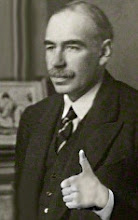
Rothbard on Torture

Not what you would expect, and not pretty at all:
“In every crime, in every invasion of rights, from the most negligible breach of contract up to murder, there are always two parties (or sets of parties) involved: the victim (the plaintiff) and the alleged criminal (the defendant). The purpose of every judicial proceeding is to find, as best we can, who the criminal is or is not in any given case. Generally, these judicial rules make for the most widely acceptable means of finding out who the criminals may be. But the libertarian has one overriding caveat on these procedures: no force may be used against non-criminals. For any physical force used against a non-criminal is an invasion of that innocent person’s rights, and is therefore itself criminal and impermissible. Take, for example, the police practice of beating and torturing suspects – or, at least, of tapping their wires. People who object to these practices are invariably accused by conservatives of ‘coddling criminals.’ But the whole point is that we don’t know if these are criminals or not, and until convicted, they must be presumed not to be criminals and to enjoy all the rights of the innocent: in the words of the famous phrase, ‘they are innocent until proven guilty.’ (The only exception would be a victim exerting self-defense on the spot against an aggressor, for he knows that the criminal is invading his home.) ‘Coddling criminals’ then becomes, in actuality, making sure that police do not criminally invade the rights of self-ownership of presumptive innocents whom they suspect of crime. In that case, the ‘coddler,’ and the restrainer of the police, proves to be far more of a genuine defender of property rights than is the conservative.

We may qualify this discussion in one important sense: police may use such coercive methods provided that the suspect turns out to be guilty, and provided that the police are treated as themselves criminal if the suspect is not proven guilty. For, in that case, the rule of no force against non-criminals would still apply. Suppose, for example, that police beat and torture a suspected murderer to find information (not to wring a confession, since obviously a coerced confession could never be considered valid). If the suspect turns out to be guilty, then the police should be exonerated, for then they have only ladled out to the murderer a parcel of what he deserves in return; his rights had already been forfeited by more than that extent. But if the suspect is not convicted, then that means that the police have beaten and tortured an innocent man, and that they in turn must be put into the dock for criminal assault. In short, in all cases, police must be treated in precisely the same way as anyone else; in a libertarian world, every man has equal liberty, equal rights under the libertarian law. There can be no special immunities, special licenses to commit crime. That means that police, in a libertarian society, must take their chances like anyone else; if they commit an act of invasion against someone, that someone had better turn out to deserve it, otherwise they are the criminals.

As a corollary, police can never be allowed to commit an invasion that is worse than, or that is more than proportionate to, the crime under investigation. Thus, the police can never be allowed to beat and torture someone charged with petty theft, since the beating is far more proportionate a violation of a man’s rights than the theft, even if the man is indeed the thief.” (Rothbard 1998: 82–83).
This passage means that, in Rothbard’s anarcho-capitalist world, the police from private protection agencies would be allowed “beat and torture” suspects “to find information,” and they would face no penalty or criminal charge for violence against such a suspect, as long as the suspect is found guilty.

Rothbard protests that private police cannot be allowed to “wring a confession” – even though there is a fine line between the two. In fact, with no ability to hold to account the activities of private protection agencies anyway, since they would be like private mafia groups, one can imagine what incredible abuses what develop in such a system: corrupt private police and private courts using torture and violence to quickly get a confession from suspects and “guilty” verdict.

BIBLIOGRAPHY

Rothbard, M. N. 1998. The Ethics of Liberty, New York University Press, New York, N.Y. and London.