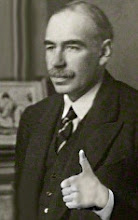
Geoffrey Hodgson discusses microfoundations in the video below and the problems with the view that macroeconomics needs neoclassical microfoundations in a conference held in June, 2010 in Suomenlinna, Helsinki, Finland.
I summarise the key points below.
An interesting point made by Hodgson (from 7.30 onwards) is that the current vogue for game theory in mainstream economics is essentially the result of the failure of the neoclassical microfoundations project, with its unrealistic assumption of utility-maximising agents with rational expectations.
The properties of the social world require analysis of human relations (and possibly emergent properties), not just analysis of individuals, even though one must not reify social structures. One need not reify social structures as “something more than an interacting pattern of individuals” when stressing the importance of social relations in economic life (as discussed in Hodgson 2012: 41).
From 15.00, Hodgson discusses the problematic “methodological individualism” approach in economics (see also Hodgson 2007): once “methodological individualists” recognise the importance of social relations, social structures and downwards causation, then the very label “methodological individualism” becomes inaccurate, misleading and invalid.
Hodgson raises the thorny question of human free will and intentionality. What causes human intentionality? He then points out a serious error of George L. S. Shackle: the notion of an “uncaused cause” or causal dualism that Shackle invoked to explain intentionality (also discussed in Hodgson 2000 and 2004: 61). Remarkably, Ludwig Lachmann seems to have held the same erroneous opinion! (Hodgson 2000: 58). Whether humans have free will or not, there is a mountain of scientific evidence that our conscious actions and mind are determined or, at least dependent on, the structure of the brain and its activity: the conscious human mind and its intentionality are emergent properties of the brain (Hodgson 2000: 59). An emergent property can effect downwards causation on lower-level things: so this explains our intentionality.
I also note that King (2012) also has a discussion of Hodgson’s views on microfoundations.
Finally, I stress that the sound is not exactly the best!
Video streaming by Ustream
BIBLIOGRAPHY
Hodgson, Geoffrey Martin. 2000. “Shackle and Institutional Economics: Some Bridges and Barriers Geoffrey M. Hodgson,” in Stephen F. Frowen and Peter Earl (eds.), Economics as an Art of Thought: Essays in Memory of G.L.S. Shackle. Routledge, New York. 51–75.
Hodgson, Geoffrey Martin. 2004. The Evolution of Institutional Economics. Routledge, London.
Hodgson, Geoffrey Martin. 2007. “Meanings of Methodological Individualism,” Journal of Economic Methodology 14.2: 57–68.
Hodgson, Geoffrey Martin. 2012. From Pleasure Machines to Moral Communities: An Evolutionary Economics without Homo Economicus. University of Chicago Press, Chicago.
King, J. E. 2012. The Microfoundations Delusion: Metaphor and Dogma in the History of Macroeconomics. Edward Elgar, Cheltenham.
Showing posts with label mirage of microfoundations. Show all posts
Showing posts with label mirage of microfoundations. Show all posts
Thursday, April 4, 2013

Subscribe to:
Posts (Atom)