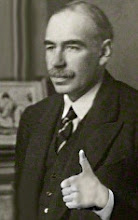
Why? The reason is that Murphy is something of a maverick who thinks that the interest rate is a monetary phenomenon, both in his PhD Unanticipated Intertemporal Change in Theories of Interest (2003) and in this post. That is, he rejects the widespread Austrian theory of interest: pure time preference theory.
More seriously, in this interesting paper and in this post, Murphy admits that Sraffa demonstrated that outside of equilibrium there is no single Wicksellian natural rate of interest, and that Hayek never really addressed this problem for his trade cycle theory.
On the face of it, these admissions have devastating consequences for virtually all modern formulations of the Austrian business cycle theory (ABCT) using the unique natural rate, as admitted by Murphy himself:
“In his brief remarks, Hayek certainly did not fully reconcile his analysis of the trade cycle with the possibility of multiple own-rates of interest. Moreover, Hayek never did so later in his career. His Pure Theory of Capital (1975 [1941]) explicitly avoided monetary complications, and he never returned to the matter. Unfortunately, Hayek’s successors have made no progress on this issue, and in fact, have muddled the discussion. As I will show in the case of Ludwig Lachmann—the most prolific Austrian writer on the Sraffa-Hayek dispute over own-rates of interest—modern Austrians not only have failed to resolve the problem raised by Sraffa, but in fact no longer even recognize it.If Mosler debates Murphy, he should press him repeatedly on both points.
Austrian expositions of their trade cycle theory never incorporated the points raised during the Sraffa-Hayek debate. Despite several editions, Mises’ magnum opus (1998 [1949]) continued to talk of “the” originary rate of interest, corresponding to the uniform premium placed on present versus future goods. The other definitive Austrian treatise, Murray Rothbard’s (2004 [1962]) Man, Economy, and State, also treats the possibility of different commodity rates of interest as a disequilibrium phenomenon that would be eliminated through entrepreneurship. To my knowledge, the only Austrian to specifically elaborate on Hayekian cycle theory vis-à-vis Sraffa’s challenge is Ludwig Lachmann.”
(Murphy, “Multiple Interest Rates and Austrian Business Cycle Theory,” pp. 11–12).
“Lachmann’s demonstration—that once we pick a numéraire, entrepreneurship will tend to ensure that the rate of return must be equal no matter the commodity in which we invest—does not establish what Lachmann thinks it does. The rate of return (in intertemporal equilibrium) on all commodities must indeed be equal once we define a numéraire, but there is no reason to suppose that those rates will be equal regardless of the numéraire. As such, there is still no way to examine a barter economy, even one in intertemporal equilibrium, and point to “the” real rate of interest.”
(Murphy, “Multiple Interest Rates and Austrian Business Cycle Theory,” pp. 14).
First, Mosler should point out that Murphy agrees with Keynes on the nature of the interest rate. So does Murphy admit that Keynesians are right in their interest rate theory?
The instant Murphy attempts to explain recessions in terms of the Austrian business cycle theory (ABCT), Mosler should demand to know what version of the ABCT Murphy is using.
Some other points:
(1) Murphy and other Austrians do not properly understand the price system in real world capitalism. They do not understand and (often) do not even acknowledge the reality of extensive fixprice markets and price administration. Many businesses do not adjust prices in reaction to demand changes, but supply: that is, they adjust output and employment. That is a strong confirmation of Keynesian theory.Come to think of it, I could debate Murphy myself, or any Austrian for that matter. I could take most of them down in an hour or so!
The Austrian idea that economic coordination in market economies fundamentally requires universally flexible prices determined by the dynamics of supply and demand curves is wrong: economic coordination – to the extent that it does exist – can be created by “quantity signals,” as Nicholas Kaldor long ago understood.
(2) Many Austrians still adhere to an unrealistic market tendency to equilibrium states. But that is an unconvincing view of markets. Austrians do not take seriously their own ideas of (1) subjective expectations and (2) Knightian or fundamental uncertainty.
(3) There is no equilibrium (or market-clearing) interest rate that equates savings and investment. This is just another unsupportable equilibrium idea. If investment depends very much on business expectations, it does not matter how low interest rates are, if business expectations are shocked.
(4) Moreover, we live in an endogenous money world, and although credit does play a fundamental role in driving business cycles, the Austrians have never understood the real problem: credit flows to destabilising asset price speculators.
If Austrians really understood this, their business cycle theory would be concerned with the destabilising role of secondary financial and real asset markets, not with (largely imaginary or overrated) distortions in the capital goods structure of production.
(5) Say’s Law is a myth whether it is defined as (1) Say’s Identity or (2) Say’s Equality.
One of the fundamental reasons why it is a myth is not just the differences between the rich and other income earners in their marginal propensity to consume, but because of the massive spending on secondary financial and real asset markets in real world capitalism.
If Say’s Law is defined in some minimal form like “consumption cannot occur without prior production,” then it is a trivially true proposition that is no threat whatsoever to Keynesianism or MMT.
(6) Why are money and secondary financial assets so important for any realistic model of capitalism? The reason is that money and secondary financial assets have a zero or very small elasticity of production. This means that a rise in demand for money or financial assets, and a rising “price” for money (i.e., an increase in its purchasing power) or financial assets will not lead to businesses “producing” money or financial assets by hiring unemployed workers.
Furthermore, the implicit assumption of both neoclassical theory and Austrian economics is the gross substitution axiom: that underlying the operation of all demand curves is the assumption that substitutes for all goods whose prices rise can be found or will emerge, and that even reproducible goods can substitute for non-producible assets and money.
But money and financial assets have zero or near zero elasticity of substitution with producible commodities:“The elasticity of substitution between all (nonproducible) liquid assets and the producible goods and services of industry is zero. Any increase in demand for liquidity (that is, a demand for nonproducible liquid financial assets to be held as a store of value), and the resulting changes in relative prices between nonproducible liquid assets and the products of industry will not divert this increase in demand for nonproducible liquid assets into a demand for producible goods and/or services” (Davidson 2002: 44).The gross substitution axiom is a fundamental assumption of neoclassical economics and the Austrians appear to tacitly assume the axiom as well. But the gross substitution axiom is wrong, and all inferences made from it in economic theories are also wrong.
Further Reading
“Robert P. Murphy on the Pure Time Preference Theory of the Interest Rate,” July 13, 2011.
“Robert P. Murphy on the Sraffa-Hayek Debate,” July 19, 2011.
“The Natural Rate of Interest in the ABCT: A Definition and Analysis,” February 26, 2013.
BIBLIOGRAPHY
Davidson, P. 2002. Financial Markets, Money, and the Real World. Edward Elgar, Cheltenham.
Murphy, Robert P. “Multiple Interest Rates and Austrian Business Cycle Theory.”
http://consultingbyrpm.com/uploads/Multiple%20Interest%20Rates%20and%20ABCT.pdf
Murphy, Robert P. 2003. Unanticipated Intertemporal Change in Theories of Interest, PhD dissert., Department of Economics, New York University.
https://files.nyu.edu/rpm213/public/files/Dissertation.pdf
Murphy, Robert P. 2011. “Is Keynes from Heaven or Hell,” Free Advice, 7 July.
http://consultingbyrpm.com/blog/2011/07/is-keynes-from-heaven-or-hell.html
Murphy, Robert P. 2012. “I Am Officially in the Twilight Zone: Callahan and Glasner on Sraffa-Hayek,” Free Advice, 26 February.
http://consultingbyrpm.com/blog/2013/02/i-am-officially-in-the-twilight-zone-callahan-and-glasner-on-sraffa-hayek.html