Showing posts with label Britain. Show all posts

Friday, July 19, 2019

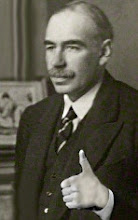
Keynes’ Life: 1931

I give an account below of Keynes life in 1931.

January–May 1931
On 27 January 1931, Friedrich Hayek arrived in London at the London School of Economics (LSE). Hayek gave four evening lectures at 5 p.m. from 27 to 30 January 1931 on “Prices and Production” (Howson 2011: 196), and these lectures were later published in England as the book Prices and Production (September 1931), an exposition of the Austrian Business Cycle Theory (ABCT). Hayek himself had returned to Austria by 14 February 1930, but he moved to Britain to take up a visiting professorship at the LSE in October 1931. Keynes did not attend Hayek’s LSE lectures, but Nicholas Kaldor had been at the LSE since April 1927 (to undertake a BSc. in economics), and presumably attended.

From winter 1930–1931 and the spring of 1931, Keynes was involved in drafting the report of the Macmillan Committee (Moggridge 1992: 509). This report was signed by Keynes on 29 May and made available on the 13 July 1931 (Moggridge 1992: 511).

On 15 January 1931, in a radio broadcast, Keynes pointed to the problem of a lack of public and private spending as a major role in causing the depression, and urged increases in public and private spending to lower unemployment (Skidelsky 1992: 383–384).

Keynes helped to organise the merger of the New Statesman and the Nation in January–February 1931, and Keynes himself became chairman of the combined board in February until he died (Moggridge 1992: 508). On the 7 March 1931, Keynes published an article called “Proposals for a Revenue Tariff” in the New Statesman and Nation, which presented the case for protectionism in Britain (Moggridge 1992: 509). Keynes proposed a tariff of 15% on manufactured and semi-manufactured imports and 5% on foodstuff imports, mainly to reduce the need for budget cuts or tax increases (Moggridge 1992: 512–513). Lionel Robbins wrote a reply to Keynes’ case for protectionism, published on 14 March 1931 (Howson 2011: 198).

In late February Keynes became ill with tonsillitis and influenza (Skidelsky 1992: 389).

On 4 May 1931, Piero Sraffa was appointed as Marshall Librarian at Cambridge.

From May to July 1931, Nicholas Kaldor attended the summer term at the University of Vienna as part of his research studentship at the LSE (Thirlwall 1987: 23), and on 1 August 1931, Kaldor was first appointed to a temporary lecturing position at the LSE (Thirlwall 1987: 27; in October 1932, Kaldor became a permanent Assistant Lecturer).

June–11 July 1931: Keynes in America
On 30 May 1931, Keynes sailed for New York with his wife and his visit lasted from June–11 July 1931. Keynes spent two weeks in New York and met numerous officials and bankers including Walter Case and Eugene Meyer (president of the Federal Reserve Board) (Skidelsky 1992: 390).

Keynes had been invited to the Harris Foundation seminars at the University of Chicago (an annual event) where he was to give a talk called “Unemployment as a World Problem” (Moggridge 1992: 518), and he gave three lectures on 22 June, 26 June, 2 July 1931 (Skidelsky 1992: 391).

Keynes was in Chicago from 22 June to 2 July 1931 (Moggridge 1992: 518). Curiously, Keynes, at this stage in his thinking, did not advocate a large-scale public works program in America, but thought interest rate policy should be the main tool for fighting the depression (Moggridge 1992: 518), and Keynes found that some Chicago economists were more supportive of public works programs to bring down unemployment than he was (Skidelsky 1992: 392). Skidelsky has suggested that some Chicago school economists were more “Keynesian than Keynes” in 1931 (Skidelsky 1992: 392).

Keynes spent his last weekend in America in New Hampshire, and on 11 July 1931 Keynes and his wife left New York for England, and during his return voyage Keynes wrote a memorandum called “Economic Conditions in the United States” which was later circulated to the Prime Minister, the Economic Advisory Council (EAC) and the Bank of England (Moggridge 1992: 519).

18 July–December 1931
When Keynes returned to England on 18 July, the 1931 world financial crisis was in progress, and Keynes was generally at Tilton over the months from July to September. On 11 May 1931 (before Keynes had left for America), the Austrian bank Kreditanstalt had collapsed. By late May 1931, the financial crisis had spread to Germany, where the Reichsbank suffered from serious losses of reserves. On 20 June 1931, Herbert Hoover announced the Hoover Moratorium, which was a one year moratorium on German debt re-payments, approved by Congress and, after some initial resistance by France, by fifteen other nations. Hoover also provided $100 million for the Reichsbank. But this did not prove sufficient and by late June and early July a severe external run on foreign exchange hit Germany (Moggridge 1992: 521).

By 13 July 1931, Germany was forced to introduce a two-day bank and stock exchange holiday, after the collapse of the Danat Bank (Moggridge 1992: 521). Britain was also hit by a severe outflow of capital: from July to September the Bank of England lost over £200 million in reserves in its attempt to maintain the pound sterling on the gold exchange standard (Moggridge 1992: 522).

In response to a request for advice from the Prime Minister, Keynes replied on 5 August 1931, and opposed austerity measures and declared that it is “now nearly certain that we shall go off the existing gold parity at no distant date” (Moggridge 1992: 523).

The crisis was so serious that Ramsay MacDonald (British Prime Minister) returned from summer holidays on 11 August, and held emergency meetings and a full Cabinet meeting on 19 August 1931 (Moggridge 1992: 534). Remaining on the gold standard was now impossible for Britain as borrowing in foreign currencies required severe cuts to government spending and tax increases, as the price of borrowing from the Bank of France, the Federal Reserve of New York and J. P. Morgan was their demand to balance the budget (Skidelsky 1992: 395). The conflict within the Labour party also destroyed the Labour government, as the Cabinet voted by 15 to 5 in favour of a revenue tariff, and also a majority would not support more than £56 million of budget cuts (Skidelsky 1992: 395).

In August 1931, there appeared the first of a two-part review of Keynes’ A Treatise on Money by Friedrich von Hayek in the journal Economica. The second part appeared in February 1932. Keynes did reply to Hayek, but the criticisms of Hayek were mostly irrelevant since Keynes soon came to repudiate many of the ideas in the Treatise.

On 24 August 1931, Ramsay MacDonald formed a National Government with the Conservatives, Liberals and a new National Labour group.

The history of governments in Britain in these years can be summarised as follows:
5 June 1929–24 August 1931 – Labour government with Ramsay MacDonald as British Prime Minister
24 August–27 October 1931 – First National Government with Ramsay MacDonald as British Prime Minister with Conservatives, Liberals and a new National Labour group
27 October 1931 – United Kingdom general election
5 November 1931–7 June 1935 – the Second National Government
7 June 1935–28 May 1937 – Stanley Baldwin is Prime Minister of Britain.
On 27 August, the new National coalition government decided to implement a program of austerity, with expenditure cuts and tax increases, and by 10 September 1931 it began to implement these measures.

On 16 September, Keynes addressed a group of MPs in the House of Commons, and he condemned the austerity budget as folly (Skidelsky 1992: 395–396).

But none of the measures adopted by the new National government stopped the capital flight from Britain, and when the Bank of England lost over £18 million on 18 September, it was decided to suspend the gold convertibility of the pound sterling after noon on 19 September 1931 (Moggridge 1992: 527).

On 20 September the government announced that Britain would abandon the gold exchange standard the next day, which then happened on Monday (21 September 1931) when a Gold Standard (Amendment) Bill was passed in Parliament (Moggridge 1992: 527).

Keynes went to London and stayed from 21 September to 10 October 1931, when he attended three meetings of the Economic Advisory Council’s Committee on Economic Information as well as a meeting of the Other Club (Moggridge 1992: 528). Keynes dined with the Prime Minister on 5 October 1931 and then visited Lloyd George at Churt (Skidelsky 1992: 400).

On 30 September, Keynes recorded a British Movietone newsreel, where he defended the suspension of the gold standard and predicted that British trade would benefit from the currency depreciation that resulted (Moggridge 1992: 528). This newsreel was screened in October 1931 and Keynes appeared in many cinemas in Britain, and can be seen here:


It was also in September 1931 that Ludwig von Mises visited London for an annual meeting of the British Association for the Advancement of Science, and Mises attended a dinner held for him at the LSE on 24 September (Howson 2011: 210). In September 1931, Friedrich Hayek also published Prices and Production.

From autumn 1931, a number of students and economists at Cambridge began to meet informally in Richard Kahn’s rooms in King’s College, Cambridge, to analyse and discuss Keynes’ A Treatise on Money. These included Piero Sraffa, Richard Kahn, Austin Robinson, James Meade, Joan Robinson, and Dennis Robertson (Moggridge 1992: 531).

By Lent term 1932 (January–March 1932), these meetings became a formal seminar held in the Old Combination Room of Trinity College, Cambridge, and were known as the “Circus,” though Keynes himself did not attend these meetings and Richard Kahn acted as an intermediary for Keynes (Moggridge 1992: 531–532).

On 5 October 1931, Hayek began teaching at the London School of Economics (LSE) as a visiting professor (Howson 2011: 206). Hayek and his family lived in Constable Close in Hampstead Garden Suburb (Howson 2011: 206).

From late October to November 1931 (in the course of the Michaelmas term at Cambridge), Keynes was ill with heart problems (Skidelsky 1992: 432–433).

Late in the year on 5 November 1931, Philip Snowden stood down as Chancellor of the Exchequer and was replaced by Neville Chamberlain (Chancellor of the Exchequer from November 1931–May 1937). On 27 November 1931, Keynes’ book Essays in Persuasion was published, which included many of his writings and essays from the 1920s onwards.

On 13 December 1931, Keynes addressed a socialist group on “The Dilemma of Modern Socialism.”

BIBLIOGRAPHY
Howson, Susan. 2011. Lionel Robbins. Cambridge University Press, New York.

Moggridge, D. E. 1992. Maynard Keynes: An Economist’s Biography. Routledge, London and New York.

Skidelsky, Robert. 1992. John Maynard Keynes: Volume Two. The Economist as Saviour 1920–1937. Macmillan, London.

Thirlwall, A. P. 1987. Nicholas Kaldor. Wheatsheaf, Brighton.

Wednesday, July 17, 2019

Keynes’ Life: 1930

I give an account below of Keynes life in 1930, the second year of the Great Depression.

January–May 1930
In January 1930, the second Hague Conference adopted the Young Plan on German reparations, and, as we saw in the last post, Keynes had corresponded with the leading members on the issue of German reparations. By early 1930, Keynes was beginning to think that an international slump was a possibility (Moggridge 1992: 483).

On 19 January 1930, Keynes’ friend Frank Plumpton Ramsey died after an operation for jaundice, which deeply saddened Keynes (Skidelsky 1992: 380).

On 24 January 1930, the British government established an “Economic Advisory Council (EAC),” chaired by the Prime Minister, which included the Chancellor of the Exchequer, the President of the Board of Trade, the Minister of Agriculture, Hubert Henderson (as senior economist), and Keynes, among others (Moggridge 1992: 481–482). This council had its first meeting on 17 February 1930 (Moggridge 1992: 482), and seems to have met once a month (Skidelsky 1992: 363). At the council’s first meeting a further “Committee on the Economic Outlook” was created and Keynes as the chairman (Skidelsky 1992: 363). To add to the confusion, yet another small committee of economists was established on 24 July 1930, with Keynes as the chairman, and Arthur Pigou, Hubert Henderson, Sir Josiah Stamp and Lionel Robbins as the other members, and Richard Kahn as one of the secretaries (Skidelsky 1992: 364). This committee met for the first time on 10 September 1930 (Skidelsky 1992: 364).

We can list these committees in which Keynes was involved in these years as follows:
(1) the Macmillan Committee (Committee on Finance and Industry) (21 November 1929–31 May 1931), chaired by Lord Macmillan (Dostaler 2007: 192).
This committee included Ernest Bevin, Lord Bradbury, R. H. Brand, Theodore Gregory, Keynes, and Reginald McKenna. The Macmillan Committee’s report was completed in May 1931, and published on 13 July 1931.

(2) Economic Advisory Council (EAC) (24 January 1930–1938)

(3) Committee on the Economic Outlook, created on 17 February 1930 with Keynes as the chairman.
This committee held meetings on the 21 March, 3 April, and 1 May 1930 (Moggridge 1992: 495).

(4) Committee of Economists (which met from the 10 September–23 October 1930), established on 24 July 1930, with Keynes as the chairman. This committee produced a report on 24 October 1930 (Dostaler 2007: 192).
In 1930, Keynes also participated to a great extent in the Macmillan Committee (which included Ernest Bevin). He was active in the examination of witnesses and in the production of the final report (Skidelsky 1992: 345), and it was in the debates within the Macmillan Committee that Keynes summarised his current economic thinking as he had developed it in the yet unpublished A Treatise on Money. Keynes also criticised general equilibrium theory by pointing to the relative rigidity of money wages in Britain in the 1920s, and Keynes even came to question whether money wages had ever been highly flexible even in the 19th century (Skidelsky 1992: 347; Keynes did, however, sometimes slip into Neoclassical explanations of money wage rigidity when he invoked the role of unemployment relief in February 1930: Skidelsky 1992: 347).

On 30 March 1930, Heinrich BrĂ¼ning became Chancellor of Germany, an office which he held from 30 March 1930–30 May 1932. BrĂ¼ning inflicted an austerity regime on the Weimar Republic, which exacerbated the Great Depression, and which effectively destroyed democracy in Germany.

Meanwhile in March 1930 in Britain, Keynes proposed deficit-financed public expenditure as a remedy to Britain’s economic malaise to the Macmillan Committee (Skidelsky 1992: 353). On 26 March 1930, Sir Ernest Harvey (deputy governor of the Bank of England) appeared before the Macmillan Committee, and Keynes’ role in questioning him, along with others, was considered a disaster for the Bank of England (Skidelsky 1992: 356). Curiously, as a defence against Keynes’ attack on bank policy, Harvey retreated into a version of the Real Bills doctrine and the idea that the Bank of England was mainly responsive to the needs of trade and could not directly control the volume of credit demand, which drifts into the modern endogenous theory of money (Skidelsky 1992: 357). It was in May 1930 that the Treasury official Sir Richard Hopkins appeared before the Macmillan Committee, and used an altered form of the now famous “Treasury View” against Keynes: Sir Richard Hopkins claimed that government deficit-financed public works might cause “psychological crowding out,” that is to say, a blow to business confidence and expectations (Skidelsky 1992: 361). Keynes now was forced to think more explicitly about the role of business “confidence” (or what would later be called “subjective expectations”) in determining investment (Skidelsky 1992: 361).

Skidelsky (1992: 362) notes that the inspiration for Keynes’ General Theory was in part a response to the opposition that Keynes had encountered to his ideas from the British Bank of England and Treasury officials during the Macmillan Committee.

On 23 April 1930, Keynes sent Ralph Hawtrey drafts of the Treatise, but Keynes himself did not have time to mull over Hawtrey’s criticism until November 1930 after the book was published (Moggridge 1992: 483).

In May 1930, the ruling Labour party was split in a great controversy over government policy in relation to the depression and the need for unemployment relief. The crucial figure within the British Labour party was the MP Oswald Mosley, who strongly supported deficit-financed public works programs. On 23 January 1930, Mosley had sent a memorandum to the Prime Minister in which he advocated direct government control of banking, protectionism, and large-scale public works programs financed by deficits (Dorril 2007: 130). These policies, along with an abandonment of the gold standard (which soon happened anyway in 1931), would certainly have cured the Great Depression in Britain. Mosley, influenced by Keynes, was therefore effectively proposing his own “New Deal” for Britain (Skidelsky 1992: 378).

On 8 February 1930, Mosley’s memo was leaked to the newspaper the Telegraph and provoked a minor crisis within the Labour party (Dorril 2007: 131). However, leading figures in the Labour party opposed this. In particular, Philip Snowden (1st Viscount Snowden), who was Chancellor of the Exchequer from 7 June 1929–5 November 1931 – despite being a socialist – favoured free trade, balanced budgets, and rejected public works programs to reduce unemployment. He also favoured export-led growth as a primary solution to the depression. This crisis within the Labour party in May 1930 is dramatised in this movie scene where Mosley appears before the Cabinet and his proposals are dismissed by Snowden:


These bizarre and Neoclassical policies held by influential figures in the Labour government – and in particular the appeal to export-led growth – destroyed the Labour government of 1929–1931, and, remarkably, also wiped out the German Social Democratic Party in Germany by 1933, as they too supported balanced budgets, sound money and crackpot Marxism.

On 28 May 1930, Oswald Mosley gave a powerful resignation speech in the House of Commons (Skidelsky 1992: 364), in which he attacked the Labour government’s “do nothing” policy. That speech can be read here, and Mosley rightly condemned “the belief that the only criterion of British prosperity is how many goods we can send abroad for foreigners to consume” (that is, by export-led growth).

June–December 1930
As the Great Depression deepened, Keynes rejected Marxist dogma that this was the final crisis of capitalism (Skidelsky 1992: 379).

His fundamental optimism – despite the disaster of the depression – can be seen in his essay “Economic Possibilities for our Grandchildren,” which was first given to the Winchester Essay Society, and then as a public lecture in Madrid on 9 June 1930 (Skidelsky 1992: 379). Keynes spent some ten days in Spain and returned to his home at Tilton, South Downs, where he continued to work on the Treatise over the summer (Skidelsky 1992: 380).

Keynes continued to be involved in the Macmillan Committee, which heard witnesses until the end of July 1930 and then adjourned until 16 October 1930 (Moggridge 1992: 495). It was also in July 1930 that Keynes came to endorse industrial protectionism as a policy to protect British industry (Moggridge 1992: 500).

On 25 September 1930, the British Cabinet of the Labour government rejected any further fiscal stimulus by public works and even accepted the need for limiting unemployment insurance (Moggridge 1992: 507).

In September and October 1930, Keynes also continued his work as chairman of the “Committee of Economists,” but the final report on 24 October 1930 was a complex mix of analysis and possible solutions to the economic problems faced by Britain because of the intense disagreements between Keynes, Pigou, Hubert Henderson, and Lionel Robbins (Skidelsky 1992: 374–377; Dostaler 2007: 192). The report was undoubtedly a failure in either advocating or urging any sensible Keynesian policy. Lionel Robbins, in particular, had been advocating the Austrian Business Cycle Theory (ABCT) in his analysis. Astonishingly, leading figures in the Labour party government favoured austerity and free trade, and rejected Keynes’ thinking (Skidelsky 1992: 377).

On 16 October 1930, the Macmillan Committee resumed its meetings normally for two days a week (Moggridge 1992: 507). Keynes took the lead in discussions by November and early December 1930 (Moggridge 1992: 507).

In October 1930, Keynes finally published his short essay “Economic Possibilities for our Grandchildren” in two parts in the The Nation and Athenaeum (see Keynes 1930a and 1930b), which was later reprinted in Essays in Persuasion (London, 1933). I have previously analysed Keynes’ essay here.

Keynes’ A Treatise on Money was published on 24 October 1930. I will not describe Keynes’ arguments in this book in detail. In brief, Keynes still assumed in this book that there were long-run forces bringing an economy to full-employment equilibrium; he assumed that investment was the most important driver of a capitalist economy, and that the rate of interest was in turn the main driver of investment (Moggridge 1992: 484–486). Keynes also adopted versions of Knut Wicksell’s concepts of the natural rate of interest (the rate at which savings would equal investment) and the market rate of interest (Moggridge 1992: 486).

BIBLIOGRAPHY
Dorril, Stephen. 2007. Blackshirt: Sir Oswald Mosley and British Fascism. Penguin Books, London and New York.

Dostaler, Gilles. 2007. Keynes and his Battles. Edward Elgar, Cheltenham.

Keynes, John Maynard. 1930a. “Economic Possibilities for our Grandchildren II,” The Nation and Athenaeum 48.3 (October 18): 96–98.

Keynes, John Maynard. 1930b. “Economic Possibilities for our Grandchildren II,” The Nation and Athenaeum 48.2 (October 11, 1930): 36–37.

Keynes, John Maynard. 1933. Essays in Persuasion. Macmillan, London.

Moggridge, D. E. 1992. Maynard Keynes: An Economist’s Biography. Routledge, London and New York.

Skidelsky, Robert. 1992. John Maynard Keynes: Volume Two. The Economist as Saviour 1920–1937. Macmillan, London.

Saturday, July 13, 2019

Keynes’ Life: 1929

I give an account below of Keynes life in 1929, the year in which the Great Depression began.

January–May 1929
Keynes taught at Cambridge in the first half of the year. The teaching periods at Cambridge were divided into three terms:
October–December – Michaelmas
January–March – Lent or January term
April–June – Easter term.
On 18 January 1929, Ludwig Wittgenstein returned to Cambridge, and Keynes met him when he arrived, and allowed Wittgenstein to share his rooms at Cambridge until February 1929 (Skidelsky 1992: 291).

From 9 February to 7 June 1929, an international committee met to propose changes to the German reparations system, which was chaired by Owen D. Young, and called the Young Committee (Moggridge 1992: 476). Keynes corresponded with the leading members on German reparations and published a famous article called “The German Transfer Problem” in the Economic Journal of March 1929 (Moggridge 1992: 476–478).

Keynes also visited the Treasury on 7 March 1929 and recommended raising the bank rate to attract more capital from abroad (Skidelsky 1992: 302).

From March 1928 until the UK general election of May 1929, Keynes strongly supported David Lloyd George’s Liberal program of deficit spending and public works to cure the problem of high unemployment in Britain (Skidelsky 1992: 297). It was at this stage that the British Treasury formulated its so-called “Treasury View” opposing debt-financed public works. Curiously, the ruling British government included some ministers like the Home Secretary (Joynson-Hicks) who favoured large public works programs in February 1929, and so the Treasury fought both these proposals and those of Keynes and Lloyd George (Skidelsky 1992: 299). Keynes attacked the “Treasury View” in an unsigned article in the Nation of 23 February 1929 called “The Objections to Capital Expenditure” (Skidelsky 1992: 299). Keynes identified two “leakages” of savings which caused disequilibrium between savings and investment, as follows:
(1) leakage of savings into financial asset markets (that is, the stock, share and bond markets) where this money is not spent on real capital investment, and

(2) leakage of savings overseas into foreign investments (Skidelsky 1992: 299).
Keynes maintained that therefore there were savings available in Britain for deficit-financed public works programs (Skidelsky 1992: 301). Winston Churchill, as Chancellor of the Exchequer, also defended the Treasury view in his budget speech of 15 April 1929 (Moggridge 1992: 462).

On 10 May 1929, Hubert Henderson and Keynes published Can Lloyd George do it?, a pamphlet in support of Lloyd George before the UK general election of 1929. In this pamphlet, Keynes and Henderson pointed to the “cumulative force of trade activity” as a further argument in favour of deficit spending, and this eventually inspired the concept of the “multiplier” formulated by Richard Kahn in the summer of 1930 (Moggridge 1992: 464).

In the UK general election of 30 May 1929, Keynes expected the Liberal party to do well in the election and win at least 100 seats (Skidelsky 1992: 306), but the results, summarised below, disappointed him:
Party | Leader | Seats Won
Conservative | Stanley Baldwin | 260
Labour | Ramsay MacDonald | 287
Liberal | David Lloyd George | 59.
The UK Labour Party under Ramsay MacDonald won 287 seats, and formed a government, with Ramsay MacDonald as British Prime Minister from 5 June 1929–7 June 1935, but proved disastrously inept and stupid, as it supported austerity when the Great Depression hit Britain.

Keynes was so disappointed that he never attended a Liberal Summer School event ever again (Moggridge 1992: 464).

June to December 1929
Since summer 1924, Keynes had been occupied in writing A Treatise on Money, and his work continued into the summer of 1928 and 1929. With his Easter teaching term over at the end of June 1929, Keynes returned in summer to working on the Treatise on Money. Keynes spent much of the summer at his house in Tilton, South Downs near Lewes, and engaged in writing his Treatise (Skidelsky 1992: 338).

Keynes had taken possession of Tilton house on 3 March 1926, rented on a 21 year lease (Skidelsky 1992: 214). It was in Tilton house that Keynes and his wife Lydia would spend their Christmas and Easter holidays and two and a half months during the summer (Skidelsky 1992: 217).

From 19 to 29 July 1929, Keynes travelled to Geneva, where he gave four lectures at the School of International Studies (Moggridge 1992: 479), having been invited by the Financial Section of the League of Nations (Skidelsky 1992: 338). He and his wife Lydia then had a holiday in Burgundy in August (Skidelsky 1992: 338).

After his return to Britain during summer, Keynes had an active social life, and he appears to have taken part in a BBC broadcast, a dinner with Lloyd George at his house in Churt, and a meeting with Oswald Mosley (the new Chancellor of the Duchy of Lancaster). This was long before Oswald Mosley became a fascist, and at this time Mosley was a rising figure in the British Labour Party (which he had joined in March 1924), and a Member of Parliament for Smethwick (21 December 1926–27 October 1931). In 1929, Mosley was appointed by Ramsey MacDonald to the position of Chancellor of the Duchy of Lancaster (a post without Portfolio and outside the Cabinet), but was tasked with solving the unemployment problem in Britain, which had been high since the early 1920s. On 4 September 1929, Keynes met Mosley in London and discussed the problem of unemployment (Skidelsky 1992: 339).

In August, Keynes decided that many chapters of A Treatise on Money needed to be re-written and he also decided to divide the work into two volumes (Moggridge 1992: 479). In mid-November, Keynes allowed Arthur Pigou and Dennis Robertson to read and comment on his new draft of the Treatise (Moggridge 1992: 480). However, it was not until the next year that Keynes’ A Treatise on Money was published, on 24 October 1930.

Before August 1929, Richard Kahn, who was Keynes’ student, also began to assist Keynes in the development of his thinking on economics (Moggridge 1992: 480). Moreover, it was in October 1929 that Joan Robinson and Austin Robinson returned to Cambridge, and from 1929 to 1930 Joan Robinson attended Piero Sraffa’s lectures (Sraffa had arrived in London in July 1927 after fleeing Italy).

Keynes did not predict, or foresee, the Great Depression of 1929–1933 (Moggridge 1992: 478; Skidelsky 1992: 338).

It was in October that two severe corrections hit the New York stock exchange, as follows:
24 October 1929 – “Black Thursday” on the New York stock exchange, the beginning of the US Stock Market Crash of 1929

29 October 1929 – “Black Tuesday” on the New York stock exchange.
When the first Wall Street Crash occurred on 24 October 1929, Keynes was surprised. Indeed, in an article in the New York Evening Post, Keynes appeared to think that monetary policy would eventually correct the problem (Moggridge 1992: 480).

Keynes’ investments also suffered heavily from falling stock and commodity prices, so that by late 1929 his new worth dropped from £44,000 to £7,814 (Skidelsky 1992: 342).

On the 5 November 1929, the UK Treasury created a “Committee on Finance and Industry,” chaired by Lord Macmillan (and therefore called the “Macmillan Committee”), to which Keynes was appointed, and its first meeting was on 21 November 1929 (Moggridge 1992: 481). This committee was an inquiry into banking and finance, amongst other things. Keynes even met Ramsey MacDonald, the British Prime Minister, on the 25 November, the 9 December and 16 December, to discuss economic issues (Moggridge 1992: 481).

Later on 24 January 1930, the British government established an “Economic Advisory Council (EAC),” chaired by the Prime Minister, which included the Chancellor of the Exchequer, the President of the Board of Trade, the Minister of Agriculture, Hubert Henderson (as senior economist), and Keynes, amongst others (Moggridge 1992: 481–482).

Keynes was now a government adviser, and he had to attend sixty-five meetings related to these committees between November 1929 and September 1930 (Moggridge 1992: 482). Keynes was especially active in the Macmillan Committee (which included Ernest Bevin), both in the examination of witnesses and in the production of the final report (Skidelsky 1992: 345).

From 1929 to 1931, Keynes lost interest in the now small Liberal Party and its politics (Skidelsky 1992: 344).

Keynes gave the Ludwig Mond Lecture at Manchester University on 7 November 1929, and noted the relative rigidity of money wages, and particularly how money wages were determined by “social and historical forces,” and not by marginal labour productivity (Skidelsky 1992: 347).

In December 1929, Richard Kahn, Keynes’ student, submitted his dissertation called “The Economics of the Short Period,” and Kahn became a Fellow at King’s College in March 1930 (Moggridge 1992: 480).

BIBLIOGRAPHY
Moggridge, D. E. 1992. Maynard Keynes: An Economist’s Biography. Routledge, London and New York.

Skidelsky, Robert. 1992. John Maynard Keynes: Volume Two. The Economist as Saviour 1920–1937. Macmillan, London.

Tuesday, July 12, 2016

Britain’s Protectionism against Indian Cotton Textiles

From the late 17th century, Indian cotton textile imports – such as white calicoes, muslins, printed and striped cotton goods – flowed into Europe in ever larger volumes.

Local manufacturers, seeing the lightness and superior nature of cotton, started to create new cotton textile industries.

But they faced a serious problem: they could not compete with the Indian imports in terms of price or even quality (Parthasarathi 2011: 89).

The centre of the world’s cotton textile production was in India in the 18th century; by the mid-19th century, it had shifted to Europe (Parthasarathi 2011: 89).

How did this happen?

Parthasarathi (2011) examines this question, and the answer he provides (which as we will see below is incomplete) is as follows:
(1) technical knowledge on how to dye and print on cotton was obtained from the Middle East and India by Europeans: that is to say, Europe imitated and borrowed the technical knowledge (Parthasarathi 2011: 90–93).

(2) however, despite the technical knowledge of (1), domestically-made cotton textiles in Europe still could not compete in price or quality with Indian goods, either at home or in export markets (Parthasarathi 2011: 89, 96).

(3) if we take the case of Britain, whose cotton textile industry became dominant by the mid-19th century, we find that Britain industrialised in this sector by imposing massive protectionism and tariff barriers to Indian cotton goods, as follows:
1685 – 10% import tariff on Indian goods;

1690 – tariff doubled to 20%;

1701 – First Calico Act, legislation banning imports of dyed, painted or printed fabric;

1707 – British textiles manufacturers obtained further tariffs on Indian textiles;

1721 – Second Calico Act, which further banned imports of Indian textiles.
Some of these early acts of protection were imposed to protect the woollen, silk and linen textile producers of Britain, but their consequence was also to protect the cotton manufacturers, who in the 18th century mainly concentrated on the production of a new hybrid fustian cloth, a mixture of cotton and linen (Parthasarathi 2011: 93).

(4) With a protected home market, British manufacturers were able to develop and apply the following technologies to production:
(1) Hargreaves’s spinning jenny (invented c. 1764; patented 1770), which was later made obsolete by 1800 by mules;

(2) Arkwright’s spinning frame, which was later developed into the water frame (patented 1769);

(3) Crompton’s mule (1779).
Hargreaves’s spinning jenny greatly increased the quality of cotton goods and lowered costs (Parthasarathi 2011: 98), but it was Arkwright’s water frame that allowed the production of higher-quality all-cotton cloth (Parthasarathi 2011: 98).

Crompton’s mule allowed the spinning of all-cotton muslins as fine as those of India (Parthasarathi 2011: 98).

The idea that shortages in yarn were the main driver of these innovations is not supported by the evidence (Parthasarathi 2011: 98) which rather shows that the desire to match the quality of Indian cloths was the major factor (Parthasarathi 2011: 109).

(5) However, despite the 18th century technological developments by Kay, Hargreaves, and Arkwright, British cotton textiles could still not compete in price with Indian goods. In the 1780s, there was vehement demand for protection by cotton manufacturers (Parthasarathi 2011: 112), which the government readily supported.
As far as I can see, all these points are true, but Parthasarathi seems to have missed further very important points about British protectionism.

As Parthasarathi notes, even with the invention and gradual use of Crompton’s mule in the 1780s, British textiles still could not compete with Indian calicoes (Alavi 1982: 56).

The British producers were protected with more tariffs, and by 1813 the import duty on Indian cotton goods stood at 85% (Alavi 1982: 56). As Alavi argues:
“It was the wall of protection that made possible the survival and growth of the British cotton textile industry in the face of Indian competition and facilitated large capital investments in the industry. Without it, the English industry would have found it impossible to get a foothold in the home market, let alone abroad.” (Alavi 1982: 56).
From 1797–1819 British cotton textile manufacturers were still unable to compete. In 1815, the value of all Indian cotton goods coming into England was 1.3 million pounds (from 1741–1750, it had stood at 1.2 million points annually, at a time when domestic cotton textile competition was still largely non-existent). British producers asked for and obtained tariff increases on Indian cottons on 7 separate occasions in the years from 1797–1819.

Even with the technological innovations, by the beginning of the 19th century, Indian silk and cotton goods
“… could be sold in the British market at a price between 50% and 60% lower than those fabricated in England. It consequently became necessary to protect the latter by duties of 70% to 80% on their value.” (Das 1946: 313, quoting Mukerjee 1967).
It was only the application of steam power in the period between 1815 to 1830 that allowed English textile goods to be competitive globally (Marks 2002: 100). The power loom, for instance, was initially limited by relying on water power, but by the beginning of the 19th century was able to use steam power (Moe 2007: 34).

The cost of British-made cotton cloth fell by 85%, but only from 1780 to 1850, and it was only in 1835 that steam power fuelled 75% of the British cotton industry (Moe 2007: 35).

British textile goods probably became internationally competitive by the mid-1820s (when tariffs were still in place). The British protectionism that lasted until the 1820s allowed British goods to become competitive.

It is estimated that by 1820, about 53% of Britain’s exports were cotton textile goods (Bairoch 1993: 85). These exports displaced India’s textile exports in world markets. Thus Britain itself had an “export-led” model of economic growth even in the early stages of the industrial revolution, by taking away the market share of India through technological innovation allowed by protectionism and tariffs.

Yet, according to classical free trade theory, India had the comparative advantage in production of cotton textiles even around 1810 when the British textile industry was developing. If real free trade had been implemented, the protective tariff would have been abolished and the market for British-made textiles at home would have collapsed.

Yet nobody can seriously deny that having a large productive textile industry was the foundation of Britain’s industrial revolution and in the long run good for the economy.

After the successful decades of tariff protection and shelter from competition, British goods succeeded in global markets at the expense of India’s exports. Bengal and the textile manufacturers were ruined and the resultant de-industrialization impoverished the previously prosperous towns.

Contemporary 19th-century British advocates of free trade actually noticed this state of affairs and criticised it. Robert Montgomery Martin (1801–1868) was a historian of Irish descent and wrote about twenty-six books on history and the British empire (including a History of the British Colonies). In 1844 he was Treasurer of Hong Kong. He appears to have been a free trader, though admittedly a member of the unconventional, proto-Keynesian “Birmingham School” of economists.

Robert Montgomery Martin was called upon to give evidence in 1840 during a British parliamentary inquiry about India:
“[Before a British Parliamentary Committee in 1840] Montgomery Martin stated that he . . . was convinced that an outrage had been committed ‘by reason of the outcry for free trade on the part of England without permitting India a free trade herself.’ After supplying statistical data of Indian textile exports to Great Britain, he pointed out that between 1815–1832 prohibitive duties ranging from 10 to 20, 30, 50, 100 and 1,000 per cent were levied on articles from India. ... ‘Had this not been the case,’ wrote Horace Wilson in his 1826 History of British India, ‘the mills of Paisley and Manchester would have been stopped in their outset, and could scarcely have been again set in motion, even by the power of steam. They were created by the sacrifice of Indian manufacture. Had India been independent, she could have retaliated, would have imposed prohibitive duties on British goods and thus have preserved her own productive industry from annihilation. This act of self-defence was not permitted her.’” (Clairmonte 1960: 86-87).
Thus some British apostles of free trade noticed this double standard. They were appalled at the hypocrisy of British protectionism and the destruction of India’s prosperous cities built on textile exports.

But they of course failed to notice that the protectionism had been a major cause of Britain’s industrial revolution and that, without it, the UK would have been much poorer. In other words, the success of the cotton textile industry in the early industrial revolution in Britain was an example of infant industry protectionism, or modern import substitution industrialization (ISI).

The great Ricardian lie spun by modern free-trading cultists that free trade was always good for Britain and that British industrialisation was the result of free trade by comparative advantage stands exposed by historical reality.

BIBLIOGRAPHY
Alavi, H. 1982. “India: The Transition to Colonial Capitalism,” in H. Alavi et al. (eds), Capitalism and Colonial Production, Croom Helm, London.

Bairoch, Paul. 1993. Economics and World History: Myths and Paradoxes. Harvester Wheatsheaf, New York and London.

Clairmonte, F. 1960. Economic Liberalism and Underdevelopment: Studies in the Disintegration of an Idea, Asia Publishing House, New York.

Das, T. 1946. Review of The Economic History of India: 1600–1800, American Historical Review 51.2 (January): 312–314.

Marks, R. 2002. The Origins of the Modern World: A Global and Ecological Narrative, Rowman & Littlefield, Lanham, MD.

Moe, E. 2007. Governance, Growth and Global Leadership: The Role of the State in Technological Progress, 1750–2000, Ashgate Publishing, Aldershot, UK.

Mukerjee, R. 1967. The Economic History of India: 1600–1800, Kitab Mahal, Allahabad.

Parthasarathi, Prasannan. 2011. Why Europe Grew Rich and Asia Did Not: Global Economic Divergence, 1600–1850. Cambridge University Press, Cambridge.

Wright, John. 1785. An Address to the Members of Both Houses of Parliament on the Late Tax laid on Fustian and Other Goods. W. Eyres, Warrington, UK.

Tuesday, February 23, 2016

Britain should abandon the Neoliberal Train Wreck that is the EU

As should other countries: it’s plain common sense.

The EU and Eurozone are catastrophic. Of course, sanity prevailed and the UK never joined the Eurozone, but the EU itself is still catastrophic.

Britain should leave the EU as quickly as possible, for the following reasons:
(1) to protect the UK’s economic and political sovereignty;

(2) to protect its democracy;

(3) to protect its welfare state and social services;

(4) to have some hope for a Post Keynesian-style or MMT-style economic policy in the future;

(5) to take control of its borders and immigration policy, because the EU open borders policy is disastrous – disastrous for the welfare state, the working class, the real wage, the employment prospects of the British people and its very social cohesion.
The UK should follow the example of Norway and Switzerland: neither Norway nor Switzerland is a member state of the European Union, but both are part of the European Free Trade Association (EFTA).

Britain can have liberalised trade with the EU by joining the European Free Trade Association (EFTA) or by bilateral trade agreements, and obtain any necessary extra labour by controlled immigration, not open borders mass immigration.

In fact, the EU itself is already in deep crisis. Schengen is already effectively dead, because Merkel killed it.

What will happen this year as another million or more migrants come flooding into the EU?

The Germans are due for a federal election in late 2017 and the French will elect a new president between April and May 2017, and those election cycles will be dominated by the consequences of as many as 2 million new migrants in Europe. If we add to this the possibility of an economic downturn in Europe in 2016 and 2017, things could get very ugly indeed in Europe. What happens as the population is subjected to another savage round of austerity? What happens as neoliberal labour market deregulation is ramped up as the only neoclassical solution to integrating 1 million or more migrants into the labour market? Unless an historic volte face happens, the mainstream left will continue to defend the EU and mass immigration and probably discredit itself for years on end.

The population will be driven to the populist right and far right, and the mainstream right will quickly realise that any further support for the EU, open borders and mass immigration will be political suicide.

I was also struck by an article published late last year about Syriza and the migrant crisis.

If true, I was not aware of the details here:
Ghaith Abdul-Ahad, “Some Tips for the Long-Distance Traveller,” London Review of Books 37.19, 8 October, 2015: 39–41.
http://www.lrb.co.uk/v37/n19/ghaith-abdul-ahad/some-tips-for-the-long-distance-traveller
According to this article, the government in office in Greece before Syriza had a “turn back the boats” policy from Turkey which stopped the flood of migrants, but when Syriza came into office they reversed this, and threw open the door to the EU. Merkel made the mistake of then opening the door to Germany and Western Europe.

And now we see the consequences of this! If true, what poetic justice indeed that the EU, after having smashed democracy in Greece in 2015, may well be hit by an existential crisis set off this year by the chain reaction of events from this one action of its victim Greece.

When the history of this period is written, it may well be said of Alexis Tsipras that he made a decision that caused the collapse of the EU.

Wednesday, January 21, 2015

Tony Benn on Britain and the EU

The late Old Labour politician Tony Benn speaks below on the European Union and why he believed that Britain should not be a member.


It is mystifying to me why so many people on the left in Britain are so bent on defending the EU and keeping Britain in it.

It is, first of all, a simple matter of democracy: why give up your sovereignty and democratic power to the EU and give away the power to change government policy on many substantive issues, when the EU is so clearly anti-democratic?

Secondly, the EU is a neoliberal train wreck: it was designed on economically conservative ideas and the worst neoclassical economics. It was designed to be a monetary union without a powerful central fiscal authority: an unworkable and disastrous idea. The Eurozone has led to catastrophe on the fringes of Europe in Greece, Ireland, Italy, Spain and Portugal and Baltic states. In the larger states like Germany and France the situation is somewhat better, but hardly anything to boast of.

If Britain had joined the Eurozone, it would have been a terrible mistake, and might today look something like Ireland.

The evidence suggests that many members of the British public are highly sceptical of the EU and want a referendum on whether to remain in it.

Tony Benn also speaks on UKIP in the video above. The UK Independence Party (UKIP) has recently taken advantage of the opposition to the EU and may do well in the 2015 general election that Britain will have in May of this year.

UKIP is a curious movement. It is a right-wing party. It strongly opposes the EU and wishes to take the UK out of it; it also wishes to end mass immigration from the EU and replace it with a “points-based” immigration system as familiar from Canada, Australia or New Zealand. Many people, conservative voters especially, seem to be in favour of these policies (some evidence here and here). But on economics UKIP is essentially Thatcherite, perhaps worse than the Tories, and even more worryingly has a libertarian wing with all the extreme laissez faire nonsense familiar from American libertarians.

The rise of UKIP is just another symptom of the utter bankruptcy of New Labour, especially on economics.

It seems to me that a genuine leftist or Labour party in Britain should be opposed to the EU, on democratic and economic grounds alone.

Finally, in honour of the late Tony Benn, who was a great social democrat, here is an old but lovely video of him tearing into Thatcherism.