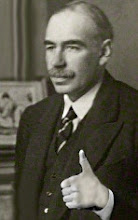
The context is a conversation between Paul Veyne and Foucault in the last year of Foucault’s life when he had AIDS and was displaying the symptoms such as severe cough and fever, and when Foucault’s doctors strongly believed he had AIDS.
Paul Veyne tells the story, as it happened in 1984:
“‘By the way,’ I [viz., Paul Veyne] asked him out of simple curiosity (for the history of medicine is not my dominant passion), ‘does AIDS really exist, or is it a moralizing medical myth?’ ‘Well,’ he [viz., Foucault] replied calmly and after a moment’s reflection, ‘listen. I’ve studied the question closely, I’ve read quite a bit on the subject. Yes, it exists, it’s not a myth. The Americans have studied it very carefully’;” (Veyne 1993: 8).Here is a man who thought that truth is not determined by an objective reality, but by the operation of power and power relations.
But here Foucault declared to his friend that AIDS existed and was not a myth. That entails that he thought it was a real disease, not some culturally-constructed “truth” made by medical power. And that in turn entails some objective reality in which diseases really do affect human beings.
Foucault’s statement is an objective truth claim. If it was not an objective truth claim, then it was either a meaningless statement or outrageously dishonest. If Foucault really maintained his view that truth is only made by power, he should have said:
“Well, it is true that it is a disease, but only because doctors and their power systems say it is and make it true. But really there is no objective truth about the matter and truth is not made by any objective reality! Therefore AIDS is just another ‘truth’ made by power.”If he really thought this, he was lying or deeply dishonest to say “it exists, it’s not a myth.”
If he sincerely meant what he said, we can see how quickly Foucault’s claim that truth can only be made by power, not by objective reality, utterly collapses if he really thought that AIDS existed and was a real disease.
BIBLIOGRAPHY
Veyne, Paul. 1993. “The Final Foucault and his Ethics” (trans. C. Porter and A. Davidson), Critical Inquiry 20.1: 1–9.