Philip Pilkington, “Financial Markets in Keynesian Macroeconomic Theory 101,” Fixing the Economists, July 24, 2014.The first deals with liquidity preference and the definition of “cash” as understood in financial market theory.
Philip Pilkington, “Paul Krugman Does Not Understand the Liquidity Trap,’” Fixing the Economists, July 23, 2014.
The second discusses the difference between the zero-lower bound versus the “liquidity trap” as defined by Keynes and the New Keynesians.
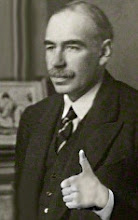
This is what Keynes had to say in the General Theory about the liquidity trap:
“There is the possibility, for the reasons discussed above, that, after the rate of interest has fallen to a certain level, liquidity-preference may become virtually absolute in the sense that almost everyone prefers cash to holding a debt which yields so low a rate of interest. In this event the monetary authority would have lost effective control over the rate of interest. But whilst this limiting case might become practically important in future, I know of no example of it hitherto. Indeed, owing to the unwillingness of most monetary authorities to deal boldly in debts of long term, there has not been much opportunity for a test. Moreover, if such a situation were to arise, it would mean that the public authority itself could borrow through the banking system on an unlimited scale at a nominal rate of interest” (Keynes 1964 [1936]: 207).Keynes said that he knew “of no example of … [sc. the liquidity trap] hitherto.”
Paul Davidson explains the old neoclassical synthesis view of the liquidity trap:
“…Old Keynesians claimed that, at some low, but positive, interest rate, the demand curve for speculative money balances becomes infinitely elastic (horizontal). This horizontal segment of the speculative demand curve was designated the liquidity trap by Old Keynesians such as Paul Samuelson and James Tobin. These mainstream Old Keynesians made the liquidity trap the hallmark of what Samuelson labeled Neoclassical Synthesis Keynesianism. If the economy is enmeshed in the liquidity trap, then Old Keynesians argued that the Monetary Authority is powerless to lower the rate of interest to stimulate the economy no matter how much the central bank exogenously increased the supply of money. This view of the impotence of monetary policy was succinctly summarized in the motto ‘you can’t push on a string.’ The liquidity trap implied that monetary policy would be powerless to stimulate the economy if it fell into recession. These Old Keynesians, therefore, proclaimed that deficit spending fiscal policy was the only policy action available to pull an economy out of a recession. This faith in deficit spending as the only solution for recession became the policy theme for ‘Keynesians’, even though Keynes's speculative motive analysis denies the existence of a ‘liquidity trap’....It seems that the liquidity trap as defined by Keynes is not something that an economy actually experiences.
In the decade after the Second World War, econometricians searched in vain to demonstrate the existence of a liquidity trap (that is, a horizontal segment of the speculative demand for money) where monetary policy could not affect the interest rate.” (Davidson 2002: 95).
There seems to be some confusion here.
If we go back to the crucial passage:
“There is the possibility, for the reasons discussed above, that, after the rate of interest has fallen to a certain level, liquidity-preference may become virtually absolute in the sense that almost everyone prefers cash to holding a debt which yields so low a rate of interest. In this event the monetary authority would have lost effective control over the rate of interest. But whilst this limiting case might become practically important in future, I know of no example of it hitherto. Indeed, owing to the unwillingness of most monetary authorities to deal boldly in debts of long term, there has not been much opportunity for a test. Moreover, if such a situation were to arise, it would mean that the public authority itself could borrow through the banking system on an unlimited scale at a nominal rate of interest” (Keynes 1964 [1936]: 207).Some questions:
(1) what did Keynes mean by the “interest rate”? Did he mean the base rate, or the yield on long term debt, or interest rates in the broadest sense to include the base rate and yields on short and long term debt?Further Reading
(2) what did Keynes mean by “cash”? Did he mean, as it apparently does in modern financial market theory,(1) physical currency, such notes and coins in circulation;
(2) demand deposit and demand deposit-like accounts (checking accounts, transactions accounts, savings accounts);
(3) short-term, liquid money market funds, and
(4) short-term, liquid government bills/bonds?
Philip Pilkington, “What is a Liquidity Trap?,” Fixing the Economists, July 4, 2013.
BIBLIOGRAPHY
Davidson, P. 2002. Financial Markets, Money, and the Real World. Edward Elgar, Cheltenham.
Keynes, J. M. 1964 [1936]. The General Theory of Employment, Interest, and Money. Harvest/HBJ Book, New York and London.