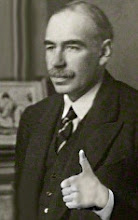
Ludwig Lachmann’s article “Speculative Markets and Economic Complexity” (1988) was written in the wake of the US stock market crash of 1987, and was meant to be defence of the market order. Lachmann, an Austrian economist, takes aim at those who stress “financial fragility,” a reference which was perhaps aimed at Hyman Minsky and his theories.
Lachmann divides markets into (1) ordinary markets and (2) speculative markets (Lachmann 1988: 7). In the “ordinary markets,” Lachmann sees a certain stability that is the result of underlying patterns of supply and demand, and the tendency for expectations to converge (Lachmann 1988: 7–8).
By contrast, speculative markets have an instability owing to the way in which market participants can quickly switch from being bears to bulls, and how “divergent expectations” are the very essence of such “speculative markets” (Lachmann 1988: 8). The latter is a crucial point because general equilibrium theory is dependent on the idea that expectations convergence over time, but that is not possible in speculative markets where, as in other areas of economic life, the future is unknowable. This is why speculative markets create a destabilising element in capitalist systems.
Strangely, while trying to defend markets, Lachmann ends up undermining the case for them in this article.
BIBLIOGRAPHY
Lachmann, L. M. 1988. “Speculative Markets and Economic Complexity,” Economic Affairs 8.2: 7–10.
Showing posts with label speculative markets. Show all posts
Showing posts with label speculative markets. Show all posts
Wednesday, September 18, 2013

Subscribe to:
Posts (Atom)