Showing posts with label review. Show all posts

Saturday, April 12, 2014

The Marginalist Pricing Controversy Revisited

While neoclassical theory holds that firms generally set their prices by equating marginal revenue with marginal cost, the reality is quite different.

The accounting research literature has provided strong evidence that firms generally use total average unit costs (or full costs or normal costs) as the basis for mark-up price setting (Gordon, Cooper, Falk and Miller 1980; Scapens et al. 1983; Govindarajan and Anthony 1983; Cooper 1990; Emore and Ness 1991; Bright et al. 1992; Shim and Sudit 1994; Drury and Tayles 2000).

These results were already known in the 1930s and 1940s (Hall and Hitch 1939) and the “full cost” reality gave rise to the “marginalist controversy” in which neoclassical economists tried desperately to explain away the gap between their theory and reality (Lucas 2003: 203).

Defenders of neoclassical theory included Edwards (1952), Alchian (1950), Pearce (1956), and Simon (1959).

One solution was the doctrine of “implicit marginalism”: the idea that, while firms do not deliberately and consciously equate marginal revenue with marginal cost, in practice they nevertheless act as if they were doing so (Lucas 2003: 203). This was usually related to the methodological instrumentalism of Milton Friedman in his famous essay “The Methodology of Positive Economics” (Friedman 1953), in which Friedman argued that the best test of a theory is whether it predicts outcomes (Lucas 2003: 204), not tests of its assumptions.

Both “implicit marginalism” and Friedman’s instrumentalism have provided neoclassical economics with an absurd escape hatch to evade empirical reality.

Friedman, for example, claimed to use an empiricist (or positivist) method, but his belief that it is not necessary to test the fundamental assumptions of a theory and that only predictive powers of theories matter is utterly unconvincing.

In responding to charges that neoclassical theory was grossly unrealistic, Friedman dismissed such charges as follows:
… criticism of this type is largely beside the point unless supplemented by evidence that a hypothesis differing in one or another of these respects from the theory being criticized yields better predictions for as wide a range of phenomena. Yet most such criticism is not so supplemented; it is based almost entirely on supposedly directly perceived discrepancies between the ‘assumptions’ and the ‘real world.’ A particularly clear example is furnished by the recent criticisms of the maximization-of-returns hypothesis on the grounds that businessmen do not and indeed cannot behave as the theory ‘assumes’ they do. The evidence cited to support this assertion is generally taken either from the answers given by businessmen to questions about the factors affecting their decisions – a procedure for testing economic theories that is about on a par with testing theories of longevity by asking octogenarians how they account for their long life – or from descriptive studies of the decision-making activities of individual firms. Little if any evidence is ever cited on the conformity of businessmen’s actual market behavior – what they do rather than what they say they do – with the implications of the hypothesis being criticized, on the one hand, and of an alternative hypothesis, on the other.” (Friedman 1953: 31).
There you have it: a theory that claims to explain how a firm acts cannot be tested by asking business people how they act!

Now, while it is true that the evidence of econometrics cannot necessarily be used to settle debates in economics, the empirical evidence of direct surveys and case studies has a much greater value than econometric evidence in questions about the behaviour and decision making of firms.

The concocted analogy that Friedman gives to try and dismiss the value of empirical surveys here is a ridiculous one. While it may well be that asking old people how they personally account for their long life cannot test scientific theories of longevity, it does not follow that their evidence has no value in testing such theories: on the contrary, one can ask them how they lived and what lifestyles they had in terms of diet, exercise, smoking, drinking etc., which would be highly relevant to such theories.

And marginalist theories of price setting can be tested by asking business people whether their decision making and actions conform to the assumptions of the theory and the prior model of what constitutes rational or profit-maximising behaviour.

To return to Friedman’s statement above, he, not wishing to seem like a bizarre anti-empiricist extremist, quickly qualified his position in a footnote:
“I do not mean to imply that questionnaire studies of businessmen’s or others’ motives or beliefs about the forces affecting their behavior are useless for all purposes in economics. They may be extremely valuable in suggesting leads to follow in accounting for divergencies between predicted and observed results; that is, in constructing new hypotheses or revising old ones. Whatever their suggestive value in this respect, they seem to me almost entirely useless as a means of testing the validity of economic hypotheses.” (Friedman 1953: 31, n. 22).
But this qualification does very little to soften the extremism of Friedman’s position, which, if anything, reads more like the apriorist fantasies of Ludwig von Mises than any empiricist method, in its unwillingness to accept that empirical evidence can refute an economic theory.

Assumptions of economic theories (and indeed any theory) matter very much. One could, for example, concoct all sorts of theories with unrealistic and even absurd assumptions that manage to predict outcomes consistent with the observed data, but one must have a criterion for deciding which one is most likely the true and the best theory: here testing the fundamental assumptions of theories is necessary.

The empirical evidence of direct surveys and case studies on price setting shows that the marginalist theory of pricing in either (1) an explicit form or (2) the implicit form is mistaken and untenable (Lucas 2003: 207).


BIBLIOGRAPHY
Alchian, A. A. 1950. “Uncertainty, Evolution and Economic Theory,” Journal of Political Economy 58: 211–221.

Bright, J., Davies, R. E., Downes, C. A., and R. C. Sweeting. 1992. “The Deployment of Costing Techniques and Practices: A UK Study,” Management Accounting Research 3: 201–211.

Cooper, R. 1990. “Explicating the logic of ABC,” Management Accounting: 58–60.

Drury, C. and M. Tayles. 2000. “Cost Systems and Profitability Analysis in UK Companies: Discussing Survey Findings,” Munich. Paper presented to Annual Congress of the European Accounting Association.

Edwards, R. S. 1952. “The Pricing of Manufactured Products,” Economica 19: 298–307.

Emore, J. R. and J. A. Ness. 1991. “The Slow Pace of Meaningful Change in Cost Systems,” Journal of Cost Management 4.4: 36–45.

Friedman, M. 1953. “The Methodology of Positive Economics,” in M. Friedman, Essays in Positive Economics. University of Chicago Press, Chicago.

Gordon, L., Cooper, R., Falk, H. and D. Miller. 1980. The Pricing Decision. National Association of Accountants Society of Management Accountants of Canada, Hamilton, New York.

Govindarajan, V. and R. Anthony. 1986. “How Firms use Cost Data in Price Decisions,” Management Accounting 65: 30–34.

Hall, R. L. and C. J. Hitch. 1939. “Price Theory and Business Behaviour,” Oxford Economic Papers 2: 12–45.

Lucas, M. R. 2003. “Pricing Decisions and the Neoclassical Theory of the Firm,” Management Accounting Research 14.3: 201–217.

Machlup, F. 1946. “Marginal Analysis and Empirical Research,” American Economic Review 36: 519–554.

Pearce, I. F. 1956. “A Study in Price Policy,” Economica n.s. 23.90: 114–127.

Scapens, R. W., Gameil, M. Y. and Cooper, D. J. 1983. “Accounting Information for Pricing Decisions,” in J. Arnold, R. W. Scapens, M. Y. Gameil, and D. J. Cooper (eds.), Management Accounting Research and Practice. CIMA, London. 283–306.

Shim, Eunsup, and Ephraim Sudit. 1995. “How Manufacturers Price Products,” Management Accounting 76.8: 37–39.

Simon, H. A. 1959. “Theories of Decision Making in Economies,” American Economic Review 49: 253–283.

Wednesday, November 27, 2013

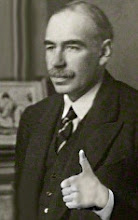
Joseph Stiglitz’s Review of Skidelsky’s Keynes: The Return of the Master

The review below is actually a very good read and has a letter from Paul Davidson at the end:
Joseph Stiglitz, “The Non-Existent Hand” (review of Robert Skidelsky, Keynes: The Return of the Master), London Review of Books 32.8 (22 April), 2010: 17–18.
Joseph Stiglitz is a New Keynesian and his interpretation of Skidelsky is interesting, not least of all for his insights into debt deflation.

Friday, March 2, 2012

Review of the Cambridge Capital Controversies

There is a very interesting review of the Cambridge Capital Controversies at the Naked Keynesianism blog here:
“The Capital Debates: A Brief Introduction,” March 1, 2012
This is a clear, but not oversimplified, summary of the debate and its consequences for neoclassical economics.

Tuesday, January 24, 2012

David Graeber versus Robert Murphy: A Review

Since I have been dealing with David Graeber’s work in the last post, I will also review the debate he had with the Austrian economist Robert P. Murphy.

Let’s review the debate:
(1) This interview with Graeber (“What is Debt? – An Interview with Economic Anthropologist David Graeber,” August 26, 2011) sparked off the debate.

(2) Robert P. Murphy’s attention was drawn to Graeber’s interview by an inaccurate summary of it by Gene Callahan. Murphy admitted he didn’t even read Graeber’s book.

(3) From the very beginning, Murphy appears to have misunderstood Graeber’s position. Graeber does not deny that money in some historical circumstances can emerge from barter between strangers, especially in long distance trade. On p. 75 of Debt: The First 5,000 Years (2011), Graber cites the cacao money of Mesoamerica and the salt money of Ethiopia as instances of money emerging through barter. It is the view that money can only ever emerge from barter spot transactions that must be rejected. Murphy in his original criticism of Graeber also appeared to charge Graeber with denying that moneyless spot trade (barter) had historical existence. That was a completely false charge.

(4) What Graeber attacks is the idea that money-less communities come to have economies dominated by barter spot trades. He also notes that in reality money-less societies tend to be dominated by debt/credit transactions, and that this can largely avoid the immediate, notorious problem of the “double coincidence of wants” that allegedly leads to money’s origin. Robert Murphy eventually made a rather important concession here:
“This is an excellent point, and Graeber is right: In the standard exposition of a barter economy, economists typically think in terms of spot transactions. But in principle, there’s no reason to restrict ourselves in this way. If we can imagine a farmer trading a pig for an axe, we can also imagine a farmer trading a pig for a promise to deliver an axe in two weeks.

Graeber is also right that the possibility of credit transactions expands the scope of a moneyless economy, and mitigates the problem of finding a double coincidence of wants.”

Robert Murphy, “Murphy Replies to David Graeber on Menger and Money,” Mises.org, September 8, 2011.
(5) Murphy cites the work of R. A. Radford (“The Economic Organization of a POW Camp,” Economica 12.48 [1945]: 189–201) that demonstrates the emergence of a cigarette money in a POW camp. But this evidence does not show what Murphy thinks it does. Situations in which barter is observed in groups of human beings in modern times where some good emerges as a medium of exchange can hardly be regarded as confirming the barter origin of money theory, because the people concerned in these cases were already perfectly familiar with money and a price system (Graeber 2011: 37; see also Ingham 2006: 264–265).

Murphy’s citation of Jeff Tucker’s account of “micro-size Three Musketeers bars” emerging as a medium of exchange amongst children bartering with Halloween candies is also invalid and does not prove anything: older and even young children are perfectly familiar with the concept of money and prices.

In any case, Graeber did not deny that money can emerge this way in the distant past: what he denies is that money can only arise this way. As Graeber remarks:
“The idea that there is a single ‘origin’ of money is rather dubious in itself – if money is simply a mathematical system whereby one can compare proportional values, then something of that sort must have emerged in innumerable different occasions in human history for different reasons. The standard version of how it emerged, however, that goes back to Adam Smith, is repeated by Jevons, Menger, etc, is one of the least likely, in fact, which is strongly counter-indicated by all existing evidence.”

Robert Murphy, “David Graeber’s Response to My Article,” Mises.org, September 8, 2011.
(6) Graeber accepts the idea of long distance or regular trade between strangers generating a money unit of account:
“If you have regular exchange between strangers, it’s because there are specific goods that each side knows they want or need. One has to bear in mind that under ancient conditions, long-distance trade was extremely dangerous. …. You show up because you know there are people who have always wanted woolens and who have always had lapis lazuli. Logically, what such a situation would lead to is a series of conventional equivalences – so many woolens for so many pieces of lapis lazuli – which are maintained despite contingencies of supply and demand, because all parties need to reduce risk or the trade would simply stop. And once again, what logic would predict is precisely what we find. Even in periods of human history where money and markets did already exist, high-risk long distance trade has often continued to be carried out through a system of conventional equivalents, administered prices, between specific commodities that merchants already know will be available, or in demand, at certain pre-established locations.

Now, could such a system generate something like money of account – that is, the use of one or two relatively desirable commodities to measure the value of other ones, once more items were added to the mix (say, you’re making several stops)? Sure. It is likely that in certain circumstances, something like this did happen – but it would have meant that money, in such cases, was created first as a means to avoid market mechanisms, and that it was not used mainly as a medium of transactions, but rather, primarily as a means of account. One could even make up an imaginary scenario whereby once you start using one divisible/portable/etc commodity as a means of establishing fixed equivalents between other ones, you could start using for minor occasional transactions, to measure negotiated prices for spot trade swaps on the side, in a more market-driven way. All that is possible and likely as not did happen here and there. However there is no reason to assume that such a system would produce a concrete medium of exchange actually used in making these transactions – in fact, given the dangers of ancient trade, insisting that some medium like silver actually be used in all transactions, rather than a credit system, would be completely irrational, since the need to carry around such a money-stuff would make one a far, far, more attractive target to potential thieves. …. The other problem is there is no reason to believe that such mechanism – which would presumably only be used by that tiny proportion of the population who engaged in long distance trade, and who tended to treat such matters as specialized knowledge to be guarded from outsiders – could possibly create a money system used in everyday transactions within a society or any evidence that it might have done so.

Robert Murphy, “David Graeber’s Response to My Article,” Mises.org, September 8, 2011.
(7) In trying to reconcile Menger’s barter view of the origin of money with the evidence from ancient Mesopotamia, Murphy contends that temples picked silver as an unit of account because silver was what was used to facilitate trades with foreigners. Yet there is a misunderstanding here: the temples used their own produced goods to obtain silver from foreigners, in long distance trade. Silver was a weight unit (Hudson 2003: 42), a high prestige object, and used in temples for objects associated with the gods. As late as the Old Babylonian period (c. 2000–1600 BC), silver was largely confined to temples and palaces (Nemet-Nejat 2002: 267). It did not circulate much as an actual medium of exchange within Mesopotamia in the third millennium BC. It is highly unlikely that silver emerged as the most saleable commodity in barter spot trades and then indirect trades within Mesopotamia to attain the status of money. Rather, a silver unit of account was developed by temples from its use as a weight unit in those temples.

RESOURCES

Graeber, David, 2009. “Debt: The First Five Thousand Years,” Eurozine.com, 20th August.
An early summary of Graeber’s work on debt.

“What is Debt? – An Interview with Economic Anthropologist David Graeber,” Nakedcapitalism.com, August 26, 2011.
The original interview with Graeber that sparked the debate.

Gene Callahan, “Fiat Currency,” Saturday, August 27, 2011.
A summary of Graeber’s interview that sparked off a debate between Gene Callahan and Robert Murphy.

Robert P. Murphy, “Have Anthropologists Overturned Menger?,” Mises Daily, September 1, 2011.
This is Robert P. Murphy’s response to Graeber’s interview at Nakedcapitalism.com.

Robert Murphy, “David Graeber’s Response to My Article,” Mises.org, September 8, 2011.
This is a summary of David Graeber’s comments on Robert P. Murphy’s article “Have Anthropologists Overturned Menger?.”

Robert Murphy, “Murphy Replies to David Graeber on Menger and Money,” Mises.org, September 8, 2011.
This is Murphy’s reply to David Graeber’s comments.

David Graeber, “On the Invention of Money – Notes on Sex, Adventure, Monomaniacal Sociopathy and the True Function of Economics. A Reply to Robert Murphy’s ‘Have Anthropologists Overturned Menger?,’” September 13, 2011.
David Graeber’s final response to Murphy, published on Nakedcapitalism.com.


BIBLIOGRAPHY

Graeber, David. 2011. Debt: The First 5,000 Years, Melville House, Brooklyn, N.Y.

Hudson, M. 2003. “The Creditary/Monetarist Debate in Historical Perspective,” in S. A. Bell and E. J. Nell (eds), The State, the Market, and the Euro: Chartalism versus Metallism in the Theory of Money, Edward Elgar, Cheltenham. 39–76.

Ingham, G. 2006. “Further Reflections on the Ontology of Money: Responses to Lapavitsas and Dodd,” Economy and Society 35.2: 259–278.

Nemet-Nejat, K. R. 2002. Daily Life in Ancient Mesopotamia, Hendrickson, Peabody, Mass.

Radford, R. A. 1945. “The Economic Organization of a POW Camp,” Economica 12. 48: 189–201.