Showing posts with label employment. Show all posts

Saturday, May 28, 2016

On the Value of Work in a Social Democracy

A career and a job where one does economically and socially useful work is an important part of any successful, healthy and wealthy society. But more than this, it gives people an identity through the job that they have and a social dignity lacking in long-term unemployment.

There are of course a lot of difficult, boring, dirty and sometimes dangerous jobs that have to be done, but a technologically advanced society like ours can use its inventive genius to create more and better machines and automation to do these jobs, so that human beings aren’t forced to do them.

But not all jobs are like the ones described above. For many people, their jobs – while often challenging or requiring hard work – are nevertheless safe, interesting, rewarding, and sometimes enjoyable. Some people are lucky enough to have jobs they absolutely love.

A really decent society run on social democratic principles would provide full employment and not leave people on welfare to become a deskilled, demoralised, dependent and depressed class of people, some of whom descend into irresponsible hedonism and drug abuse.

And there is certainly something to be said for the principle that people should not be allowed to simply live off welfare for years on end as long-term unemployed, but not as in the vicious and victim-blaming right-wing hysteria of libertarians or neoliberals – the latter having increasingly imposed a vicious, disgusting and punitive welfare system over the past 30 years.

The whole point of a society run on social democratic and Keynesian principles of full employment is precisely: we shouldn’t even need a big welfare bill for people of working age, because by means of (1) macroeconomic management of the private sector and (2) government employment programs at decent wages, there would only be a small body of unemployed anyway (essentially people in seasonal and frictional unemployment).

To achieve this today would require not just fiscal policy to create jobs in the private sector but government employment programs to find and create economically and socially useful work, e.g., in public infrastructure development, housing, social services, etc. That of course requires much more government planning than we currently have and perhaps ditching parts of the current welfare system (except for people who cannot work) for a system where people not employed in the private sector are provided with work at better and decent wage rates in public sector jobs. Private sector jobs probably do need to pay more, as in MMT-style job guarantee programs, but even in recruitment and distribution of people between the sectors more planning probably has its virtues too.

One could have a universal basic income under such a system, but everybody who is fit for work should be provided with a job appropriate for them and their skills to obtain income above the universal basic income. Such a system in, say, the United States would, I strongly suspect, start to do something substantive to fix the social problems of the African American community and white working classes too.

In that respect, a social democratic and, for that matter, old-fashioned socialist system is certainly not about shoving the human race onto welfare or the dole, but it is about bettering the human condition through a system that really does value work and employment and provides it for its citizens, as compared with a dysfunctional laissez faire capitalism that repeatedly fails to provide full employment.

In that respect, there is also something to be said for this Marxist take on this subject, even though I would shun the doctrinaire aspects of Marxism and reject a command economy. But, as the author says, it is true that there are some people who do not wish to work, and:
“Socialism is not about putting everyone on the dole, but putting everyone to work, doing work with dignity, respect, honor, satisfaction, and human fulfillment. Not everyone wants to work. Not everyone wants to be a civilized human being. Those who don't want to work, those who want to be predators, they will feel the hammer of the state, hard enough to satisfy any authoritarian.”
http://barefootbum.blogspot.com/2016/03/a-rant-on-socialism-authoritarianism.html
I wouldn’t go that far, however. The “hammer of the state” is a bit too much for me, unless the people in question are criminals. But a sensible punitive demand that people – especially young men – should not be lazy and irresponsible work-shy hedonists is not objectionable by any means.

Now today, while there is plenty of manual labour and unskilled labour that could be done under such a system even in the first world nations, there is also a very great deal of economically and socially useful work that can be done by intellectuals trained at universities, e.g., in the natural sciences, engineering, medical science, neuroscience, computer science, and the more useful social sciences.

Above all, governments in the Western world could also begin to employ people in much larger programs to start really helping with Third World development, e.g., health care, public infrastructure, disease control, education, etc. Promoting Third World development by allowing a space for independent economic development, import substitution industrialisation, utterly reformed international institutions and direct assistance by Western labour would be far better than the current system of neoliberalism.

It is undoubtedly true that as technological development soars, automation, robots and artificial intelligence will make it more and more difficult to find work for people of value, but nevertheless economically and socially useful work will still be of great value, even if the working day and working week will probably shrink as compared with today.

Thursday, January 30, 2014

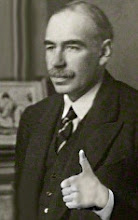
Kalecki, Keynes, Wages and Capacity Utilisation

In this fascinating interview of heterodox economist Bob Rowthorn, he makes a very interesting point about the importance of capacity utilisation and fixprices in Keynesian economics, in terms of the differences between the views of Keynes in the General Theory and Kalecki (N.B. the video may start at an earlier point than I set it at in Mozilla Firefox!).


Now I have not looked carefully into this, but does anyone know any good literature about this subject, and specific references in Kalecki’s work?

The crucial point is that Keynes was opposed to nominal wage cuts (for reasons explained in Chapter 19 of the General Theory), and his analysis there seems to assume a flexprice world (Hayes 2006: 178: “The General Theory itself is a ‘flex-price’ system, but not of Hick’s Walrasian type”) as a concession to the neoclassical theory of Keynes’s day, in order to show that even flexible prices and wages do not necessarily cure unemployment.

But, once we have a mark-up pricing world with adjustments in capacity utilisation where prices are generally relatively inflexible, then expansion of aggregate demand does not simply cause inflation as it would if prices were generally flexprice.

And once we move to the real world of fixprices (the world of mark-up prices and capacity utilisation as in Kalecki’s models), Keynesian economics simply becomes an even stronger and more robust theory of modern market economies.


BIBLIOGRAPHY
Hayes, Mark. 2006. The Economics of Keynes: A New Guide to The General Theory. Edward Elgar, Cheltenham.

Sunday, May 19, 2013

Will Hutton on the Future of Automation

A thought-provoking article by Will Hutton in the Guardian/Observer on the consequences of automation on employment:
Will Hutton, “Driverless Cars, Pilotless Planes … Will There be Jobs Left for a Human Being?,” Guardian, Sunday 19 May 2013.
It is strange that there is no mention of the need to maintain aggregate demand, but otherwise the speculations at the end make interesting reading.

I am inclined to think we are only seeing the the small effects of these processes now, and the really huge changes will be more a medium to long term problem, something that will become acute from 2030s or 2040s, though that is just a wild guess.

A final point about energy technology: I suspect many people think of nuclear fusion as the promise that bounced, but recent news about the international nuclear fusion project should give people pause. Unfortunately, at a conservative estimate commercial fusion reactors might not be around until the 2050s.

Sunday, December 23, 2012

Murphy versus Huerta de Soto on the Government’s Ability to Increase Employment and Output

Robert Murphy tells us that it is not at all clear that we “should credit QE1 and/or [sc. the] Obama stimulus” with the US recovery in 2009. That reflects a most extreme view that some Austrians can now be found peddling: the idea that expansionary government fiscal policy does nothing or little to increase private investment and consumption, and that government stimulus programs do not work.

How strange it is, then, to see that other Austrians have never denied that government fiscal and monetary policies can increase employment and output.

Take this statement by Huerta de Soto (who is himself an advocate of a most extreme Rothbardian program):
“Under certain conditions, government and union intervention, along with the institutional rigidity of the markets, may prevent the necessary readjustments which precede any recovery of economic activity. If wages are inflexible, hiring conditions very rigid, union power great and governments succumb to the temptation of protectionism, then extremely high unemployment can actually be maintained indefinitely, without any adjustment to new economic conditions on the part of the original means of production. Under these circumstances a cumulative process of contraction may also be triggered. By such a process the massive growth of unemployment would give rise to a widespread decrease in demand, which in turn would provoke new doses of unemployment, etc. Some theorists have used the term secondary depression to refer to this process, which does not arise from spontaneous market forces, but from coercive government intervention in labor markets, products, and international trade. In some instances, ‘secondary depression’ theorists have considered the mere possibility of such a situation a prima facie argument to justify government intervention, encouraging new credit expansion and public spending. However the only effective policy for avoiding a ‘secondary depression,’ or for preventing the severity of one, is to broadly liberalize markets and resist the temptation of credit expansion policies. Any policy which tends to keep wages high and make markets rigid should be abandoned. These policies would only make the readjustment process longer and more painful, even to the point of making it politically unbearable.

What should be done if, under certain circumstances, it appears politically ‘impossible’ to take the measures necessary to make labor markets flexible, abandon protectionism and promote the readjustment which is the prerequisite of any recovery? This is an extremely intriguing question of economic policy, and its answer must depend on a correct evaluation of the severity of each particular set of circumstances. Although theory suggests that any policy which consists of an artificial increase in consumption, in public spending and in credit expansion is counterproductive, no one denies that, in the short run, it is possible to absorb any volume of unemployment by simply raising public spending or credit expansion, albeit at the cost of interrupting the readjustment process and aggravating the eventual recession.

Nonetheless Hayek himself admitted that, under certain circumstances, a situation might become so desperate that politically the only remaining option would be to intervene again, which is like giving a drink to a man with a hangover. In 1939 Hayek made the following related comments:
it has, of course, never been denied that employment can be rapidly increased, and a position of ‘full employment’ achieved in the shortest possible time by means of monetary expansion. ... All that has been contended is that the kind of full employment which can be created in this way is inherently unstable, and that to create employment by these means is to perpetuate fluctuations. There may be desperate situations in which it may indeed be necessary to increase employment at all costs, even if it be only for a short period—perhaps the situation in which Dr. BrĂ¼ning found himself in Germany in 1932 was such a situation in which desperate means would have been justified. But the economist should not conceal the fact that to aim at the maximum of employment which can be achieved in the short run by means of monetary policy is essentially the policy of the desperado who has nothing to lose and everything to gain from a short breathing space.
Now let us suppose politicians ignore the economist’s recommendations and circumstances do not permit the liberalization of the economy, and therefore unemployment becomes widespread, the readjustment is never completed and the economy enters a phase of cumulative contraction. Furthermore let us suppose it is politically impossible to take any appropriate measure and the situation even threatens to end in a revolution. What type of monetary expansion would be the least disturbing from an economic standpoint? In this case the policy with the least damaging effects, though it would still exert some very harmful ones on the economic system, would be the adoption of a program of public works which would give work to the unemployed at relatively reduced wages, so workers could later move on quickly to other more profitable and comfortable activities once circumstances improved. At any rate it would be important to refrain from the direct granting of loans to companies from the productive stages furthest from consumption. Thus a policy of government aid to the unemployed, in exchange for the actual completion of works of social value at low pay (in order to avoid providing an incentive for workers to remain chronically unemployed) would be the least debilitating under the extreme conditions described above.” (Huerta de Soto 2012: 452–456).
First, before I come to my main point, Huerta de Soto is entirely wrong to blame “secondary depressions” solely on government intervention and “union power.” Has this man never heard of debt deflation and subjective expectations affecting the outlook of capitalists? In an environment of high private-sector debt, wage cuts would prove disastrous as the burden of debt soared, which causes bankruptcy to both debtors and creditors. And, in any case, markets lack the reliable equilibrating mechanisms so beloved by neoclassicals and Austrians, for the following reasons:
(1) the essential property of all highly liquid assets (with money as the most liquid asset) is that there is a zero or near zero elasticity of substitution between these liquid assets and producible commodities. This means that the gross substitution axiom is false and any acts of spending on liquid assets causing their price to rise will not necessarily induce substitution effects leading to more demand for cheaper producible commodities.

(2) it is unlikely that all markets have equilibrium prices (and even less likely that price setting businesses would be willing to adjust the prices rapidly anyway if they existed). The very notion of an economy with a tendency to general equilibrium, where all product markets converge to market-clearing prices, depends on unrealistic assumptions, such as flexible prices and demand and supply curves behaving with substitution effects in the absence of income effects;

(3) owing to uncertainty and subjective expectations, it is unlikely that shattered expectations of business people will change suddenly to induce the necessary level of investment in a severe recession or depression;

(4) there is thus no guarantee that savings will match investment (even if you assume a loanable funds theory of interest) or that Say’s law is much more than a fantasy;

(5) there is no such thing as some natural rate of interest that will equilibrate savings and investment;

(6) as Keynes himself argued, absence of wage and price flexibility is not the reason why neoclassical theory is flawed: even if we had complete wage and price flexibility, there would still be no guarantee of full employment.
But to return to my original point: the crucial issue here is that even Huerta de Soto states that “no one denies that, in the short run, it is possible to absorb any volume of unemployment by simply raising public spending or credit expansion” – no one, that is, except (apparently) Robert Murphy!

Curiously, Ludwig Lachmann went further than Huerta de Soto and saw public works spending in a depression as a genuinely useful measure:
“In the British situation of 1932, Hayek and his friends rejected the proposals of Keynes and some non-Keynesian British economists – that at the bottom of the depression the government should take certain steps, and so on. Hayek has now realised that that was wrong. That is to say, I think Austrians today would not reject all measures to relieve unemployment and increase employment, in a situation in which nothing really is scarce. And in this respect I think Austrians … would have … have ... learned.”
BIBLIOGRAPHY

Huerta de Soto, J. 2012. Money, Bank Credit and Economic Cycles (3rd edn.; trans. M. A. Stroup), Ludwig von Mises Institute, Auburn, Ala.