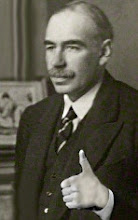
But amongst the early critics of Marxism was Achille Loria (1857–1943), an Italian political economist.
Achille Loria’s book Karl Marx (1920) reproduced his critique of Marx from an earlier article of 1895:
“... by a vigorous deduction from his premise that the value of commodities is measured by the mass of labour incorporated in them, Marx arrives at the fundamental and logical distinction between constant capital and variable capital. If, however, the value of products be exclusively determined by the mass of labour incorporated in them, it is evident that the capital invested in machinery or in raw material can only transmit to the product a value exactly equal to the quantity of labour contained therein, without adding any surplus, and that it is therefore constant capital; whereas wage capital transmits to the product value equal to all the quantity of labour which it maintains and sets in motion, a quantity which, as we know, exceeds the quantity of labour contained in the capital itself. In other words, wage capital, besides reproducing its own value, furnishes a supplement or a surplus value, and is therefore variable capital. Consequently surplus value arises exclusively from variable capital, and is therefore precisely proportional to the quantity of this capital. It further ensues that of two undertakings employing equal amounts of aggregate capital, the one which employs a larger proportion of constant capital ought to furnish a profit and a rate of profit lower than that furnished by the other. But free competition among the capitalists enforces an equal rate of profit upon the capitals invested in the various undertakings, and leads to the immediate abandonment of undertakings requiring a greater proportion of constant capital, and to the correlative expansion of the others. There consequently results an increase in the value of the products of the former undertakings, and a diminution in the value of the products of the latter. This process continues until the value of the respective products furnishes an equal rate of profit to the capitals respectively employed in producing them. Value, therefore, though in the first instance it is equivalent to the labour employed in producing the products, necessarily diverges from that standard in the end, and has then an utterly different measure. Thus the theory we are discussing is peremptorily refuted, or is reduced to absurdity.BIBLIOGRAPHY
From the outset Marx is distinctly aware of the existence of this striking contradiction, which emerges in so formidable a manner in the first stage of his investigation; he frankly recognises it, but postpones its solution to the later volumes of his treatise. On the very morrow, indeed, of the publication of the first volume, he ardently set to work once more, and sketched to his friend, in monumental pages, the design of the complete book.” (Loria 1920: 71–72).
“… [but], on the one hand, Marx clearly affirmed, and showed by his actions, that he definitely wished to devote himself to the completion of his treatise, whereas, on the other hand, it is undeniable that after the publication of the first volume of Capital, he never wrote another line of the book, and that all the posthumous additions to this volume were composed prior to 1867.” (Loria 1920: 72–73).
“Most distressing of all, [sc. when Marx died] he had taken with him to the grave the solution of the formidable enigma which everyone, the vulgar and the thinkers alike, had expected his genius to solve, and which no one else could unravel. It is true that shortly before his death he showed his friend the bulky manuscripts dictated in earlier days relating to the Criticism of Political Economy, suggesting that something might be made of this collection. It is also true that Engels, faithful executor of his divinity’s wishes, devoted himself with splendid zeal to the publication of the manuscripts. But alas what delusion was in store for the admirers of the master! What a Russian campaign of disaster organised by enthusiastic lieutenants to the hurt of this Napoleon of thought!
In 1885, two years after the death of Marx, there was published under Engels’ supervision a so-called second volume of Capital. But the careless and pedestrian editorship, the long theoretical disquisitions making no appeal to facts for their justification, disquisitions in which the argumentative thread is continually broken, suffice to show that what we have before us is not a book, hardly even a sketch for a book, but a series of casual writings composed for the purposes of study and for personal illumination.” (Loria 1920: 74–75).
“But absolutely nowhere [sc. in volume 2 of Capital] does it touch on or even hint at the theoretical enigma left unsolved in the first volume. Solely in Engels’ preface do we find an announcement that the definitive solution will be furnished in a subsequent volume, and a suggestion that in the interim economists engage in a sort of academic debate, and bring forward their respective solutions. There actually took part in this strange competition, with varying success, Conrad Schmidt, Landé, Lexis, Skworzoff, Stiebeling, Julius Wolf, Fireman, Lafargue, Soldi, Coletti, Graziadei, and myself. At length, however, in 1894, appeared the third volume, which was to reveal to an impatient world the desired solution.
The solution reduces itself to this. It is true, says Marx, that the value commensurate to labour ends by assigning to the capitals respectively employed as constant and as variable, different rates of profit, and that this is radically incompatible with competition. But it is likewise true that products are not actually sold for their value, but for their price of production, which is equal to the capital consumed plus profit at the ordinary rate on the total capital employed. Certainly if we consider the mass of products sold, we find that their total price is precisely equal to their total value. But this integral value is not distributed among the various products in proportion to the quantity of labour incorporated in them, but in a lesser or greater proportion, according as the products themselves contain a greater or less proportion of the mean between the constant capital and the total capital; that is to say, the products containing a proportion of constant capital superior to the mean are sold at a price above their value in order to eliminate the deficiency of profit due to the preponderance of the capital which does not produce surplus value; whereas the products containing a proportion of constant capital inferior to the mean are sold at a price less than their value so as to eliminate the excess of profit due to the preponderance of the capital that produces surplus value; whilst only the products containing the mean proportion of constant capital and total capital are sold at a price precisely identical with their value.
But it soon becomes apparent that this so-called solution is little more than a play upon words, or, better expressed, little more than a solemn mystification. For when economists endeavour to throw light upon the laws of value, they naturally consider the value at which the commodities are actually sold, and not a fantastical or transcendental value, not a value which neither possesses nor can possess any concrete relationship to facts. It may well be that value as determined by abstract economic theory will not always correspond precisely with value as a concrete fact, for the complexities and the manifold vicissitudes of real life impose obstacles; it may well be, indeed, that to the rigidity of normal value, constituting the type of the relationship of exchange, we ought to counterpose the comparatively transient fluctuations of current value. But it must be understood that no logical fact should stand in the way of the realisation of normal value, for this, conversely, ought to be derived by logical necessity from fundamental economic premises. Of a value, indeed, which not only is not realised, but is not logically capable of realisation, the economist neither can nor ought to take any account; he should show in what respect, instead of being the expression of what value is, it is the expression of what value is not and cannot be; he should point out the negation of every correct and positive theory of value. Now this value commensurate to labour, value as defined by Marx’s theory, not merely has its realisation restricted or modified by the vicissitudes of reality, but further, as Marx himself is constrained to recognise, it is not logically capable of realisation, seeing that it would give rise to results incompatible with the most elementary advantage of those who effect the exchange of commodities; consequently, it is not merely an abstraction remote from reality, but is incompatible with reality; not only is it an impossibility in the realm of fact, but further and above all it is a logical impossibility. Thus, far from effecting the salvation of the threatened doctrine, this alleged solution administers a death-blow, and implies the categorical negation of what it professes to support. For what meaning can there possibly be in this reduction of value to labour, the doctrine dogmatically affirmed in the first volume, to one who already knows that the author is himself calmly prepared to jettison it? Is there any reason for surprise at Marx’s hesitation to publish this so-called defence; need we wonder that his hand trembled, that his spirit quailed, before the inexorable act of destruction?” (Loria 1920: 76–79).
Loria, Achille. 1895. “L’opera postuma di Carlo Marx,” Nuova Antologia di Scienze 55.3 (February): 460–496.
Loria, Achille. 1920. Karl Marx. (trans. Eden and Cedar Paul), George Allen and Unwin Ltd., London.
Robinson, Joan. 1966. An Essay on Marxian Economics (2nd edn.). Macmillan, London.