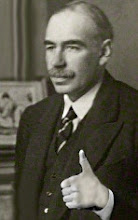
In this fascinating interview of heterodox economist Bob Rowthorn, he makes a very interesting point about the importance of capacity utilisation and fixprices in Keynesian economics, in terms of the differences between the views of Keynes in the General Theory and Kalecki (N.B. the video may start at an earlier point than I set it at in Mozilla Firefox!).
Now I have not looked carefully into this, but does anyone know any good literature about this subject, and specific references in Kalecki’s work?
The crucial point is that Keynes was opposed to nominal wage cuts (for reasons explained in Chapter 19 of the General Theory), and his analysis there seems to assume a flexprice world (Hayes 2006: 178: “The General Theory itself is a ‘flex-price’ system, but not of Hick’s Walrasian type”) as a concession to the neoclassical theory of Keynes’s day, in order to show that even flexible prices and wages do not necessarily cure unemployment.
But, once we have a mark-up pricing world with adjustments in capacity utilisation where prices are generally relatively inflexible, then expansion of aggregate demand does not simply cause inflation as it would if prices were generally flexprice.
And once we move to the real world of fixprices (the world of mark-up prices and capacity utilisation as in Kalecki’s models), Keynesian economics simply becomes an even stronger and more robust theory of modern market economies.
BIBLIOGRAPHY
Hayes, Mark. 2006. The Economics of Keynes: A New Guide to The General Theory. Edward Elgar, Cheltenham.
Showing posts with label capacity utilisation. Show all posts
Showing posts with label capacity utilisation. Show all posts
Thursday, January 30, 2014

Subscribe to:
Posts (Atom)