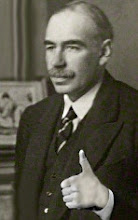
In what follows I focus on his statements on the law of demand, though there is much else of interest in the paper, including a discussion of the quantity theory of money (one could also add a fine discussion of the law of demand and its shortcomings in Philip Mirowski’s The Effortless Economy of Science? [2004]).
Neoclassical economics tends to engage in fundamental analysis by means of highly abstract principles, abstracted from social data (Albert et al. 2012: 296).
In particular, neoclassical laws have a tendency to “immunise” neoclassical theory against refutation by experience and empirical evidence, a methodology Albert dubs “model Platonism” (Albert et al. 2012: 300).
The tendency has reached an apotheosis (of stupidity in my view) in the apriorism of some economic theory, most notably, as Albert points out, associated with the praxeology of Mises and his Austrian and non-Austrian methodological followers (Albert et al. 2012: 300, with n. 15).
The law of demand is in fact used in both neoclassical and Austrian economics, and this abstract law – in its abstract form – posits a universally true demand function, in which quantity demanded of a commodity is a decreasing function of price (Albert et al. 2012: 302).
The problem identified by Albert is a crucial one: at first sight, the law looks like it is an empirically testable proposition with substantive informational content about the real world (Albert et al. 2012: 302). But, as Albert says,
“... upon closer examination, this impression fades. As is well known, the law is usually tagged with a clause that entails numerous interpretation problems: the ceteris paribus clause. In the strict sense this must thus at least be formulated as follows to be acceptable to the majority of theoreticians: ceteris paribus – that is, all things being equal – the demanded quantity of a consumer good is a monotone-decreasing function of its price. The ceteris paribus clause is not a relatively insignificant addition, which might be ignored. Rather, it can be viewed as an integral element of the law of demand itself.” (Albert et al. 2012: 302).So the ceteris paribus assumption is crucial to the law.
What is the epistemological status of the law of demand?
Albert sees it as a general hypothetical proposition: that is, a conditional statement with the antecedent-consequent/if-then structure (Albert et al. 2012: 302).
The ceteris paribus assumption must be part of the antecedent, so that the law can be written:
If, with all other factors held constant except price, the price of a good is reduced, then the quantity demanded will increase, andHans Albert hits the nail on the head about the epistemological problem here:
If, with all other factors held constant except price, the price of a good is increased, then the quantity demanded will fall.
“If the factors that are to be left constant remain undetermined, as not so rarely happens, then the law of demand under question is fully immunized to facts, because every case which initially appears contrary must, in the final analysis, be shown to be compatible with this law. The clause here produces something of an absolute alibi, since, for every apparently deviating behavior, some altered factors can be made responsible. This makes the statement untestable, and its informational content decreases to zero.” (Albert et al. 2012: 303).Of course, once the ceteris paribus is appropriately interpreted to mean everything conceivable except price must be held constant, then the consequence of this is all too clear: the law of demand is reduced to an analytic a priori proposition, which has been made true by definition and with respect to the real world has become not-informative (Albert et al. 2012: 303).
For how can you refute or test a tautology?
I have said the same thing myself here, on the basis of a summary of Steve Keen devastating critique of the law (Keen 2011: 38–73).
Of course, responses can be made: doesn’t natural science also use abstract laws? E.g.,
Newton’s law of universal gravitation:But these laws are testable to a high level, while the law of demand is not.
any two bodies in the universe attract each other with a force that is directly proportional to the product of their masses and inversely proportional to the square of the distance between them.
Newton’s first law of motion:
an object at rest will stay at rest unless acted on by an outside force, and an object in motion will stay in motion unless acted on by an outside force.
For neoclassical economics claims to be able to test the “law of demand,” but the “testing” is simply models where attempts are made to separate out the impact of a price change into the “income effect” and “substitution effect,” by means of changing indifference curves, budget constraints and employing Hicksian compensated demand curves. The result is simply that the “law of demand” is proven only for a single, isolated consumer.
Worse still, the Sonnenschein-Mantel-Debreu theorem finds that the law of demand does not necessarily apply to market demand curves, and the attempts to show how the law of demand could govern the behaviour of market demand curves result in the equally absurd result that this can only happen if in effect there is only one commodity and only one consumer in an economy.
The devastating result of all this is simply this: all the “proofs” reduce the law of demand to an analytic a priori statement that is informationally vacuous – exactly as Han Albert notes.
Further Reading
Lars P. Syll, “Hans Albert on Neoclassical Economics — Fully immunized to Facts,” 26 February, 2014.
Philip Pilkington, “Hans Albert Expands Robinson’s Critique of Marginal Utility Theory to the Law of Demand,” Fixing the Economists, February 27, 2014.
BIBLIOGRAPHY
Albert, Hans. 1963. “Modell-Platonismus: Der neoklassische Stil des ökonomischen Denkens in kritischer Beleuchtung,” in F. Karrenberg and H. Albert (eds.), Sozialwissenschaft und Gesellschaftsgestaltung. Festschrift für Gerhard Weisser. Duncker und Humblot, Berlin. 45–76.
Albert, Hans, Arnold, Darrell and Frank Maier-Rigaud. 2012. “Model Platonism: Neoclassical economic thought in critical light,” Journal of Institutional Economics 8.3: 295–323.
Keen, Steve. 2011. Debunking Economics: The Naked Emperor Dethroned? (rev. and expanded edn). Zed Books, London and New York.
Mirowski, Philip. 2004. The Effortless Economy of Science?. Duke University Press, Durham.