Showing posts with label communism. Show all posts

Friday, July 7, 2017

What is the Case against Marxism in a Nutshell?

That is, what is the case against the actual theory presented by Karl Marx in volume 1 of Capital? This was the only volume of Capital that Marx published in his lifetime, and volume 3 contradicts volume 1 in important respects.

First, we need to know what Marx actually argued in volume 1 of Capital.

The essence of Marx’s theory and his conception of the historical tendency of capitalism is as follows:
(1) Marx had an elaborate labour theory of value on which he founded volume 1 of Capital (see here). Marx understood “value” in the following terms:
(1) the substance of value is abstract socially necessary labour time, which must be defined as a homogeneous unit capable of aggregating and measuring all heterogeneous types of human labour-power (Marx 1906: 45–46);

(2) so therefore value is abstract, socially necessary labour time embodied, crystallised, or materialised in commodities, and

(3) the magnitude of value or quantitative measure of value is the amount of abstract socially necessary labour time, counted in homogeneous units (Marx 1906: 45–46).
Marx also thought that market prices move around and are determined by labour values, since the latter are the equilibrium price anchors for a capitalist system.

(2) capitalism tends to increase the (1) accumulation, (2) concentration (accumulation over time) and (3) centralisation of capital. Capitalism will therefore have a tremendous tendency towards monopoly.

(3) capitalism will tend to destroy more and more capitalists and result in huge centralisation of capital (or monopoly) and reduce even capitalists to the proletarian class;

(4) capitalism will tend to use more and more machines and automation in production resulting in a huge body of unemployed people.

(5) the industrial reserve army of labour (the unemployed) grows and grows, and helps to hold real wages in check (see Chapter 25 of Capital). Even more, Marx thought that a large and growing industrial reserve army is a necessary condition of capitalism: it was a “condition of existence of the capitalist mode of production” (Marx 1906: 646).

(6) the tendency of capitalism is to keep the real wage at a subsistence level, which is the value of the maintenance and reproduction of labour-power (on this, see Chapter 25 of Capital and here). Wages rise and fall around this subsistence level as an equilibrium process;

(7) machines will only increase the intensity, speed and arduousness of work for the proletarians and their misery (see Chapter 15 of volume 1), and also increase the employment of women and children who are paid a lower wage than adult men (although government laws might counter this latter trend to some extent). The adult men are then increasing thrown out of work by machines and women and children replace them with lower wages;

(8) volume 3 of Capital adds to this the tendency of the profit rate to fall, but this mechanism is not invoked in volume 1 as one of the causes of the collapse, and some modern Marxists now dispute just how important the tendency of the falling rate of profit was for the final collapse of capitalism in Marx’s theory, as the emphasis given to this may be more the result of Engels’ tendentious editing of volume 3 of Capital.

(9) eventually almost the whole of society is reduced to the proletarian class with only a tiny handful of monopoly capitalists, who according to Marx “usurp and monopolise all advantages of this process of transformation” (Marx 1906: 836).

(10) the huge and constantly growing class of proletarians, who are kept in poverty with a subsistence wage, are subject to an increasing “mass of misery, oppression, slavery, degradation, [and] exploitation” (Marx 1906: 836). As in the passage of Engels quoted by Marx, the “other classes perish and disappear in the face of Modern Industry” (Marx 1906: 837, n. 1).

(11) finally, the proletarians eventually organise and rebel against capitalism, overthrowing the system.
Now these theories and predictions judged in their totality were not the long-run tendency of capitalism.

Even if a few elements are true (e.g., the increasing use of machines), nevertheless Marx’s vision is a Marxist caricature of capitalism which has been falsified by history.

We can run through the problems and failed predictions of Marxism as follows:
(1) Marx’s labour theory of value is false. The a priori argument for the labour theory of value in volume 1 of Marx’s Capital is a non sequitur and later contradicts itself, as detailed here and here. There are devastating problems with the very concept of a homogeneous unit of abstract, socially necessary labour time and serious empirical problems with the theory, as I show here. The very concept, as Marx defines it, cannot be accepted or defended as coherent or meaningful, and is contrary to the empirical evidence. The labour theory does not explain price determination (for how most prices are actually determined, see here), and the theory of price determination in volume 3 of Capital is inconsistent with that in volume 1. See here.

(2) the tendency to monopoly has its limits even in capitalism, and the extreme and increasing degree of monopoly as predicted by Marx goes well beyond anything observed in real world capitalism;

(3) the size of the working class eventually stabilised and society was swelled by a growing and prosperous middle class and social mobility. Unemployment rates in capitalism are simply a cyclical result of the business cycle: even in the 19th century, unemployment rates did not grow and grow in the long run, as Marx’s theory predicts, but normally simply moved around a point somewhat above full employment, as John Maynard Keynes pointed out:
“our actual experience … [sc. is] that we oscillate, avoiding the gravest extremes of fluctuation in employment and in prices in both directions, round an intermediate position appreciably below full employment and appreciably above the minimum employment a decline below which would endanger life.”
Keynes, J. M. 1936. General Theory of Employment, Interest, and Money , Chapter 18.
https://www.marxists.org/reference/subject/economics/keynes/general-theory/ch18.htm
(4) Marx thought that the large industrial reserve army is a necessary consequence and necessary condition of capitalism, but this is incorrect. In the Keynesian era of full employment, there was very low unemployment and indeed labour scarcity in the advanced capitalist world, but capitalism continued and thrived – indeed we now call it the “Golden Age” of capitalism.

(5) the long-run tendency of capitalism, even in the 19th century, was to massively increase the real wage, which has soared above subsistence level, even for workers (see here and here).

(6) the growing real wage and rising disposable income even of workers in capitalism also allowed a massive capacity for production of new commodities and new opportunities for employment (e.g., especially in services and middle class employment), which in turn has helped to overcome technological unemployment.

(7) Marx’s claim that machines, generally speaking, are an unmitigated evil in capitalism whose primary effect is to increase the intensity and speed of work by labourers is an outrageous falsehood – a perversion of history and reality. In reality, machines have, generally speaking, tended to decrease the intensity, difficulty and monotony of human labour and often reduced to human labour to lighter work of visual inspection and overseeing of machine work, not physical labour. On this, see here and here. Advanced capitalist nations have also virtually eliminated child labour as well, and in our time have tended to pay women the same hourly wage for the same type of work as men.

(8) highly developed and advanced Western capitalist states like Britain and the US proved the most resistant to communism and Marxism (contrary to Marx’s theory), and when communist revolutions broke out it was in backward Russia and China. Even the communist outbreaks in Germany and Italy at the end of the First World War were more the result of the collapse of those nations under the strain of war, and not in line with the vision Marx had predicted (as I noted here).
In the Keynesian era of full employment from 1946 to 1973, mixed economy capitalism produced a golden age.

Of course, since the 1970s we have entered a a disastrous and regressive era of Neoliberal economics, but, even so, the consequences of that Neoliberalism are not in line with all of the predictions of Marxism as listed above.

The end of the Keynesian period and the return to revived neoclassical theories from the 1970s brought with it a return to lower growth, higher unemployment, stagnating real wages, and higher income inequality, but, above all, a transnational globalised neoliberal capitalism which has shipped a great deal of Western manufacturing and jobs to the Third World, and allowed legal and illegal Third World mass immigration into the West to lower wage costs, displace native workers and even replace populations.

To the extent that early Marxists dealt with issues of immigration and open borders, many welcomed it.

Engels in The Principles of Communism (written in 1847) welcomed the destruction and erasure of ethnic and national groups:
“What will be the attitude of communism to existing nationalities?

The nationalities of the peoples associating themselves in accordance with the principle of community will be compelled to mingle with each other as a result of this association and thereby to dissolve themselves, just as the various estate and class distinctions must disappear through the abolition of their basis, private property.”
https://www.marxists.org/archive/marx/works/1847/11/prin-com.htm
Lenin saw open borders as “progressive”:
“There can be no doubt that dire poverty alone compels people to abandon their native land, and that the capitalists exploit the immigrant workers in the most shameless manner. But only reactionaries can shut their eyes to the progressive significance of this modern migration of nations. Emancipation from the yoke of capital is impossible without the further development of capitalism, and without the class struggle that is based on it. And it is into this struggle that capitalism is drawing the masses of the working people of the whole world, breaking down the musty, fusty habits of local life, breaking down national barriers and prejudices, uniting workers from all countries in huge factories and mines in America, Germany, and so forth.

America heads the list of countries which import workers. …. The bourgeoisie incites the workers of one nation against those of another in the endeavour to keep them disunited. Class-conscious workers, realising that the break-down of all the national barriers by capitalism is inevitable and progressive, are trying to help to enlighten and organise their fellow-workers from the backward countries.”
V. I. Lenin, “Capitalism and Workers’ Immigration,” Za Pravdu No. 22, October 29, 1913.
https://www.marxists.org/archive/lenin/works/1913/oct/29.htm
So early Marxists saw mass immigration and the destruction of national differences as “progressive,” and thought that once people had been mixed up into multicultural or multi-ethnic states, this would create a huge class-conscious proletarian movement, which would then overthrow capitalism. This was yet another Marxist delusion.

Instead, unending Third World mass immigration means the dispossession of the people of the Western world, the Islamisation of our societies, the transformation of our nations into dysfunctional, Balkanised areas with rent-seeking nepotistic and mutually hostile ethnic and religious groups fighting for control of the state.

The deteriorating plight of Western workers and even segments of the middle class by Neoliberalism, the Islamisation of our societies, and Third World immigration has not produced any renewed Marxist or Communist movements of any political importance in the First World.

Rather, more and more people have reacted with increased support for nationalist and protectionist conservatives, and Marxists and Communists – where they still exist – militantly support the disastrous mass immigration policies that more and more people hate and reject.

In particular, modern Marxists are mired in irrational regressive left and Cultural Leftist delusions, such as Third Wave feminism, the idea that all cultures are equal and the nonsense that mass immigration is always a positive force.

That is why Marxism is destined for the dustbin of history.

BIBLIOGRAPHY
Marx, Karl. 1906. Capital. A Critique of Political Economy (vol. 1; rev. trans. by Ernest Untermann from 4th German edn.). The Modern Library, New York.

Marx, Karl. 1990. Capital. A Critique of Political Economy. Volume One (trans. Ben Fowkes). Penguin Books, London.

Wednesday, April 27, 2016

Keynes on Communism

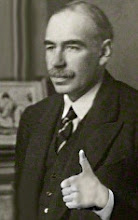
Keynes visited the Soviet Union in the summer of 1925. He evidently tried hard to take a fair-minded view of Soviet Communism to please other people on the left, but just couldn’t do it.

From his essay “A Short View of Russia” (1925):
“Like other new religions, Leninism derives its power not from the multitude but from a small minority of enthusiastic converts whose zeal and intolerance make each one the equal in strength of a hundred indifferentists. .... Like other new religions, it persecutes without justice or pity those who actively resist it. Like other new religions, it is unscrupulous. Like other new religions, it is filled with missionary ardour and ecumenical ambitions. ....

I sympathise with those who seek for something good in Soviet Russia.

But when we come to the actual thing what is one to say? For me, brought up in a free air undarkened by the horrors of religion, with nothing to be afraid of, Red Russia holds too much which is detestable. Comfort and habits let us be ready to forgo, but I am not ready for a creed which does not care how much it destroys the liberty and security of daily life, which uses deliberately the weapons of persecution, destruction, and international strife. How can I admire a policy which finds a characteristic expression in spending millions to suborn spies in every family and group at home, and to stir up trouble abroad? Perhaps this is no worse and has more purpose than the greedy, warlike, and imperialist propensities of other Governments; but it must be far better than these to shift me out of my rut. How can I accept a [sc. communist] doctrine which sets up as its bible, above and beyond criticism, an obsolete economic textbook which I know to be not only scientifically erroneous but without interest or application for the modern world? How can I adopt a creed which, preferring the mud to the fish, exalts the boorish proletariat above the bourgeois and the intelligentsia who, with whatever faults, are the quality in life and surely carry the seeds of all human advancement? Even if we need a religion, how can we find it in the turbid rubbish of the Red bookshops? It is hard for an educated, decent, intelligent son of Western Europe to find his ideals here, unless he has first suffered some strange and horrid process of conversion which has changed all his values.”
http://www.gutenberg.ca/ebooks/keynes-essaysinpersuasion/keynes-essaysinpersuasion-00-h.html
Keynes’ judgement on Marx’s economics is especially interesting:
“How can I accept a [sc. communist] doctrine which sets up as its bible, above and beyond criticism, an obsolete economic textbook which I know to be not only scientifically erroneous but without interest or application for the modern world?”
And we can easily list these erroneous and obsolete doctrines as they exist in volume 1 of Capital:
(1) the size of the working class eventually stabilised and society was swelled by a growing and prosperous middle class and social mobility, contrary to Marx’s prediction of all people – except a small class of capitalists – being reduced to proletarians. Unemployment rates in capitalism are simply a cyclical result of the business cycle: even in the 19th century, unemployment rates did not grow and grow in the long run, as Marx’s theory predicts, but normally simply moved around a point somewhat above full employment, as John Maynard Keynes pointed out:
“our actual experience … [sc. is] that we oscillate, avoiding the gravest extremes of fluctuation in employment and in prices in both directions, round an intermediate position appreciably below full employment and appreciably above the minimum employment a decline below which would endanger life.”
Keynes, J. M. 1936. General Theory of Employment, Interest, and Money , Chapter 18.
https://www.marxists.org/reference/subject/economics/keynes/general-theory/ch18.htm
(3) Marx thought that the large industrial reserve army is a necessary consequence and necessary condition of capitalism, but this is incorrect. In the Keynesian era of full employment, where there was very low unemployment and indeed labour scarcity in the advanced capitalist world, capitalism continued and thrived – indeed we now call it the “Golden Age” of capitalism.

(4) the long-run tendency of capitalism, even in the 19th century, was to massively increase the real wage, which has soared above subsistence level, even for workers (see here and here), contrary to Marx’s theory that the tendency of capitalism is to keep the real wage at a subsistence level (which is the value of the maintenance and reproduction of labour-power).

(5) the growing real wage and rising disposable income even of workers in capitalism also allowed a massive capacity for production of new commodities and new opportunities for employment (e.g., especially in services and middle class employment), which in turn has helped to overcome technological unemployment for most of the history of capitalism, contrary to Marx’s prediction of subsistence wages and increasing technological unemployment. Even if we do experience mass technological unemployment this century, it need not lead to disaster, with demand-management, a guaranteed income and government employment programs.

(6) Marx’s claim that machines, generally speaking, are an unmitigated evil in capitalism whose primary effect to increase the intensity and speed of work by labourers is an outrageous falsehood – a perversion of history and reality. In reality, machines have, generally speaking, tended to decrease the intensity, difficulty and monotony of human labour and often reduced to human labour to lighter work of visual inspection and overseeing of machine work, not physical labour. On this, see here and here. Advanced capitalist nations have also virtually eliminated child labour as well, and in our time have tended to pay women the same hourly wage for the same type of work as men.

(7) highly developed and advanced Western capitalist states like Britain and the US proved the most resistant to communism and Marxism (contrary to Marx’s theory), and when communist revolutions broke out it was in backward Russia and China.
BIBLIOGRAPHY
Keynes, J. M. 1933 [1925]. “A Short View of Russia,” in John Maynard Keynes, Essays in Persuasion. Macmillan, London. 297–311.
http://www.gutenberg.ca/ebooks/keynes-essaysinpersuasion/keynes-essaysinpersuasion-00-h.html

Thursday, November 5, 2015

“Marx was not responsible for the Horrors of Communism” is Nonsense

The cry that “Marx was not responsible for the crimes of Soviet communism” is Marxist apologetics at its worst: an attempt to completely exonerate Marx from the horrors of 20th century communism.

It is also curious that many Marxists claim that Soviet communism was some “betrayal” of Marx and Engel’s vision of communism, but then at the same time go on to engage in the most disgraceful apologetics for Soviet communism.

However, that is not my purpose here. The question is: to what extent was Marx responsible for the authoritarian nightmare that was the Soviet Union?

Of course, it is true that Marx was not personally responsible for the torture chamber that was Stalinist Russia (obviously not, he was dead). And we can of course rule out the following senses in which Marx might have been responsible for Soviet crimes:
(1) Marx was not personally morally responsible in the way a Soviet executioner of victims of Stalin’s Great Terror was responsible for mass murder;

(2) Marx was not personally morally responsible in the way that Lenin or Stalin were responsible for mass murder when they ordered or signed the orders to kill millions of people.
Now any rational person can admit that Marx was not responsible in these senses above.

Nevertheless, there remains a terrible sense in which Marx was clearly indirectly responsible for the authoritarian and murderous nature of these regimes by means of his ideas and influence on later generations. If you think ideas have no influence on people, then you are clearly wrong, and the demand for a dictatorship of the proletariat with “despotic inroads on the rights of property” is right there in The Communist Manifesto (Marx and Engels 1985 [1888]: 104–105).

Or take Marx’s Critique of the Gotha Program, which was based on a letter he wrote in 1875 and was published in 1891.

By the mid-1870s, reformist or moderate Continental socialist parties and leaders had risen to challenge the views of Marx in significant ways. In Germany, in 1875 there was founded the Socialist Workers’ Party of Germany, which became the modern Social Democratic Party of Germany, and it adopted a moderate program that Marx opposed.

However, Marx rejected that peaceful reformist model for communism and towards the end of the Critique of the Gotha Program Marx states frankly his opposition to democracy and his different vision of the state in the transitional communist society:
“What, then, is the change which the institution of the State will undergo in a communistic society? In other words, what social functions, analogous ‘to the present functions of the State, will remain there? This question can be answered only by proceeding scientifically; the problem is not brought one flea’s leap nearer its solution by a thousand combinations of the word ‘people’ with the word ‘State.’

Between the capitalist and the communist systems of society lies the period of the revolutionary transformation of the one into the other. This corresponds to a political transition period, whose State can be nothing else but the revolutionary dictatorship of the proletariat. But the platform [sc. of the German Social Democrats] applies neither to the latter, nor to the future State organization of communist society. Its political demands contain nothing but the old democratic litany that the whole world knows: ‘universal suffrage,’ ‘direct legislation,’ ‘administration of justice by the people,’ ‘arming of the nation,’ etc. They are a mere echo of the middle-class People’s Party, of the League for Freedom and Peace; they are all demands that, so far as they are not of an exaggerated phantastic conception, are realized now. Only the State, in which they are found, is not situated within the boundary lines of the German Empire, but in Switzerland, the United States, etc. This sort of ‘Future State’ is present State, though existing outside the limits of the German Empire.” (Marx 1922 [1891]: 47–48).
It should be quite clear that Marx envisages an authoritarian system here, and that he was an enemy of peaceful democratic reform through elections and political movements. Until the end of his life he was an advocate of violent revolution, and even endorsed the violence of the Russian revolutionary movement in his last years (Sperber 2014: 537). These are all clear reasons why Marx was, quite simply, an extremist and an enemy of democratic, constitutional government, and why it is absurd to deny that his ideology bears a real responsibility for the horrors of 20th-century authoritarian communist governments where his ideas on the “dictatorship of the proletariat” were put into effect.

If some Nazi were to write works inciting people to violent revolution and a genocide, and later people were actually inspired by these works and actually did establish a violent genocidal Nazi state in line with the plan of the works, only the most irrational, stupid and dogmatic ideologue would say that the original Nazi bears no indirect moral responsibility for things that were done by people who followed his advice. Exactly the same argument applies to Marx.

Even worse, we have this brutally frank vision by Friedrich Engels in 1872 of what a Communist revolution would be like:
“A revolution is certainly the most authoritarian thing there is; it is the act whereby one part of the population imposes its will upon the other part by means of rifles, bayonets and cannon — authoritarian means, if such there be at all; and if the victorious party does not want to have fought in vain, it must maintain this rule by means of the terror which its arms inspire in the reactionists. Would the Paris Commune have lasted a single day if it had not made use of this authority of the armed people against the bourgeois? Should we not, on the contrary, reproach it for not having used it freely enough?
Friedrich Engels, “On Authority,” 1874
https://www.marxists.org/archive/marx/works/1872/10/authority.htm
There is not a shred of evidence that Marx would have disagreed with this.

It stands as a chilling statement of how Engels envisaged the Communist revolution: authoritarianism, violence, and a terrorist state. This is like a playbook for 20th century communist regimes, and – is it really any surprise? – Lenin was a great admirer of his essay of Engels (Hunt 2009: 259).

Also disgusting is the way that apologists say that Marx and Engels would never have approved of the violence and crimes of, say, the Soviet Union. How the hell would they know? Did they ever read this passage by Engels?

BIBLIOGRAPHY
Engels, Friedrich. “On Authority,” 1874
https://www.marxists.org/archive/marx/works/1872/10/authority.htm

Hunt, Tristram. 2009.The Frock-Coated Communist: The Revolutionary Life of Friedrich Engels. Allen Lane, London.

Marx, Karl. 1922. “Critique of the Gotha Programme,” in Marx and Daniel de Leon, Critique of the Gotha Programme and Did Marx Err?. National Executive Committee, Socialist Labor Party, New York.

Marx, Karl and Friedrich Engels. 1985 [1888]. The Communist Manifesto (trans. S. Moore). Penguin Books, London.

Sperber, Jonathan. 2014. Karl Marx: A Nineteenth-Century Life. Liveright Publishing Corporation, New York.

Thursday, April 30, 2015

Engels on Authoritarianism and Revolution

In 1872, Friedrich Engels waged a campaign against the anarchist thought and followers of Mikhail Bakunin (1814–1876), and later he published an essay called “On Authority” (1874) in the Italian paper Almanacco Republicano (Hunt 2009: 259). The essay has a remarkable admission at the end, as follows:
“A number of Socialists have latterly launched a regular crusade against what they call the principle of authority. It suffices to tell them that this or that act is authoritarian for it to be condemned. This summary mode of procedure is being abused to such an extent that it has become necessary to look into the matter somewhat more closely.

Authority, in the sense in which the word is used here, means: the imposition of the will of another upon ours; on the other hand, authority presupposes subordination. Now, since these two words sound bad, and the relationship which they represent is disagreeable to the subordinated party, the question is to ascertain whether there is any way of dispensing with it, whether — given the conditions of present-day society — we could not create another social system, in which this authority would be given no scope any longer, and would consequently have to disappear.

On examining the economic, industrial and agricultural conditions which form the basis of present-day bourgeois society, we find that they tend more and more to replace isolated action by combined action of individuals. ….

Everywhere combined action, the complication of processes dependent upon each other, displaces independent action by individuals. But whoever mentions combined action speaks of organisation; now, is it possible to have organisation without authority?

Supposing a social revolution dethroned the capitalists, who now exercise their authority over the production and circulation of wealth. Supposing, to adopt entirely the point of view of the anti-authoritarians, that the land and the instruments of labour had become the collective property of the workers who use them. Will authority have disappeared, or will it only have changed its form? Let us see.

Let us take by way if example a cotton spinning mill. The cotton must pass through at least six successive operations before it is reduced to the state of thread, and these operations take place for the most part in different rooms. Furthermore, keeping the machines going requires an engineer to look after the steam engine, mechanics to make the current repairs, and many other labourers whose business it is to transfer the products from one room to another, and so forth. All these workers, men, women and children, are obliged to begin and finish their work at the hours fixed by the authority of the steam, which cares nothing for individual autonomy. The workers must, therefore, first come to an understanding on the hours of work; and these hours, once they are fixed, must be observed by all, without any exception. Thereafter particular questions arise in each room and at every moment concerning the mode of production, distribution of material, etc., which must be settled by decision of a delegate placed at the head of each branch of labour or, if possible, by a majority vote, the will of the single individual will always have to subordinate itself, which means that questions are settled in an authoritarian way. The automatic machinery of the big factory is much more despotic than the small capitalists who employ workers ever have been. At least with regard to the hours of work one may write upon the portals of these factories: Lasciate ogni autonomia, voi che entrate! [Leave, ye that enter in, all autonomy behind!]

If man, by dint of his knowledge and inventive genius, has subdued the forces of nature, the latter avenge themselves upon him by subjecting him, in so far as he employs them, to a veritable despotism independent of all social organisation. Wanting to abolish authority in large-scale industry is tantamount to wanting to abolish industry itself, to destroy the power loom in order to return to the spinning wheel.

Let us take another example — the railway. Here too the co-operation of an infinite number of individuals is absolutely necessary, and this co-operation must be practised during precisely fixed hours so that no accidents may happen. Here, too, the first condition of the job is a dominant will that settles all subordinate questions, whether this will is represented by a single delegate or a committee charged with the execution of the resolutions of the majority of persona interested. In either case there is a very pronounced authority. Moreover, what would happen to the first train dispatched if the authority of the railway employees over the Hon. passengers were abolished?

But the necessity of authority, and of imperious authority at that, will nowhere be found more evident than on board a ship on the high seas. There, in time of danger, the lives of all depend on the instantaneous and absolute obedience of all to the will of one.

When I submitted arguments like these to the most rabid anti-authoritarians, the only answer they were able to give me was the following: Yes, that's true, but there it is not the case of authority which we confer on our delegates, but of a commission entrusted! These gentlemen think that when they have changed the names of things they have changed the things themselves. This is how these profound thinkers mock at the whole world.
We have thus seen that, on the one hand, a certain authority, no matter how delegated, and, on the other hand, a certain subordination, are things which, independently of all social organisation, are imposed upon us together with the material conditions under which we produce and make products circulate.

We have seen, besides, that the material conditions of production and circulation inevitably develop with large-scale industry and large-scale agriculture, and increasingly tend to enlarge the scope of this authority. Hence it is absurd to speak of the principle of authority as being absolutely evil, and of the principle of autonomy as being absolutely good. Authority and autonomy are relative things whose spheres vary with the various phases of the development of society. If the autonomists confined themselves to saying that the social organisation of the future would restrict authority solely to the limits within which the conditions of production render it inevitable, we could understand each other; but they are blind to all facts that make the thing necessary and they passionately fight the world.

Why do the anti-authoritarians not confine themselves to crying out against political authority, the state? All Socialists are agreed that the political state, and with it political authority, will disappear as a result of the coming social revolution, that is, that public functions will lose their political character and will be transformed into the simple administrative functions of watching over the true interests of society. But the anti-authoritarians demand that the political state be abolished at one stroke, even before the social conditions that gave birth to it have been destroyed. They demand that the first act of the social revolution shall be the abolition of authority. Have these gentlemen ever seen a revolution? A revolution is certainly the most authoritarian thing there is; it is the act whereby one part of the population imposes its will upon the other part by means of rifles, bayonets and cannon — authoritarian means, if such there be at all; and if the victorious party does not want to have fought in vain, it must maintain this rule by means of the terror which its arms inspire in the reactionists. Would the Paris Commune have lasted a single day if it had not made use of this authority of the armed people against the bourgeois? Should we not, on the contrary, reproach it for not having used it freely enough?

Therefore, either one of two things: either the anti-authoritarians don’t know what they’re talking about, in which case they are creating nothing but confusion; or they do know, and in that case they are betraying the movement of the proletariat. In either case they serve the reaction.”
Friedrich Engels, “On Authority,” 1874
https://www.marxists.org/archive/marx/works/1872/10/authority.htm
If nothing else, Engels was brutally frank in the words highlighted in yellow. You couldn’t have a clearer statement of how Engels envisaged the Communist revolution: authoritarianism, violence, and terror. This is like a playbook for 20th century communist regimes, and – is it really any surprise? – Lenin was a great admirer of his essay of Engels (Hunt 2009: 259).

It is quite outrageous to hear modern apologists for Marx and Engels trying to desperately explain away the phrase “dictatorship of the proletariat” as not signifying an authoritarian regime. Also disgusting is the way that apologists say that Marx and Engels would never have approved of the violence and crimes of, say, the Soviet Union. How the hell would they know? Did they ever read this passage by Engels? And it is amply clear from reading any go0d biography of Marx’s life that he – until the end of his life – was an advocate of violent revolution, and even endorsed the violence of the Russian socialist revolutionaries in his last years, even when they assassinated the Tsar (Sperber 2014: 537).

In short, Marxism was an authoritarian ideology and attempts to deny this are absurd and shameful.

In my view, the alternative progressive liberal political tradition of the late 19th century, which maintained a support for all the best aspects of classical liberalism while discarding its commitment to economic laissez faire, is the true ideological ancestor of modern social democracy. Of course, one could add to this non-Marxist trade union movements, the British Fabian Society (which rejected revolutionary socialism), and, finally, in economic thought the ideas of John Maynard Keynes as developed in the modern school of Post Keynesian economics.

BIBLIOGRAPHY
Engels, Friedrich. “On Authority,” 1874
https://www.marxists.org/archive/marx/works/1872/10/authority.htm

Hunt, Tristram. 2009.The Frock-Coated Communist: The Revolutionary Life of Friedrich Engels. Allen Lane, London.

Sperber, Jonathan. 2014. Karl Marx: A Nineteenth-Century Life. Liveright Publishing Corporation, New York.

Tuesday, July 24, 2012

What Economic System did Marx and Engels Advocate?

And here I don’t mean their utopian classless, stateless society (which they called “pure communism”), but the transitional system they advocated in The Communist Manifesto (English trans. 1888 edn., based on the 1872 German edn.; the first German edn. was published in 1848).

Here is what they advocated:
“The proletariat will use its political supremacy to wrest, by degrees, all capital from the bourgeoisie, to centralise all instruments of production in the hands of the State, i.e., of the proletariat organised as the ruling class; and to increase the total productive forces as rapidly as possible.

Of course, in the beginning, this cannot be effected except by means of despotic inroads on the rights of property, and on the conditions of bourgeois production; by means of measures, therefore, which appear economically insufficient and untenable, but which, in the course of the movement, outstrip themselves, necessitate further inroads upon the old social order, and are unavoidable as a means of entirely revolutionising the mode of production.

These measures will of course be different in different countries.

Nevertheless, in most advanced countries, the following will be pretty generally applicable.

1. Abolition of property in land and application of all rents of land to public purposes.
2. A heavy progressive or graduated income tax.
3. Abolition of all rights of inheritance.
4. Confiscation of the property of all emigrants and rebels.
5. Centralisation of credit in the hands of the state, by means of a national bank with State capital and an exclusive monopoly.
6. Centralisation of the means of communication and transport in the hands of the State.
7. Extension of factories and instruments of production owned by the State; the bringing into cultivation of waste-lands, and the improvement of the soil generally in accordance with a common plan.
8. Equal liability of all to work. Establishment of industrial armies, especially for agriculture.
9. Combination of agriculture with manufacturing industries; gradual abolition of all the distinction between town and country by a more equable distribution of the populace over the country.
10. Free education for all children in public schools. Abolition of children’s factory labour in its present form. Combination of education with industrial production, &c, &c.” (Marx and Engels 1985 [1888]: 104–105).
The essence of the transitional Communist system was the complete nationalisation of all industry and business: the state would itself own all capital goods, and by implication centrally plan production and consumption of commodities, even the media (by point (6)).

But, in addition to this, the state would abolish private property rights in land and housing, and even the right to inherit private property (with the exception of insignificant personal family property), as in points (1) and (3) above. Indeed, according to Marx and Engels, this is essence of the Communist system:
“In this sense, the theory of the Communists may be summed up in the single sentence: Abolition of private property.” (Marx and Engels 1985 [1888]: 96).
Point (5) also requires the abolition of private banks, and state monopoly on banking.

In point (10), we find a strong opposition to child labour, which Marx and Engels were passionately opposed to. They stressed this in The Communist Manifesto in these words:
“Do you charge us with wanting to stop the exploitation of children by their parents? To this crime we plead guilty.” (Marx and Engels 1985 [1888]: 100).
But the disgust at the economic exploitation of children was hardly unique to Marxism: for example, even deeply Christian, 19th century Tory radicals and paternalists in the UK were vehement opponents of child labour, and were a driving force behind legislation to outlaw it.

Point (9) stands as a very strange, anti-urban – and even deluded – idea: to reduce the population of cities and redistribute population to rural areas.

It is obvious how all this requires an authoritarian, even totalitarian, political system, and it is not surprising that Marx and Engels advocated a “dictatorship of the proletariat”: abolition of democracy, freedom of speech, the rule of law and legal and civil rights. For these reasons alone – even before we get to economic objections – Marxism stands as just another decidedly evil and monstrous authoritarian doctrine.

It can be seen how radically different the Marxist transitional state is from a modern economy with Keynesian macroeconomic management:
(1) The Marxist transitional state requires complete nationalisation of all production; by contrast, a Keynesian system is one where the vast majority of all production is done privately.

(2) Private property rights are extensive and a fundamental part of the legal and social organisation of states with a Keynesian heritage. In the Communist system, even private ownership of land, housing and the right to inheritance are abolished.

(3) In many modern states, even when central banks exist, banking is largely conducted by private financial institutions. The Marxist transitional state would have all banks nationalised. A further observation is that Marxism would essentially abolish developed markets for financial assets, especially secondary financial asset markets.

(4) Communication media tend to be largely privatised in modern states with a history of Keynesian macroeconomic management. Even in states with one nationalised television or media network (e.g., the UK with the BBC), all other media are privatised. In the Marxist state, all media are controlled by the state.

(5) Keynesianism requires no bizarre commitment to shifting population to rural areas.

(6) Keynesianism requires no “equal liability of all to work,” even though I dare say there are many people, even in Western countries, who might feel intuitively that this idea has some appeal.
At most, modern states do resemble the transitional Marxist state in point (2) (the progressive income tax) and point (10) (free or subsidized public education for children and abolition of child labour). But there are so many other differences (and significant ones to boot) that anyone who asserts, for example, that the modern UK or Canada must be communist because they have public education and no child labour is just guilty of stupid and lazy reasoning: committing the fallacy of hasty generalization and possibly the fallacy of composition.

Above all, what distinguishes capitalism ameliorated by Keynesianism historically from Communism is the commitment to democracy, freedom of speech, freedom of religion, the rule of law and civil liberties. Although one can certainly find authoritarian states that practised Keynesianism in the past (e.g., fascist Japan and modern China), I say “historically” because the broad sweep of nations where Keynesianism has existed over the past 70 years have been overwhelmingly democratic and in the liberal tradition. To illustrate what I mean here, note how Chicago school monetarism was practised by Augusto Pinochet’s Chile (a dictatorship), but it is a bad mistake to think that monetarism is inherently authoritarian or requires authoritarianism. Most nations that have implemented monetarist ideas have been democratic: monetarism as a macroeconomic theory and practice is essentially neutral with respect to the political organisation of the nation where it is implemented. The same can be said of Keynesian economics, which in fact presupposes a very significant amount of private enterprise and private production.

One of the more interesting verdicts of Keynes on Marxism was that the doctrine was a “sickness of the soul” (Skidelsky 1992: 517), and, while Keynes was in a conversation with T. S. Eliot in 1934, Virginia Woolf described Keynes as he commented on Marxism:
“[sc. Keynes adressed] The economic question: the religion of Communism. [sc. Marxism was the] ... worst of all and founded on a silly mistake of old Mr. Ricardo’s which M[aynard] given time will put right.” (from the diary of Virginia Woolf, quoted in Skidelsky 1992: 517).
The “silly mistake of old Mr. Ricardo” was nothing less than the labor theory of value, an important point.

The judgement of Keynes on the Soviet Union is given by Skidelsky:
“unlike the Webbs, he [sc. Keynes] could never think of Soviet Russia as a serious intellectual resource for Western civilisation. In the 1920s he had said that Marxism and communism had nothing of scientific interest to offer the modern mind. The depression did not alter his view. Russia ‘exhibits the worst example which the world, perhaps, has ever seen of administrative incompetence and of the sacrifice of almost everything that makes life worth living ...’; it was a ‘fearful example of the evils of insane and unnecessary haste’; ‘Let Stalin be a terrifying example to all who seek to make experiments.’” (Skidelsky 1992: 488).
The opposition of Keynes to Marxism was both economic and political. In reply to George Bernard Shaw in 1935 on the issue of Marx, this is what Keynes said about Marxism:
“Thank you for your letter. I will try to take your words to heart. There must be something in what you say, because there generally is. But I’ve made another shot at old K.[arl] M.[arx] last week, reading the Marx-Engels correspondence just published, without making much progress. I prefer Engels of the two. I can see that they invented a certain method of carrying on and a vile manner of writing, both of which their successors have maintained with fidelity. But if you tell me that they discovered a clue to the economic riddle, still I am beaten – I can discover nothing but out-of-date controversialising.

To understand my state of mind, however, you have to know that I believe myself to be writing a book [viz., The General Theory] on economic theory which will largely revolutionalise – not, I suppose, at once but in the course of the next ten years – the way the world thinks about economic problems. When my new theory has been duly assimilated and mixed with politics and feelings and passions, I can’t predict what the final upshot will be in its effect on action and affairs. But there will be a great change, and, in particular, the Ricardian foundations of Marxism will be knocked away.

I can’t expect you, or anyone else, to believe this at the present stage. But for myself I don’t merely hope what I say, – in my own mind I’m quite sure.”
(Keynes to Shaw, 1 January, 1935, quoted in Skidelsky 1992: 520–521).
And Keynes, as a progressive liberal, was adamant that civil rights and democracy were the most important things that any Western nation needed to preserve:
“... [sc. Keynes] could both love the communist generation for their idealism, and despise them for their muddle-headedness. If Keynes could not solve the ‘primal question’ of how to live, he felt he could solve the secondary question of what to do. His assault on the scientific pretentions of Marxism and the horrors of the Soviet system was unremitting, and needed no revelation of mass murder. He insisted on the supreme importance of ‘preserving as a matter of principle every jot and tittle of the civil and political liberties which former generations painfully secured.’” (Skidelsky 1992: 518).
BIBLIOGRAPHY

Marx, K. and F. Engels. 1985 [1888]. The Communist Manifesto (trans. S. Moore). Penguin Books, London.

Skidelsky, R. J. A. 1992. John Maynard Keynes: The Economist as Saviour, 1920–1937 (vol. 2), Macmillan, London.

Monday, August 22, 2011

Keynes’s Opinion of Communism and Marxism

Ralph Raico quotes a radio interview by Keynes, where Keynes supposedly praises the Soviet Union:
Ralph Raico, “Keynes and the Reds,” Mises Daily, February 13, 2002.

“The Case for Robert Skidelsky as a Liar,” August 20, 2011.
The remarks in question were allegedly made by Keynes in a radio talk for the BBC in June 1936 in which he discussed Sidney and Beatrice Webb’s book Soviet Communism: A New Civilization? (Longmans, 1935), a rather disgraceful apologia for Soviet communism.

Raico draws attention to this comment of Keynes:
“Until recently events in Russia were moving too fast and the gap between paper professions and actual achievements was too wide for a proper account to be possible. But the new system is now sufficiently crystallized to be reviewed. The result is impressive. The Russian innovators have passed, not only from the revolutionary stage, but also from the doctrinaire stage.

There is little or nothing left which bears any special relation to Marx and Marxism as distinguished from other systems of socialism. They are engaged in the vast administrative task of making a completely new set of social and economic institutions work smoothly and successfully over a territory so extensive that it covers one-sixth of the land surface of the world. Methods are still changing rapidly in response to experience. The largest scale empiricism and experimentalism which has ever been attempted by disinterested administrators is in operation. Meanwhile the Webbs have enabled us to see the direction in which things appear to be moving and how far they have got.”
If Keynes really thought that Soviet Union was “impressive,” then that was a wrong, ridiculous, contemptible and disgraceful remark.

However, I have not seen the full interview yet, and I suspect that there is some kind of selective quotation going on here. Why? The reason is that such a remark blatantly contradicts Keynes’s other writings and statements. The fact is that Keynes’s explicit public and private condemnation of Marxism, communism, and the Soviet Union is well attested.

First, Skidelsky is clear that Keynes did not support the Webbs’ book:
“unlike the Webbs, he [sc. Keynes] could never think of Soviet Russia as a serious intellectual resource for Western civilisation. In the 1920s he had said that Marxism and communism had nothing of scientific interest to offer the modern mind. The depression did not alter his view. Russia ‘exhibits the worst example which the world, perhaps, has ever seen of administrative incompetence and of the sacrifice of almost everything that makes life worth living ...’; it was a ‘fearful example of the evils of insane and unnecessary haste’; ‘Let Stalin be a terrifying example to all who seek to make experiments.’” He found Kingsley Martin too ‘pro-Bolshie’ in the New Statesman.” (Skidelsky 1992b: 488).
Secondly, Keynes wrote a letter in reply to George Bernard Shaw in 1935 on the issue of Marx, where he was quite clear in rejecting Marxism:
“Thank you for your letter. I will try to take your words to heart. There must be something in what you say, because there generally is. But I’ve made another shot at old K.[arl] M.[arx] last week, reading the Marx-Engels correspondence just published, without making much progress. I prefer Engels of the two. I can see that they invented a certain method of carrying on and a vile manner of writing, both of which their successors have maintained with fidelity. But if you tell me that they discovered a clue to the economic riddle, still I am beaten – I can discover nothing but out-of-date controversialising.

To understand my state of mind, however, you have to know that I believe myself to be writing a book on economic theory which will largely revolutionalise – not, I suppose, at once but in the course of the next ten years – the way the world thinks about economic problems. When my new theory has been duly assimilated and mixed with politics and feelings and passions, I can’t predict what the final upshot will be in its effect on action and affairs. But there will be a great change, and, in particular, the Ricardian foundations of Marxism will be knocked away.

I can’t expect you, or anyone else, to believe this at the present stage. But for myself I don’t merely hope what I say, – in my own mind I’m quite sure.”
(Keynes to Shaw, 1 January, 1935, quoted in Skidelsky 1992b: 520–521).
Thirdly, Keynes rejected the Soviet system:
“And so he [sc. Keynes] could both love the communist generation for their idealism, and despise them for their muddle-headedness. If Keynes could not solve the ‘primal question’ of how to live, he felt he could solve the secondary question of what to do. His assault on the scientific pretentions of Marxism and the horrors of the Soviet system was unremitting, and needed no revelation of mass murder. He insisted on the supreme importance of ‘preserving as a matter of principle every jot and tittle of the civil and political liberties which former generations painfully secured ....’. He was outraged when London University tried to silence the loquacious Professor Laski of the LSE, writing in the New Statesman to defend Laski, but adding, ‘Too many of the younger members of the Left have toyed with Marxist ideas to have a clear conscience in repelling reactionary assaults on freedom.’” (Skidelsky 1992b: 518).
His verdict on Bolshevism was made in 1922, in a remark that unfortunately also evinces some anti-Semitism:
“Bolshevism is such a delirium, bred by besotted idealism and intellectual error out of the sufferings and peculiar temperaments of Slavs and Jews. But we can no more regard this culminating delirium as a lasting fact or influence than the rule of Robespierre or the Jacobins.” (Keynes 1977 [1922]: 373).
But suppose, for the sake of argument, that Keynes did praise the Soviet Union in this one radio address, even though on numerous other occasions he condemned it. The correct response to this by any modern progressive liberal or Keynesian is to condemn Keynes for this particular morally disgraceful remark, and to question why he would have been so inconsistent when he clearly and correctly criticised and rejected communism many times. This example of a personal, moral failing of Keynes does not, however, invalidate his ideas in the General Theory.

To dismiss Keynesian economics on the basis of an ad hominem attack on Keynes is nothing but an informal logical fallacy.

If Austrians really think the ad hominem fallacy is valid, then by the same fallacious reasoning all of Mises’s economics can be dismissed by this remark:
“It cannot be denied that Fascism and similar movements aiming at the establishment of dictatorships are full of the best intentions and that their intervention has, for the moment, saved European civilization. The merit that Fascism has thereby won for itself will live on eternally in history. But though its policy has brought salvation for the moment, it is not of the kind which could promise continued success. Fascism was an emergency makeshift. To view it as something more would be a fatal error.” (Mises, 1978 [1927]: 51).
You could not find a clearer apology for fascism. Keynes, for all his moral faults (for example, his support for eugenics and anti-Semitism), never declared that fascism “saved European civilization” or that the “merit that Fascism has … won for itself will live on eternally in history”. It was Ludwig von Mises - the Austrian school hero - who wrote this vile nonsense.

Appendix: Paul Sweezy and Keynes

I will note as an interesting appendix that many of the less doctrinaire Marxists of the late 20th century abandoned pure Marxism and came to see merit in Keynes’s work, as noted by Gilles Dostaler:
“It was in the Anglo-American world that Marxism, much less established, or recognized than in France, or in other Latin countries, particularly Italy, was more receptive to Keynesianism, and where efforts were made to rethink Marx in the light of Keynes thought. The pioneer here was Paul Sweezy, who was first a disciple of Hayek, in his book The Theory of Capitalist Development, published in 1942. The Keynesian-Marxist synthesis that he put forward lead him to call into question fundamental ideas developed by Marx, such as the tendency of the rate of profit to fall, which was replaced by the tendency of the surplus to rise. Sweezy developed his ideas with his co-author Paul Baran in Monopoly Capital, published in 1966, and wrote about them extensively in Monthly Review which he co-founded.” (Dostaler, “The General Theory, Marx, Marxism and the Soviet Union,” p. 18).
Paul M. Sweezy (1910–2004) was a leading American Marxist and abandoned Marx’s value theory and the belief that the rate of profit had an inevitable tendency to fall in modern capitalism. His version of Marxism attempts to reconcile Marxism with Keynesian macroeconomics.


BIBLIOGRAPHY

Dostaler, Gilles, “The General Theory, Marx, Marxism and the Soviet Union,”
http://appliphp.univ-tlse1.fr/LEREPS/spip/IMG/pdf/Dostaler-Marx_et_Keynes.pdf

Keynes, J. M. 1977. The Collected Writings of John Maynard Keynes. Vol. 17, Activities 1920–1922, Treaty Revision and Construction (ed. E. Johnson), Macmillan, London.

Mises, L. von. 1978 [1927]. Liberalism: A Socio-Economic Exposition (2nd edn; trans. R. Raico), Sheed Andrews and McMeel, Mission, Kansas.

Skidelsky, R. J. A. 1992a. John Maynard Keynes: Hopes Betrayed 1883–1920 (vol. 2), Macmillan, London.

Skidelsky, R. J. A. 1992b. John Maynard Keynes: The Economist as Saviour 1920–1937, Macmillan, London.

Skidelsky, R. J. A. 2000. John Maynard Keynes: Fighting for Britain 1937–1946 (vol. 3), Macmillan, London.

Webb, S. and B., Webb, 1935. Soviet Communism: A New Civilization?, Longmans.

Monday, May 23, 2011

Economic Systems are Best Conceptualized on a Continuum

Of the various ways of organizing economic systems, one can see two extremes: anarcho-capitalism and communist command economies. Anarcho-capitalism would privatise everything and abolish the state. A communist command economy would abolish most private property and plan production of commodities centrally. In the middle, we have the modern mixed economy, where there is a very large space for private production of commodities and private property, but where regulation restricts production and property rights, and where the state intervenes with monetary and fiscal policy, as well as social security and other public goods.

The modern neoliberal/neoclassical system we have had since the early 1980s would be to the left of centre. I would put the neoclassical synthesis Keynesian system many countries had from 1945–1979 in the middle. A Post Keynesian system would probably be slightly right of centre.

Some nations like Japan, South Korea and Taiwan after 1945 had a higher degree of planning than even mixed economies, through their highly successful industrial policy, and would be even more to the right of the centre on the line below.