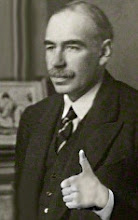
In 1938, Keynes published the paper “The Policy of Government Storage of Foodstuffs and Raw Materials” (The Economic Journal 48.191 [1938]: 449–460).
This is an interesting paper that anticipates Kaldor’s plan to stabilise prices and control inflation by means of buffer stocks (Kaldor 1976: 228–229).
Keynes first notes that a fault of modern market economies is the failure of the private sector to make effective use of stocks (Keynes 1938: 450).
A consequence of this is that price fluctuations in the fundamental raw materials commodities can be severe, and Keynes reviewed some price data from the 1930s with respect to rubber, wheat, lead and cotton to prove this (Keynes 1938: 451).
The price fluctuations in raw materials, Keynes noted, induce a concomitant and unnecessary economic and trade instability (Keynes 1938: 451–452).
Keynes pointed out that monopolies and cartels actually promote a kind of price stability that is not necessarily a bad thing (Keynes 1938: 452).
At this point, Keynes shows us quite clearly that he was familiar with the concept of administered prices:
“For we have to-day two contrasted types of marketing policy existing side by side. On the one hand, those enjoying what have been called ‘administered’ prices1—that is, with prices comparatively stable and fluctuations in demand met by a centralised control of output and by organised arrangements for the withholding of stocks on the part of the producers themselves—and, on the other hand, those with ‘competitive’ prices, where the producers themselves are not in a position to withhold their stocks and the scale of output is governed by price fluctuations. The former arrangement is apt to be objectionable in general, even when it is highly desirable for the particular purpose of meeting fluctuations, because it may be part and parcel of conditions of almost uncontrolled monopoly; whilst the latter arrangement is hardly less objectionable, in that it so greatly increases the risks and losses of enterprise.
The fact that we have two major groups of commodities which respond quite differently to fluctuations in effective demand is of great importance to the general theory of the short period.
[note] 1 The term ‘administered prices’ is due to Mr. E. G. Means [sic] of the U.S. Dept. of Agriculture.”
(Keynes 1938: 452–453).
So Keynes knew of cost-based pricing and even mentioned Gardiner Means, though he got the initials of his name wrong (if this was not just a typographic error).
Even though Keynes thought administered prices were “objectionable in general” (and perhaps missed the point that such mark-up prices are widely used in quite competitive industries, not just in monopolies or oligopolistic markets), he nevertheless already understood the important insight that subsequent Keynesians were to make: that cost-based prices are beneficial to a market economy and promote price stability, when businesses meet fluctuations in demand through direct changes in the quantity of output produced and the use of stocks, rather than through price adjustment.
Next, Keynes noted that the depression had induced governments around the world to experiment with price stabilisation programs, including the use of buffer stocks (Keynes 1938: 453).
The UK itself had passed an “Essential Commodities Reserves Act” in May 1938, though admittedly for the purpose securing stocks of basic goods in the event of war with Germany (Keynes 1938: 454), and the rest of Keynes’ paper is insightful discussion of how government buffer stocks should be a normal, peacetime policy to secure macroeconomic stability – a policy which was in fact adopted by the United States after WWII and which was part of the price stability that characterised virtually all of the golden age of capitalism (1946–1971).
In the late 1960s and 1970s, this buffer stock policy was dismantled and rendered ineffective by US policy-makers, as Kaldor noted with dismay after the first bout of 1970s stagflation:
“… the duration and stability of the post-war economic boom owed a great deal to the policies of the United States and other governments in absorbing and carrying stocks of grain and other basic commodities both for price stabilisation and for strategic purposes. Many people are also convinced that if the United States had shown greater readiness to carry stocks of grain (instead of trying by all means throughout the 1960s to eliminate its huge surpluses by giving away wheat under PL 480 provisions and by reducing output through acreage restriction) the sharp rise of food prices following upon the large grain purchases by the U.S.S.R. [in 1972–1973], which unhinged the stability of the world price level far more than anything else, could have been avoided.” (Kaldor 1976: 228).
BIBLIOGRAPHY
Kaldor, N. 1976. “Inflation and Recession in the World Economy,” Economic Journal 86 (December): 703–714.
Keynes, J. M. 1938. “The Policy of Government Storage of Foodstuffs and Raw Materials,” Economic Journal 48.191: 449–460.
It is sometimes claimed that the Keynesian golden age of capitalism (1946 to 1973) had an accelerating inflation rate. The story goes: all Keynesianism did was cause a never-ending, upward trend in inflation rates.
The myth was peddled by (of all people!) the British Labour politician James Callaghan (UK Prime Minister from 1976 to 1979) when in 1976 he declared that Keynesianism “only worked on each occasion ... by injecting a bigger dose of inflation into the economy, followed by a higher level of unemployment as the next step,” before he introduced at least a rhetorical commitment to a pre-Thatcherite form of monetarism in the UK.
But it is nonsense, certainly in the case of the US, as we can see in the graph below.
There were two outliers: the post-WWII inflation and the Korean War inflation. But, apart from these, the inflationary spike that did break out after 1968 was unusual and a deviation from the basic price stability of the golden age. That price stability was most notable for the late 1950s and most of the 1960s. In fact, actual deflation briefly occurred twice in the post-WWII era.
As Nicholas Kaldor long ago noted, during the golden age “for a long time the rate of inflation (as measured by consumer prices) remained moderate, and until the closing years of the 1960s it showed no clear tendency to acceleration” (Kaldor 1976: 214).
The reason for the inflationary crisis of the 1970s was four-fold:
(1) From 1968–1971 there were the beginnings of inflationary pressures, in both wages and prices in many industrialised nations. The fundamental cause was that around 1968–1969 in Japan, France, Belgium and the Netherlands and from 1969–1970 in Germany, Italy, Switzerland and the UK wage rises had occurred, which Kaldor attributes to strong action by unions (Kaldor 1976: 224). There is a perpetual struggle between capitalists and labour over distribution of income, and it just happened that around 1968 to 1970 labour won out in many countries causing a bout of cost-push inflation (via wage increases). But this would not have become a serious problem had it not been for factors (2), (3), and (4).
(2) the dismantling of commodity buffer stock policies that had previously ensured price stability. The prelude to stagflation was marked by a significant explosion in commodity prices that occurred in the second half of 1972. Part of the problem was the failure of the harvest in the old Soviet Union in 1972–1973 and the unexpectedly large purchases on world markets by the Soviet state. This could have been averted had the United States not dismantled its commodity buffer stock policies in the 1960s.
(3) The end of Bretton Woods (the post-WWII international monetary system) was momentous: inflationary expectations and instability on financial and commodity markets resulted, as well as a rise in commodity speculation as a hedge against inflation. This contributed to the cost-push inflation that was being felt in many countries after 1971.
(4) The final factor that caused the severe inflation of the 1970s was the first oil shock from October 1973, when various Middle Eastern producers of oil instituted an embargo that lasted until March 1974 (Kaldor 1976: 226). In most countries, the double digit inflation of the 1970s was caused by the oil shocks (both the first and second).
The unfortunate concatenation of these historically unprecedented shocks – that is, factors (1), (2), (3), and (4) – in toto was the cause of 1970s stagflation.
Kaldor stresses the importance of factor (2). During most of the golden age of capitalism (1945–1973), primary commodity buffer stocks had created stable prices. But this policy was changed in the 1960s when the US modified its buffer stock policies:
“… the duration and stability of the post-war economic boom owed a great deal to the policies of the United States and other governments in absorbing and carrying stocks of grain and other basic commodities both for price stabilisation and for strategic purposes. Many people are also convinced that if the United States had shown greater readiness to carry stocks of grain (instead of trying by all means throughout the 1960s to eliminate its huge surpluses by giving away wheat under PL 480 provisions and by reducing output through acreage restriction) the sharp rise of food prices following upon the large grain purchases by the U.S.S.R. [in 1972–1973], which unhinged the stability of the world price level far more than anything else, could have been avoided.” (Kaldor 1976: 228).
That was a major factor causing stagflation, along with wage–price spirals. The first oil shock was a final factor that exacerbated everything.
BIBLIOGRAPHY
Kaldor, N. 1976. “Inflation and Recession in the World Economy,” Economic Journal 86 (December): 703–714.
The charge is sometimes made that Keynesians do no consider supply-side factors in their analysis. That charge may have some legitimacy when made against neoclassical synthesis Keynesianism. But anyone who has bothered to study heterodox Keynesianism outside the neoclassical mainstream knows the charge is nonsense.
Post Keynesian economics has long advocated the use of commodity buffer stocks as a policy against supply-side inflation, and a crucial article on this issue remains Nicholas Kaldor’s analysis of stagflation (Kaldor 1976). L. Randall Wray gives us a summary of the Post Keynesian position on buffer stocks:
“To control spot-price inflation (such as oil price shocks), Post Keynesians have advocated using buffer stocks .... Under a buffer stock program the government buys commodities when prices are falling and sells them when prices are rising, thereby helping to stabilise prices. These programs stabilize individual prices; but if some of the commodities are an important part of the consumer basket, buffer stocks would help stabilize the overall price level. For example, stabilizing energy prices would help stabilize the price of most goods, as energy enters directly and indirectly into the production of almost everything.” (Wray 2001: 89).
In the post-WWII world the United States had a program of commodity buffer stocks that ensured price stability and quite low inflation in these years. When these stocks were dismantled in the early years of the Nixon administration, the world experienced the outbreak of supply side inflation, commodity market volatility, and wage-price spirals we know as stagflation (Davidson and Davidson 1996: 166–170).
Curiously, one very important buffer stock that the US still maintains is its Strategic Petroleum Reserve, established in 1975 by the Energy Policy and Conservation Act (EPCA).
In many ways, this reserve is an underused asset, as has been argued by Paul Davidson:
Davidson carefully analyses the role of speculation on future markets in the disastrous spike in oil prices when oil reached its peak at $138 per barrel in June 2008. That analysis is nicely complemented by Bill Mitchell’s recent post on the role of financial institutions and banks in speculation in food commodity markets (see Bill Mitchell, “We Should Ban Financial Speculation on Food Prices,” Billy Blog, May 27, 2011).
Paul Davidson notes that the spike of 2008 could have been prevented had the US released between 70–100 million barrels of oil:
“…it should be obvious that with the rapid increases in oil prices [viz., in 2008], hedge funds, pension funds, other large financial institutions as well as individual investors have been placing billions into oil commodity markets to hedge against inflation and/or to take increase the value of their portfolios via market price increases. But, as the Keynes concept of user cost suggests, speculators on crude price increases may not only include hedge funds – but may involve oil producing companies and countries who recognize that they must produce sufficient quantities of oil to prevent prices rising so rapidly that the economies of their major markets do not collapse … On the other hand, recognizing that speculation has enhanced the rapid escalation of market price, oil producers do not want to pump enough oil from existing underground capacity to squeeze out speculators and thereby reduce their user costs to zero – or even push user costs into negative territory! … The US government can test this speculation and likely force futures oil prices down, perhaps even well below $100 a barrel, by a strategic use of the world’s largest emergency supply, the US Strategic Petroleum Reserve (SPR). As of May 2008 the SPR held 701 million barrels (96% of capacity). If the United States was to dump say between 70 and 105 million barrels on the future market, it is likely that speculators could lose a significant amount of money, while the U.S. would earn billions of dollars on the sale of oil .... Moreover it would not be the first time that strategic use of the SPR prevented run away crude oil prices. After Desert Storm in 1991, 21 million barrels from the SPR was sold over 45 days. As a result world oil prices [were] … barely disturbed despite the interruption of crude oil supplies from Kuwait and Iraq. Again after Hurricane Katrina shut down U.S. crude production in the Gulf of Mexico (approximately 25% of total U.S. oil production), the release of 11 million barrels from the SPR assured stability in the world’s markets for crude oil.”
A quick review of the instances when the US has released capacity from the Strategic Petroleum Reserve confirms its effectiveness:
(1) 1990–1991: Desert Storm sales of 21 million barrels.
(2) 1996–1997: total non-emergency sales for deficit reduction of 28 million barrels .
(3) 2005: Hurricane Katrina sale of 11 million barrels.
(4) 2011: sale of oil owing to the Arab Spring instability of 30 million barrels.
What is notable is that Clinton even used sales from the Strategic Petroleum Reserve to reduce the US deficit! It should also be noted that Japan has a large Strategic Petroleum Reserve, which in 2010 had 324 million barrels. The European Union countries have significant petroleum reserves too.
So, if the US, EU and Japanese governments took joint action to maintain the price of oil within certain limits, they could break the back of both excess demand-side problems and price rises caused by speculation, perhaps for many years to come. This, along with incentives for increased production and locating untapped oil fields, could provide the necessary energy policy needed for first part of this century, as government and private sector research into alternative energy sources is radically expanded. The challenge would be to establish and use such buffer stocks as growing demand from China and other emerging economies causes much greater need for commodities in future years.
What we need is a new era of energy price stability, and even the re-establishment of other basic commodity buffer stock programs that worked so well from 1945 to the late 1960s. The challenge would be to establish and use such buffer stocks as growing demand from China and other emerging economies causes much greater need for commodities in future years, and the possible severe problems caused by peak oil (for a sceptical view of the peak oil thesis, see here).
As noted by Kaldor (1976: 228-230), an international system of commodity buffer stocks could provide the anchor for a new global reserve currency as well, when the US dollar loses that status:
“I remain convinced … that the most promising line of action for introducing greater stability into the world economy would be to create international buffer stocks for all the main commodities, and to link the finance of these stocks directly to the issue of international currency, such as the S.D.R.s [Special Drawing Rights], which could thus be backed by, and directly convertible into, major commodities comprising foodstuffs, fibres and metals. Assuming these buffer stocks cover a sufficiently wide range of commodities, their very existence could provide a powerful self-regulating mechanism for promoting growth and stability in the world economy.” (Kaldor 1976: 28).
These days you could probably add rare earth metals and oil to Kaldor’s list.
A final point is that on the issue of reforming the international payments system, Post Keynesians and supporters of MMT differ:
Davidson, G. and P. Davidson, 1996. Economics for a Civilized Society (2nd edn.), Macmillan, Basingstoke.
Kaldor, N. 1976. “Inflation and Recession in the World Economy,” Economic Journal 86 (December): 703–714.
Wray, L. Randall. 2001. “Money and Inflation,” in R. P. F. Holt and S. Pressman (eds), A New Guide to Post-Keynesian Economics, Routledge, London and New York. 79–91.
The portmanteau word “stagflation” (stagnation + inflation) refers to the economic problems of the 1970s. We need a clear definition of stagflation, and there are in fact two senses in which it is used:
(1) the simultaneous occurrence of stagnation (low or no growth) and high inflation (the original definition of the term when it was coined by Ian Macleod, in a speech to the British House of Commons, in 1965);
(2) the simultaneous occurrence of rising unemployment rates and rising inflation.
It is sense (2) in which the word is normally used in economics, and it describes high unemployment and high inflation rates (even during recessions) occurring simultaneously. Thus the years from 1975-1977 in the US were not technically stagflation: these were years of an expansion in the business cycle with disinflation (falling inflation rates), rising employment, and rising real output growth.
The most serious periods of stagflation were in 1973–1974/1975 and 1979-1981 when many countries entered recessions and experienced rising unemployment and rising inflation. In most countries, these severe years of surging inflation and unemployment were the result of the first (1973-1974) and second oil shocks (1979-1980), and the double digit inflation rates in many countries (though not all) that provoked the sense of crisis in these years were caused by the high price of energy, a major factor input. But it is also true that from 1968–1970 many countries experienced an unusual rise in wages and prices, with further surges in prices from 1972-1973 before the first oil shock hit their economies. This requires an explanation.
There is no doubt that the era of stagflation was a theoretical and practical problem for neoclassical synthesis Keynesians, with their flawed Hicksian IS-LM models.
But Post Keynesians never had any difficulty explaining stagflation and offering effective cures for it. In particular, Geoff Harcourt explains in the video below (from 20.00 minutes onwards) how Keynes’s General Theory was easily capable of showing that rising unemployment can occur with rising inflation. Harcourt also talks about Lorie Tarshis and his textbook summary of Keynes’s General Theory for American universities in the 1940s, which was attacked by conservatives. Tarshis’s accurate summary of Keynes was rejected for Paul Samuelson’s neoclassical version of Keynesianism (the neoclassical synthesis), and if Tarshis’s book on Keynes had been used instead of Samuelson’s textbook, many of the theoretical problems of neoclassical synthesis Keynesianism would have been avoided.
One of the best analyses of stagflation is by Nicholas Kaldor:
“Inflation and Recession in the World Economy,” Economic Journal 86 (December, 1976): 703–714.
My analysis here is based on Kaldor and other Post Keynesian work.
When we buy many commodities we do not engage in some kind of haggling over price in each individual transaction, or compete with others to bid for a product as in an auction, nor do the prices of many commodities change even though demand has changed. For example, when you go to the supermarket, you do not see daily or weekly fluctuations in the price of milk or bread in accordance with demand for, and sales of, those commodities.
Real world capitalism has developed numerous markets where prices are not set, or explicable, by demand and supply curves. Instead, prices can be (1) administered by business institutions or (2) cooperation between businesses that produce commodities (the familiar concepts of monopoly, oligopoly and cartels). But modern corporations are often institutions that also administer prices, and prices can be stable or unchanged for significant periods of time. Nor do they not respond immediately to demand or sales fluctuations:
“In studies of price determination, business enterprises have stated that variations of their prices within practical limits, given the prices of their competitors, produced virtually no change in their sales and that variations in the market price, especially downward, produced little if any changes in market sales in the short term. Moreover, when the price change is significant enough to result in a significant change in sales, the impact on profits has been negative enough to persuade enterprises not to try the experiment again. Consequently administered prices are maintained for a variety of different outputs over time … The pricing administrators of business enterprises maintain pricing periods of three months to a year in which their administered prices remained unchanged; and then, at the end of the period, they decide on whether to alter them.” (Lee 2003: 288).
What disturbs this?
The price of commodities produced in an economy depends on the costs of factors of production, in particular the wage bill, and then the mark-up over the costs of factor inputs (Musella and Pressman 1999: 1100).
The factors of production are
(1) primary commodities or natural resources, including land, raw materials, water, and energy;
(2) labour, and
(3) capital goods.
Thus inflationary pressures can result from
(1) surges in the prices of primary commodities or energy, especially when the prices of these factor inputs are set on world markets or are influenced by supply shocks;
(2) workers pushing for wage rises, and
(3) business firms increasing their pricing mark-ups.
A vicious circle can result when (a) workers demand wage rises and then (b) firms increase their mark-ups, causing a circle of (a), (b) etc. The distinction must also be made between (1) demand-pull inflation, and (2) cost-push inflation, when the latter has a supply-side cause.
During the most of the Golden Age of Capitalism (1945–1973), primary commodity buffer stocks had ensured price stability. But this policy was changed in the 1960s when the US modified its buffer stock polices:
“… the duration and stability of the post-war economic boom owed a great deal to the policies of the United States and other governments in absorbing and carrying stocks of grain and other basic commodities both for price stabilisation and for strategic purposes. Many people are also convinced that if the United States had shown greater readiness to carry stocks of grain (instead of trying by all means throughout the 1960s to eliminate its huge surpluses by giving away wheat under PL 480 provisions and by reducing output through acreage restriction) the sharp rise of food prices following upon the large grain purchases by the U.S.S.R. [in 1972–1973], which unhinged the stability of the world price level far more than anything else, could have been avoided.” (Kaldor 1976: 228).
From 1968–1971 there were the beginnings of inflationary pressures, in both wages and prices in many industrialised nations. Around 1968–1969, this was reflected in wage rises in Japan, France, Belgium and the Netherlands, and from 1969–1970 in Germany, Italy, Switzerland and the UK, which Kaldor attributes to demands by unions for wage rises (Kaldor 1976: 224). There is of course an eternal struggle in modern capitalism between labour and capital over distribution of income, and sometimes this can get out of control. Post Keynesians recognise the need for some kind of control over wages in modern capitalism, when wage gains become excessive, and the method required is incomes policy of some type. This does not require hostility or opposition to trade unions, however, and Post Keynesian labour theory is, if anything, supportive of organised labour.
But the prelude to stagflation was also marked by a significant explosion in commodity prices that occurred in the second half of 1972. Part of the problem was the failure of the harvest in the old Soviet Union in 1972–1973 and the unexpectedly large purchases on world markets by the Soviet state. That was exacerbated by the uncertainty caused by the break up of the Bretton Woods system,
after Richard Nixon had ended the convertibility of the US dollar to gold on August 15, 1971, an event you can see Nixon announcing in the video below.
The end of Bretton Woods (the post-WWII international monetary system) was momentous: inflation expectations and instability on financial and commodity markets resulted, as well as a rise in commodity speculation as a hedge against inflation. This contributed to the cost-push inflation that was being felt in many countries after 1971. As Kaldor noted, this could have been averted had the United States not dismantled its commodity buffer stock in the 1960s.
The final factor that caused the severe inflation of the 1970s was the first oil shock from October 1973, when various Middle Eastern producers of oil instituted an embargo that lasted until March 1974 (Kaldor 1976: 226). In most countries, the double digit inflation of the 1970s was caused by the oil shocks. This fed into wage-price spirals in a number of countries.
A long-term solution to stagflation proposed by Kaldor was an international system of buffer stocks in major commodities. This could be used to raise commodity prices when they fell to too low a level by buying on the market (which would help incomes in developing nations and other producing nations), and to lower prices by selling into the market when prices were rising too high (Kaldor 1976: 228–229).
In short, Post Keynesian economics can easily understand and deal with stagflation. The wage-price spirals that broke out by the end of the 1960s in some industrialised nations could have been dealt with by incomes policy (national wage arbitration/wage-price controls), and the long-term solution was, and still is, an international system of commodity buffer stocks.
BIBLIOGRAPHY
Blaas, W. 1982. “Institutional Analysis of Stagflation,” Journal of Economic Issues 16.4: 955-975.
Cornwall, J. 1990. The Theory of Economic Breakdown: An Institutional-Analytical Approach, Blackwell, Cambridge, MA.
Cornwall, J. 1994. Economic Breakthrough & Recovery: Theory and Policy (rev. edn), M.E. Sharpe, Armonk, N.Y.
Eckstein, A. and D. Heien, 1978. “The 1973 Food Price Inflation,” American Journal of Agricultural Economics 60.2: 186–196.
Galbraith, J. K. 2008. The Predator State: How Conservatives Abandoned the Free Market and Why Liberals Should Too, Free Press, New York.
Hathaway, D. E. 1974. “Food Prices and Inflation,” Brookings Papers on Economic Activity Vol. 1974, No. 1: 63–116.
Kaldor, N. 1976. “Inflation and Recession in the World Economy,” Economic Journal 86 (December): 703–714.
King, J. E. 2002. A History of Post Keynesian Economics since 1936, Edward Elgar Publishing, Cheltenham, UK and Northampton, MA.
Lee, F. S. 2003. “Pricing and Prices,” in J. E. King (ed.), The Elgar Companion to Post Keynesian Economics, E. Elgar Pub., Cheltenham, UK and Northhampton, MA. 285–289.
Musella, M. and S. Pressman. 1999. “Stagflation,” in P. Anthony O’Hara (ed.), Encyclopedia of Political Economy: L–Z, Routledge, London and New York. 1099–1100.