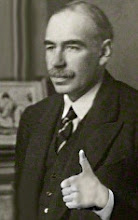
“Within the frame of social cooperation there can emerge between members of society feelings of sympathy and friendship and a sense of belonging together. These feelings are the source of man’s most delightful and most sublime experiences. They are the most precious adornment of life; they lift the animal species man to the heights of a really human existence. However, they are not, as some have asserted, the agents that have brought about social relationships. They are fruits of social cooperation, they thrive only within its frame; they did not precede the establishment of social relations and are not the seed from which they spring.According to Mises, feelings of “sympathy” or what can be called “altruism” did not bring about “social relationships”: they are the results of “social cooperation.”
The fundamental facts that brought about cooperation, society, and civilization and transformed the animal man into a human being are the facts that work performed under the division of labor is more productive than isolated work and that man’s reason is capable of recognizing this truth. But for these facts men would have forever remained deadly foes of one another, irreconcilable rivals in their endeavors to secure a portion of the scarce supply of means of sustenance provided by nature. Each man would have been forced to view all other men as his enemies; his craving for the satisfaction of his own appetites would have brought him into an implacable conflict with all his neighbors. No sympathy could possibly develop under such a state of affairs.” (Mises 1998: 144).
And the “division of labour” – that almost obsessive economic fetish – transformed our animal ancestors into socially-cooperating human beings.
Unfortunately, Mises’s ideas are destroyed by what we now know from evolutionary biology. I suspect that if he had known more evolutionary theory even in his own day, he would probably have been able to discover he was talking rubbish.
Just have a look at the video below of a talk by Patricia Churchland.
First, the emergence of social animals has a lot to do with evolutionary forces that selected traits of altruism and emotion directed first at offspring, then close family (kin), and then extended social groups (kith). The process is related to the chemical oxytocin and how in animals self-care extended to kin care and then how emotions (like distress and pain) could be triggered by events in the social domain.
Secondly, it was the expansion of the forebrain in mammals and in humans that allowed greater prediction and anticipation of future events and social problems. These were no doubt a cause of the successful ability of humans to be social and to live in groups.
Mises has it the wrong way around. Feelings of sympathy preceded complex social cooperation. It was not “division of labour” but just the success of individuals being more altruistic towards each other that was the driver of emergence of social animals.
BIBLIOGRAPHY
Mises, L. 1998. Human Action: A Treatise on Economics. The Scholar’s Edition. Mises Institute, Auburn, Ala.