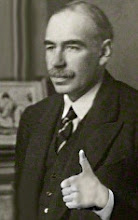
This debate between Robert Taylor and David Ramsay Steele is on praxeology and apriorism.
David Ramsay Steele was a Marxist who converted to libertarianism, and his book analysing Mises’ arguments about economic calculation and socialism is From Marx to Mises: Post-Capitalist Society and the Challenge of Economic Calculation (1992).
This argument is between two people who largely agree with Austrian economics, and often the debate is quite confused, and I should point out that there are plenty of empirical studies showing that a rise in the minimum wage does not cause unemployment, e.g., Card and Krueger (1994 and 1995), Dube and Reich (2010), or the 2006 OECD Employment Outlook report entitled “Boosting Jobs and Incomes” (described here).
However, some of Steele’s comments on empiricism and praxeology are nevertheless interesting.
A further point is that all Steele had to do to deal with Taylor’s mathematics and geometry examples is to explain the difference between (1) pure mathematics and (2) applied mathematics. Just because pure mathematics yields necessary truth, it does not follow that a system like praxeology does, because pure mathematics is analytic a priori and praxeology claims to be synthetic a priori. Aside from the observation that the very existence of synthetic a priori knowledge just is not convincing, pure mathematics is not making necessary statements about reality but about analytic a priori systems.
Showing posts with label Robert Taylor versus David Ramsay Steele. Show all posts
Showing posts with label Robert Taylor versus David Ramsay Steele. Show all posts
Friday, June 6, 2014

Subscribe to:
Posts (Atom)