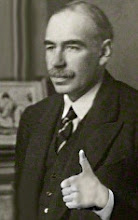
Noam Chomsky has been influential both in modern linguistics, cognitive science and philosophy, but it is curious that he has been a critic of empiricism and an advocate of a type of
“Rationalism” (that is, in the technical philosophical sense) (Schwartz 2012: 180).
Two important aspects of this Rationalism were (1) the view that human beings are not blank slates as in radical (and mistaken) empiricism, and (2) the observation that human language learning in children appears to be an innate biological trait, with universal syntactic structures (Schwartz 2012: 180–181).
The latter view was brought out in Chomsky’s now famous 1959 review of B. F. Skinner’s
Verbal Behavior, where Chomsky attacked Skinner’s behaviourism and effectively discredited that theory (Schwartz 2012: 181). (A related point is that Quine’s linguistic behaviourism as a basis for rejecting analyticity was also undermined.)
It is obvious that a human biologically endowed language faculty seems to bear some similarity to Platonic ideals or Kantian categories and
synthetic a priori knowledge. Nevertheless, that conclusion would be a mistake.
Arguably, the innate language faculty of humans, far from vindicating Kant’s
synthetic a priori, is the result of Darwinian evolution, and has, in evolutionary terms, been acquired
a posteriori – a biological structure shaped by reality and adaptive selection.
But a highly useful and successful trait or propensity to interpret the world in a particular way, given to us by evolution, does not lead to
a priori knowledge in the traditional epistemological sense, a point which even Chomsky hints at in his discussion of the human capacity for doing science:
“Some have argued that [sc. the human science-forming capacity] … is not blind luck but rather a product of Darwinian evolution. The outstanding American philosopher Charles Sanders Peirce, who presented an account of science construction in terms similar to those just outlined, argued in this vein. His point was that through ordinary processes of natural selection our mental capacities evolved so as to be able to deal with the problems that arise in the world of experience. But this argument is not compelling. It is possible to imagine that chimpanzees have an innate fear of snakes because those who lacked this genetically determined property did not survive to reproduce, but one hardly argue that humans have the capacity to discover quantum theory for similar reasons. The experience that shaped the course of evolution offers no hint of the problems to be faced in the sciences, and ability to solve these problems could hardly have been a factor in evolution.
We cannot appeal to this deus ex machina to explain the convergence of our ideas and the truth about the world. Rather, it is largely a lucky accident that there is such a (partial) convergence, so it seems.
The human science-forming capacity, like other biological systems, has its scope and limits, as a matter of necessity. We can be confident that some problems will lie beyond the limits, however the science-forming capacity is supplemented by appropriate background information.” (Chomsky 1988: 158).
I think Chomsky goes too far here in asserting that our innate capacities – for instance, our propensity for inductive reasoning – give “no hint of the problems to be faced in the sciences.” On the contrary, human inductive reasoning (if it stems partly from an innate propensity) seems to have much to do with the ability to do science, though it is a fallible process.
Nevertheless, our linguistic abilities and propensity for creating language conforming to syntactic and grammatical rules have the properties of an abstract deductive system (Schwartz 2012: 182), but this does not give necessary
a priori knowledge in the traditional sense:
“It is important to note that Chomsky’s language learners do not know particular propositions describing a universal grammar. They have a set of innate capacities or dispositions which enable and determine their language development. Chomsky gives us a theory of innate learning capacities or structures rather than a theory of innate knowledge. His view does not support the Innate Knowledge thesis as rationalists have traditionally understood it. As one commentator puts it, ‘Chomsky’s principles ... are innate neither in the sense that we are explicitly aware of them, nor in the sense that we have a disposition to recognize their truth as obvious under appropriate circumstances. And hence it is by no means clear that Chomsky is correct in seeing his theory as following the traditional rationalist account of the acquisition of knowledge.’”
“Rationalism vs. Empiricism,” Stanford Encyclopedia of Philosophy, 2004 (rev. 2013)
http://plato.stanford.edu/entries/rationalism-empiricism/
Some of these issues are brought out in this interview with (a young!) Chomsky by Bryan Magee.
Links
“Rationalism vs. Empiricism,” Stanford Encyclopedia of Philosophy, 2004 (rev. 2013)
http://plato.stanford.edu/entries/rationalism-empiricism/
Nathalie Gontier, “Evolutionary Epistemology,” Internet Encyclopedia of Philosophy, 2006
http://www.iep.utm.edu/evo-epis/
“Evolutionary Epistemology,” Stanford Encyclopedia of Philosophy, 2001 (rev. 2012)
http://plato.stanford.edu/entries/epistemology-evolutionary/
BIBLIOGRAPHY
Chomsky, Noam. 1988.
Language and Problems of Knowledge: The Managua Lectures. MIT Press, Cambridge, Mass and London.
Cottingham, John. 1988.
The Rationalists. Oxford University Press, Oxford and New York.
Horwich, Paul. 1992. “Chomsky versus Quine on the Analytic-Synthetic Distinction,”
Proceedings of the Aristotelian Society n.s. 92: 95–108.
Schwartz, Stephen P. 2012.
A Brief History of Analytic Philosophy: From Russell to Rawls. Wiley-Blackwell, Chichester, UK.