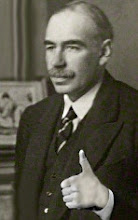
The background that Schwartz provides in Chapter 1 of his book actually illuminates Keynes’s own early philosophical ideas and the context of Keynes’s famous A Treatise on Probability (1921). I sketch the main points of Chapter 1 from Schwartz’s study in what follows.
Bertrand Russell (1872–1970) was the founder of analytic philosophy, but he drew on important work in mathematical logic by the German Gottlob Frege (1848–1925).
Russell and George E. Moore (1873–1958), another founder of analytic philosophy, attended Cambridge University in the 1890s, and came under the influence of British Hegelian philosophers.
Russell went through a number of philosophical phases as follows:
(1) a period of influence from British idealism;When Moore and Russell broke with Idealism, they had a brief flirtation with Platonic realism (Schwartz 2012: 28), and then Russell moved towards “logical atomism,” which is recognisably an early form of analytic philosophy.
(2) a period of Platonist realism (1901–1904);
(3) the period of logical realism (1905–1912), and
(4) the period of logical atomism (1913–1918).
In 1903, two important books appeared. Both of these works profoundly influenced the young John Maynard Keynes. The first (and most important to Keynes) was Moore’s Principia Ethica, an influential treatise on ethics; the second was Russell’s Principles of Mathematics (1903) (written in the latter’s Platonic realist phase).
Russell’s book was concerned with the foundations of mathematics, and in it Russell argued that mathematics could be deduced from a very small number of principles, a view which is the hallmark of the philosophy of mathematics called logicism.
But the ground for Russell’s logicist interpretation of mathematics had already been laid by Gottlob Frege in his Begriffsschrift (1879), Die Grundlagen der Arithmetik (The Foundations of Arithmetic; 1884), and the Grundgesetze der Arithmetik (Basic Laws of Arithmetic; vol. 1: 1893; vol. 2: 1903), in which works Frege founded modern logic and argued against Kant’s view that arithmetic statements were synthetic a priori knowledge. Against this Kantian view, Frege held that arithmetic was analytic a priori, and tried to demonstrate how a new logic could be used to deduce mathematics from a set of given axioms.
Russell’s early work uncovered a flaw in Frege’s system called Russell’s paradox, but Russell continued his work in the 1900s in an attempt to solve this paradox and complete Frege’s vision.
Russell and Alfred North Whitehead (1861–1947) worked on the culmination of their logicist program in mathematics, the three-volume book Principia Mathematica (the volumes of which were published in 1910, 1912, and 1913 respectively). In the Principia Mathematica, Russell and Whitehead attempted to construct a set of axioms and rules by means of symbolic logic from which all mathematics could be proven.
Though it is generally thought that Russell’s strict logicist program failed (given the problems raised by Gödel’s incompleteness theorems), nevertheless the consensus today is still that most of classical mathematics can be derived from pure logic and set theory (Schwartz 2012: 19), so in one important respect the essence of Russell’s logicist program was successful.
Thus the main legacy of Russell’s logicism was the rejection of Kantian synthetic a priori knowledge. For after it was shown that mathematics was not an example of synthetic a priori knowledge, one of the greatest arguments made by Rationalist apriorists was undercut and refuted.
Another influence that Russell’s logicism had was on John Maynard Keynes. Keynes’s own “logical theory of probability” was itself a logicist attempt to put probability and inductive inference on a sound footing by using a system of formal logic (Gillies 2000: 27). It is notable that Russell himself was deeply involved in helping Keynes with his work on probability (Gillies 2000: 27), although the initial inspiration for Keynes’s work on probability came from Moore’s Principia Ethica (Gillies 2000: 28).
The other major philosophical achievement of Russell covered by Schwartz is Russell’s article “On Denoting” (Mind 14 [1905]: 479–493), a landmark in the analytic philosophy of language. In this, Russell developed a theory of “definite descriptions,” or phrases that pick out one specific object, such as the “30th Prime Minister of the United Kingdom” or “my copy of Keynes’s General Theory.” These are distinguished from proper names, and philosophical problems arise when definite descriptions refer to non-existent objects, such as “the present king of France” or the “current president of Canada,” and propositions such as “the present king of France is bald.”
For Russell, these “definite description” propositions were merely informal ways of expressing existential statements: for example, the proposition “the present king of France is bald” is really to be understood as “there is one and only one present king of France and that one is bald” (Schwartz 2012: 24). Such existential statements are clearly false in terms of their truth value, so that Russell was able to reject the questionable theory of definite descriptions developed by Meinong (Schwartz 2012: 23).
By the time Russell turned to actual philosophy in the 1910s, he continued the British empiricist tradition of Locke, Berkeley and Hume (Schwartz 2012: 34), and modern analytic philosophy, for better or worse, has continued largely to shun both Hegelianism and modern Continental philosophy.
Links
“Bertrand Russell,” Stanford Encyclopedia of Philosophy, 1995 (rev. 2010)
http://plato.stanford.edu/entries/russell/
Carey, Rosalind. “Russell’s Metaphysics,” Internet Encyclopedia of Philosophy, 2008
http://www.iep.utm.edu/russ-met/
Klement, Kevin C. “Russell’s Paradox ,” Internet Encyclopedia of Philosophy, 2005
http://www.iep.utm.edu/par-russ/
“Gottlob Frege,” Stanford Encyclopedia of Philosophy, 1995 (rev. 2012)
http://plato.stanford.edu/entries/frege/
Klement, Kevin C. “Gottlob Frege (1848–1925),” Internet Encyclopedia of Philosophy, 2005
http://www.iep.utm.edu/frege/
“Frege’s Theorem and Foundations for Arithmetic,” 1998 (rev. 2013)
http://plato.stanford.edu/entries/frege-logic/
Lotter, Dorothea. “Frege and Language,” Internet Encyclopedia of Philosophy, 2005
http://www.iep.utm.edu/freg-lan/
“Philosophy of Mathematics,” Stanford Encyclopedia of Philosophy, 2007 (rev. 2012)
http://plato.stanford.edu/entries/philosophy-mathematics/
“Principia Mathematica,” Stanford Encyclopedia of Philosophy, 1996 (rev. 2010)
http://plato.stanford.edu/entries/principia-mathematica/
“Logicism,” Wikipedia
http://en.wikipedia.org/wiki/Logicism
BIBLIOGRAPHY
Beaney, Michael. 2013. The Oxford Handbook of the History of Analytic Philosophy. Oxford University Press, Oxford.
Gillies, Donald. 2000. Philosophical Theories of Probability. Routledge, London and New York.
Glock, Hans-Johann. 2008. What is Analytic Philosophy?. Cambridge University Press, Cambridge, UK and New York.
Keynes, John Maynard. 1921. A Treatise on Probability. Macmillan, London.
Martinich, A. P. and David Sosa (eds.). 2006. A Companion to Analytic Philosophy. Blackwell, Malden, Mass. and Oxford.
Preston, Aaron. 2012. Review of Stephen P. Schwartz, A Brief History of Analytic Philosophy: From Russell to Rawls
http://ndpr.nd.edu/news/36378-a-brief-history-of-analytic-philosophy-from-russell-to-rawls/
Russell, Bertrand. 1905. “On Denoting,” Mind 14: 479–493.
Schwartz, Stephen P. 2012. A Brief History of Analytic Philosophy: From Russell to Rawls. Wiley-Blackwell, Chichester, UK.
Soames, Scott. 2003a. Philosophical Analysis in the Twentieth Century. The Age of Meaning. Volume 2. Princeton University Press, Princeton, N.J. and Oxford.
Soames, Scott. 2003b. Philosophical Analysis in the Twentieth Century. The Dawn of Analysis. Volume 1. Princeton University Press, Princeton, N.J. and Oxford.
Stroll, Avrum. 2000. Twentieth-Century Analytic Philosophy. Columbia University Press, New York.