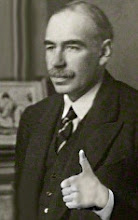
“A Conversation with Mark Blaug,” March 2007.Blaug, of course, was well known for his work on economic methodology, and was author of The Methodology of Economics: Or how Economists explain (2nd edn.). Cambridge University Press, Cambridge, UK, 1992.
Showing posts with label Mark Blaug. Show all posts
Showing posts with label Mark Blaug. Show all posts
Wednesday, May 14, 2014
Interview with Mark Blaug
This is an interesting audio interview with by John Fountain in March 2007 at the University of Canterbury:

Wednesday, April 30, 2014
Mark Blaug was Right on Mises’ Method
Mark Blaug in his influential book The Methodology of Economics (2nd edn.; 1992) dismissed Ludwig von Mises’ later methodological work and apriorist praxeology as “so idiosyncratic and dogmatically stated that we can only wonder that they have been taken seriously by anyone” (Blaug 1992: 81).
This statement provokes outrage from some Austrians, but Blaug was stating a simple truth.
Praxeology – Mises’ method for economic science – is based on a false and intellectually bankrupt Kantian epistemology requiring synthetic a priori knowledge.
Modern analytic philosophy rejects Kantian epistemology and synthetic a priori knowledge, and for good reason. All alleged examples of synthetic a priori knowledge – such as mathematics or Euclidean geometry – have turned out not to be at all, and the same can be said for Mises’ “human action axiom,” which is supposed to be the basis of praxeology. The “human action axiom” is is quite clearly synthetic a posteriori, and Mises himself made a candid and embarrassing admission to Israel Kirzner that contradicts his earlier views on epistemology.
In fact, there is strong evidence that Mises was a wretched philosopher, and that he was simply confused about the difference between “synthetic” and “analytic” propositions.
The utter failure of Mises’ epistemology can be seen in the challenge that George J. Schuller made to Austrians in 1951 in his review of Human Action. Schuller pointed out that, if the economic theories of Mises’ book Human Action really are derived by painstaking and valid deductive argument, then it should be possible to set the book out in a formal symbolic form in which all axioms, premisses, and deductions are shown formally and proven.
No Austrian has ever done this. Their failure to meet Schuller’s challenge is pretty strong proof that Mises’ praxeology was a house built on sand.
And what of Mises’ wider influence on this subject? Outside the fringe Austrian school, virtually nobody takes Mises’ praxeology seriously.
Mark Blaug was entirely correct.
Further Reading
“No Constants in Human Behaviour?,” March 9, 2014.
“How does an Austrian Praxeologist make Predictions?,” March 11, 2014.
“David Gordon on Praxeology and the Austrian Method: A Critique,” March 13, 2014.
“Why Mises’s Praxeological Theories are not Necessarily True of the Real World,” March 15, 2014.
“Mises versus Ayer on Analytic Propositions and a priori Reasoning,” March 16, 2014.
“Deduction, Necessary Truth and the Real World,” March 16, 2014.
“Mises and Empiricism,” April 17, 2014
BIBLIOGRAPHY
Blaug, Mark. 1992. The Methodology of Economics, or, How Economists Explain (2nd edn.). Cambridge University Press, Cambridge, UK.
This statement provokes outrage from some Austrians, but Blaug was stating a simple truth.
Praxeology – Mises’ method for economic science – is based on a false and intellectually bankrupt Kantian epistemology requiring synthetic a priori knowledge.
Modern analytic philosophy rejects Kantian epistemology and synthetic a priori knowledge, and for good reason. All alleged examples of synthetic a priori knowledge – such as mathematics or Euclidean geometry – have turned out not to be at all, and the same can be said for Mises’ “human action axiom,” which is supposed to be the basis of praxeology. The “human action axiom” is is quite clearly synthetic a posteriori, and Mises himself made a candid and embarrassing admission to Israel Kirzner that contradicts his earlier views on epistemology.
In fact, there is strong evidence that Mises was a wretched philosopher, and that he was simply confused about the difference between “synthetic” and “analytic” propositions.
The utter failure of Mises’ epistemology can be seen in the challenge that George J. Schuller made to Austrians in 1951 in his review of Human Action. Schuller pointed out that, if the economic theories of Mises’ book Human Action really are derived by painstaking and valid deductive argument, then it should be possible to set the book out in a formal symbolic form in which all axioms, premisses, and deductions are shown formally and proven.
No Austrian has ever done this. Their failure to meet Schuller’s challenge is pretty strong proof that Mises’ praxeology was a house built on sand.
And what of Mises’ wider influence on this subject? Outside the fringe Austrian school, virtually nobody takes Mises’ praxeology seriously.
Mark Blaug was entirely correct.
Further Reading
“No Constants in Human Behaviour?,” March 9, 2014.
“How does an Austrian Praxeologist make Predictions?,” March 11, 2014.
“David Gordon on Praxeology and the Austrian Method: A Critique,” March 13, 2014.
“Why Mises’s Praxeological Theories are not Necessarily True of the Real World,” March 15, 2014.
“Mises versus Ayer on Analytic Propositions and a priori Reasoning,” March 16, 2014.
“Deduction, Necessary Truth and the Real World,” March 16, 2014.
“Mises and Empiricism,” April 17, 2014
BIBLIOGRAPHY
Blaug, Mark. 1992. The Methodology of Economics, or, How Economists Explain (2nd edn.). Cambridge University Press, Cambridge, UK.
Subscribe to:
Posts (Atom)